
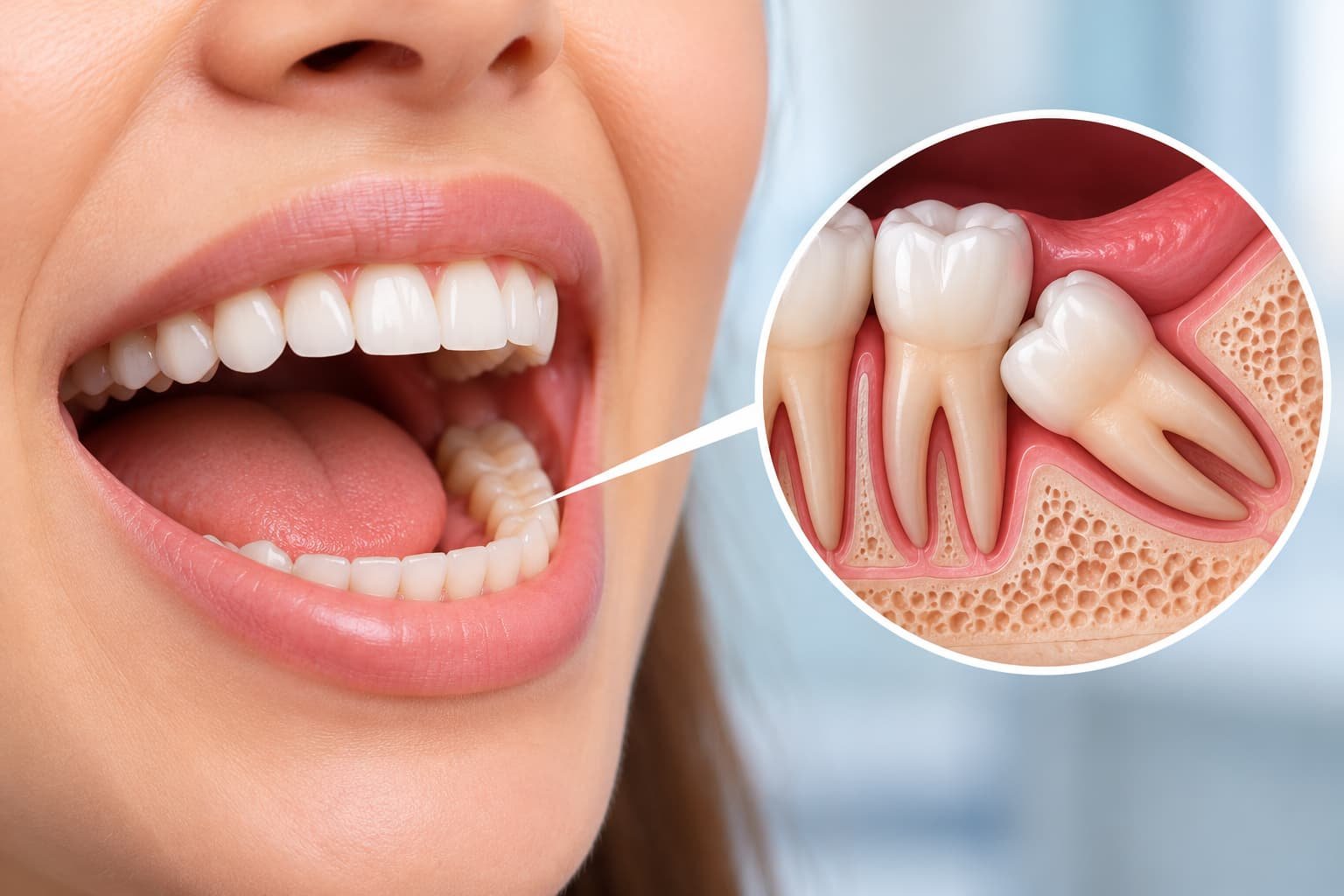
Does everyone have wisdom teeth ,No, not everyone has wisdom teeth. Most adults develop at least one, but a meaningful percentage are born without any third molars, and others have only one, two, or three instead of four. Whether you have them, how many you get, and whether they cause problems depends on genetics, jaw size, and how your teeth develop during childhood and adolescence.
If you want a clear answer about your own wisdom teeth, a dental exam with an X-ray is the only reliable way to know. For patients in the Deira area, Calcium Clinic and any Best Dental Clinic in Deira Dubai can confirm what is happening beneath your gums and whether treatment is needed.
What Wisdom Teeth Actually Are and Why Some People Never Get Them
Wisdom teeth are the third set of molars, the flatter teeth at the very back of the mouth that grind food. Humans typically develop three sets of molars on each side of the upper and lower jaw. The first and second molars arrive during childhood and early adolescence. The third molars, if they appear at all, usually emerge between ages 17 and 25.
The reason not everyone has them goes back to human evolution. Our ancestors had larger jaws and diets built around tough, uncooked plants and raw meat, which required more chewing surface. As cooking and food preparation advanced, jaws gradually became smaller. Today many people simply do not have enough room in the jaw for a third set of molars, and in some cases the genetic instructions to form them have faded entirely.
Estimates vary because studies look at different populations. Some research suggests around 20 to 25 percent of people are born with one to three wisdom teeth, while roughly 35 percent develop none at all. Other studies place the number of people missing at least one wisdom tooth between 5 and 37 percent. The variation is real, but the core point holds: missing wisdom teeth is common and completely normal.
How Many Wisdom Teeth Can You Have?
The typical pattern is four wisdom teeth, one in each corner of the mouth. But the actual number varies widely.
| Number of Wisdom Teeth | How Common It Is | What It Means |
| Four | Most common pattern | One in each corner of the mouth |
| One to three | Around 20 to 25 percent of people | Partial development, often runs in families |
| None | Up to roughly 35 percent in some populations | Entirely normal, no treatment needed |
Having fewer than four wisdom teeth is not a defect. It is a variation in normal dental development, influenced by genetics and sometimes by ethnic background. Certain populations show lower rates of wisdom tooth development than others, though researchers are still clarifying how much of that is genetic versus environmental.
When Wisdom Teeth Come In and What That Feels Like
Wisdom teeth typically begin to make themselves known between 17 and 25, though the timing varies from person to person. Some people feel nothing at all. Others notice tenderness, pressure, or a dull ache at the back of the jaw as the tooth pushes toward the surface.
Common early signs include:
- Soreness or swelling in the gums behind the last molar
- A feeling of pressure at the back of the jaw
- Difficulty opening the mouth fully
- A bad taste or odour if food gets trapped around a partially erupted tooth
- Headaches or jaw stiffness that comes and goes
Not all wisdom teeth erupt fully. Some stay buried in the jawbone or under the gum line, which is called impaction. An impacted tooth may grow sideways, press against the neighbouring molar, or remain completely hidden. You cannot always tell an impacted tooth is there without an X-ray, which is why dentists routinely check for them during late adolescence.
Problems Wisdom Teeth Can Cause
Even when wisdom teeth do develop, they do not always need removal. A fully erupted, properly aligned wisdom tooth that you can clean effectively may cause no issues at all. However, many people do run into trouble because the jaw is too small to accommodate them.
The most common problems include:
- Impaction, where the tooth gets trapped under the gum or against bone
- Crowding, which can shift other teeth out of alignment
- Decay, because back molars are hard to reach with a toothbrush and floss
- Gum inflammation or infection around a partially erupted tooth
- Cysts or damage to the roots of neighbouring teeth in more serious cases
If you notice persistent pain, swelling, or signs of infection such as fever or pus, see a dentist promptly. A Cheap Dentist in Dubai can assess the situation and explain whether removal is necessary or whether monitoring is enough.
How Dentists Check for Wisdom Teeth
A visual exam alone is not enough. Many wisdom teeth sit below the gum line, so a panoramic X-ray or similar imaging is the standard way to check their position, angle, and relationship to nearby nerves and teeth. The X-ray also reveals whether wisdom teeth are present at all, which is useful for people who have never seen or felt them.
If removal is recommended, the dentist or oral surgeon will explain what the procedure involves, what recovery looks like, and what alternatives exist. In straightforward cases, removal is a routine procedure. In more complex cases, such as a tooth close to a nerve, a specialist referral may be the safer path.
What to Do Next
If you are in your late teens or twenties and have not had your wisdom teeth checked, now is the right time. Even if nothing hurts, an X-ray can reveal developing problems before they become painful or damage neighbouring teeth. For patients looking for a Cheap Dental Clinic Deira or seeking Services such as Dental crowns in dubai, Dental Crowns & Bridges in Deira, or a consultation with a Best Dentist in Deira, Dubai, Calcium Clinic offers a practical starting point for understanding your options.
Book an appointment for a wisdom teeth evaluation and X-ray if you are experiencing pain, swelling, or simply want to know whether your wisdom teeth are present and likely to cause problems.
Frequently Asked Questions
1. Does everyone have wisdom teeth?
No, not everyone develops wisdom teeth. Some people have all four, while others have one, two, three, or none. This variation is usually influenced by genetics and is generally normal.
2. At what age do wisdom teeth usually appear?
Wisdom teeth typically erupt between the ages of 17 and 25. However, they may appear earlier or later, remain partially erupted, or stay trapped beneath the gums
3. Is it normal to never develop wisdom teeth?
Yes, it is normal. Some people are naturally missing one or more wisdom teeth because they never developed. If you are unsure whether yours are present, a dentist can confirm this with an examination and X-ray when appropriate.
4. Do wisdom teeth always need to be removed?
No, wisdom teeth do not always require removal. If they are healthy, properly positioned, fully erupted, and easy to clean, they may be left in place with regular dental monitoring. Removal may be recommended if they cause pain, infection, decay, or damage to nearby teeth.
5. How do I know if my wisdom teeth are impacted?
Signs of impacted wisdom teeth may include pain at the back of the jaw, swollen gums, difficulty opening your mouth, and recurring infections. However, some impacted teeth cause no symptoms. A dental examination and X-ray can help identify their position and determine whether treatment is necessary.