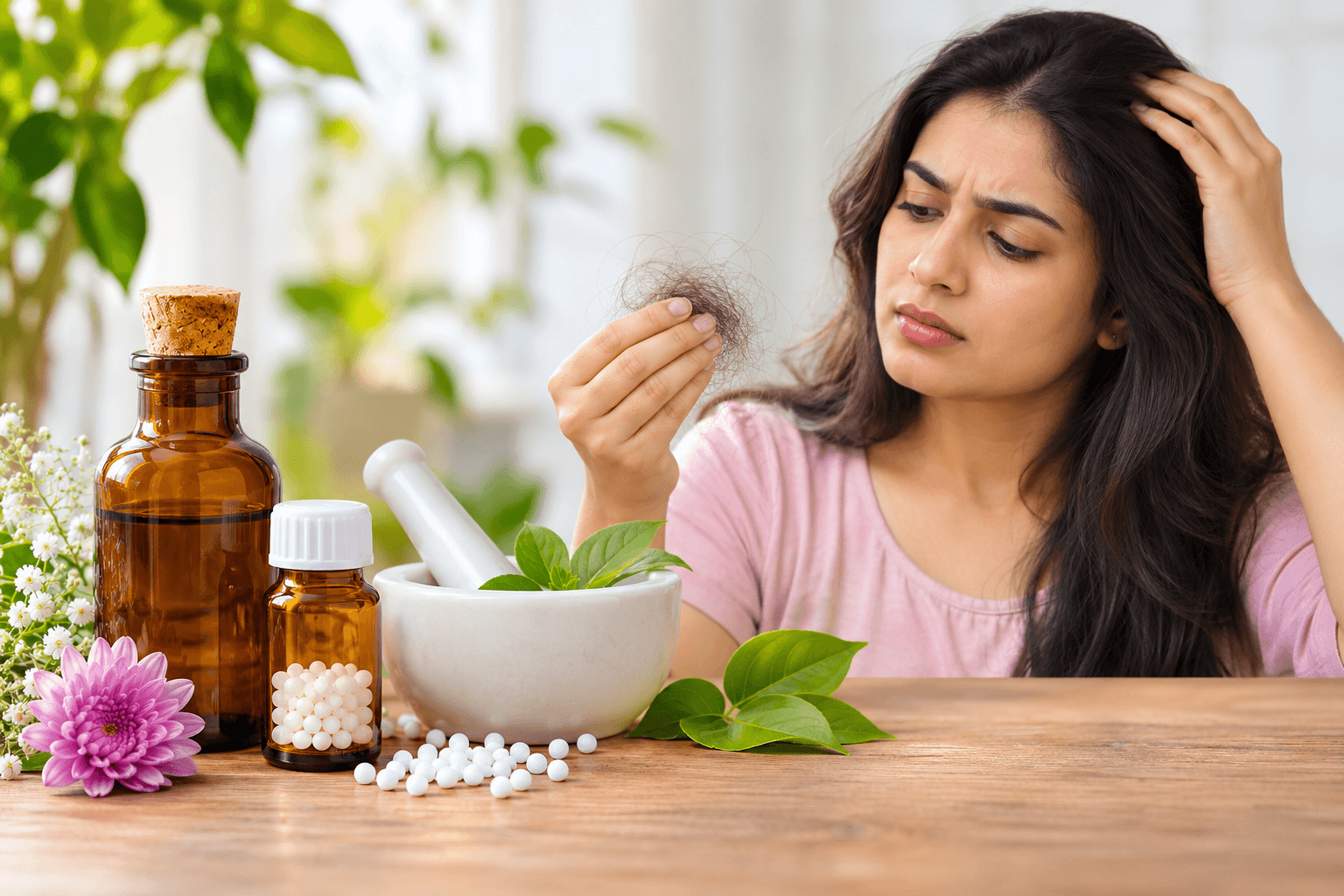
Homeopathy treatment for hair loss addresses underlying triggers such as hormonal shifts, nutritional gaps, stress, or autoimmune patterns rather than just suppressing shedding. A qualified homeopath selects a remedy based on your complete symptom picture, including hair texture, scalp condition, emotional state, and general health. If you are exploring Homeopathy Treatment in Dubai, the approach typically combines individualized oral remedies with practical scalp care and follow-up monitoring.
What Hair Loss Actually Involves
Hair grows in a predictable cycle. Around 85% of scalp hairs are in the growth stage at any time, lasting two to six years. A shorter regression stage follows, then a resting stage of about three months before old hairs shed and new ones begin. Losing roughly 70 to 100 hairs daily is normal in adults and usually needs no treatment. Concern arises when shedding accelerates suddenly, exceeds that range, or produces visible thinning patches.
Common triggers include acute illness, chemotherapy, radiation therapy, thyroid or kidney disorders, severe emotional stress, post-delivery hormonal changes, menopause, age-related pattern baldness, and family history. Women often notice hair loss during puberty, after childbirth, and around menopause because of fluctuating hormones. Men more commonly develop male pattern baldness linked to genetics and age.
How Homeopathy Approaches Hair Loss
Homeopathy does not treat “hair loss” as one uniform condition. A practitioner evaluates the pattern, onset, scalp symptoms, and associated complaints before prescribing. Two people with similar thinning may receive different remedies because their overall presentations differ.
The process usually involves:
- Detailed case history covering sleep, digestion, stress, temperature preferences, and menstrual or hormonal patterns where relevant
- Examination of the scalp for dryness, oiliness, dandruff, or patchy involvement
- Review of recent illnesses, medications, or nutritional deficiencies
- Selection of a remedy matched to the individual, not just the symptom
- Follow-up at intervals to assess shedding, regrowth, and any side effects
Common Homeopathic Remedies for Hair Loss
Several remedies appear frequently in clinical practice. The choice depends on the full picture.
| Remedy | Typical Indications | Notes |
| Rosmarinus Officinalis | Diffuse thinning, weak hair roots, dry scalp | Often used in mother tincture form for topical or oral support |
| Lycopodium Clavatum | Hair loss after childbirth or menopause, premature greying | Suited to individuals with digestive complaints and anxiety |
| Phosphorus | Hair falling in handfuls, especially after illness or emotional stress | May suit those with sensitivity to noise and light |
| Natrum Muriaticum | Hair loss with oily scalp, dandruff, or grief-linked shedding | Often considered when emotional reserve is prominent |
| Silicea | Brittle hair, slow regrowth, weak nails | May suit those with low stamina and poor nutrient absorption |
| Fluoricum Acidum | Patchy hair loss, especially in sunlight-exposed areas | Historically associated with alopecia areata patterns |
These remedies are not interchangeable. A homeopath may prescribe one at a time, sometimes alternating based on response. Self-prescribing without a full case analysis often leads to poor results.
What the Research and Clinical Experience Suggest
Homeopathy’s evidence base for hair loss remains limited and debated. Some observational reports and small studies suggest improvements in shedding and regrowth when remedies are individualized, but robust controlled trials are scarce. Current best practice treats homeopathy as a supportive or adjunctive option, not a replacement for investigating medical causes.
An experienced practitioner will first rule out reversible contributors: iron deficiency, thyroid dysfunction, autoimmune conditions, recent infection, or medication effects. If a treatable medical cause exists, that should be addressed alongside or before homeopathic care. A Homeopathy Clinic in Dubai with qualified practitioners typically coordinates with general medicine when blood tests or dermatology referral are needed.
Practical Tips That Improve Outcomes
- Track shedding for two weeks before starting treatment so you have a baseline
- Photograph the scalp under consistent lighting monthly, not daily
- Avoid harsh chemical treatments and tight hairstyles during the initial treatment phase
- Address sleep and protein intake, as both influence the hair cycle
- Be patient: visible regrowth usually takes three to six months because of the resting phase
- Inform your homeopath about all supplements and medications, including biotin or minoxidil
Common Mistakes People Make
- Stopping after four weeks because shedding has not slowed
- Using multiple homeopathic remedies at once without professional guidance
- Ignoring blood tests that could reveal thyroid or iron problems
- Expecting a remedy to override chemotherapy or severe nutritional deficiency
- Confusing normal daily shedding with treatment failure
When to Seek In-Person Care
Consult a qualified professional if hair loss is patchy, scarring, painful, or accompanied by scalp redness, scaling, or systemic symptoms like fatigue and weight changes. Sudden clumps of hair, especially after illness or childbirth, often settle with time, but a proper assessment helps rule out underlying disease. For those seeking a Female Homeopathy Doctor in Dubai, many clinics offer consultations tailored to hormonal and postpartum hair concerns.
The team at calcium clinic provides individualized homeopathic consultations for hair loss, including assessment of hormonal, nutritional, and stress-related factors. To book a session or ask about treatment options, contact us directly.
FREQUENTLY ASKED QUESTIONS
1.Is the American Hair Loss Association legit?
Yes, the American Hair Loss Association is a recognized nonprofit consumer organization focused on hair loss education, research awareness, and support for those affected. It is not a homeopathic body, but its public resources on causes and treatment options are widely referenced.
2.What causes splotchy hair loss?
Splotchy or patchy hair loss is most often caused by alopecia areata, an autoimmune condition where the body attacks hair follicles. It can also result from fungal infections like ringworm, traction from certain hairstyles, or scarring conditions, so a dermatology assessment is recommended.
3.How to deal with hair loss mentally?
Acknowledge the distress without letting it drive impulsive treatments. Tracking progress objectively, joining a support group, and working with a practitioner who sets realistic timelines all help. Some people benefit from counseling, especially when hair loss follows grief, illness, or major hormonal changes.
4.When do people lose hair?
Hair loss can occur at any age, but it commonly increases after acute illness, during postpartum and menopausal transitions in women, and with advancing age in men. Normal daily shedding of 70 to 100 hairs happens throughout life and does not indicate a problem.