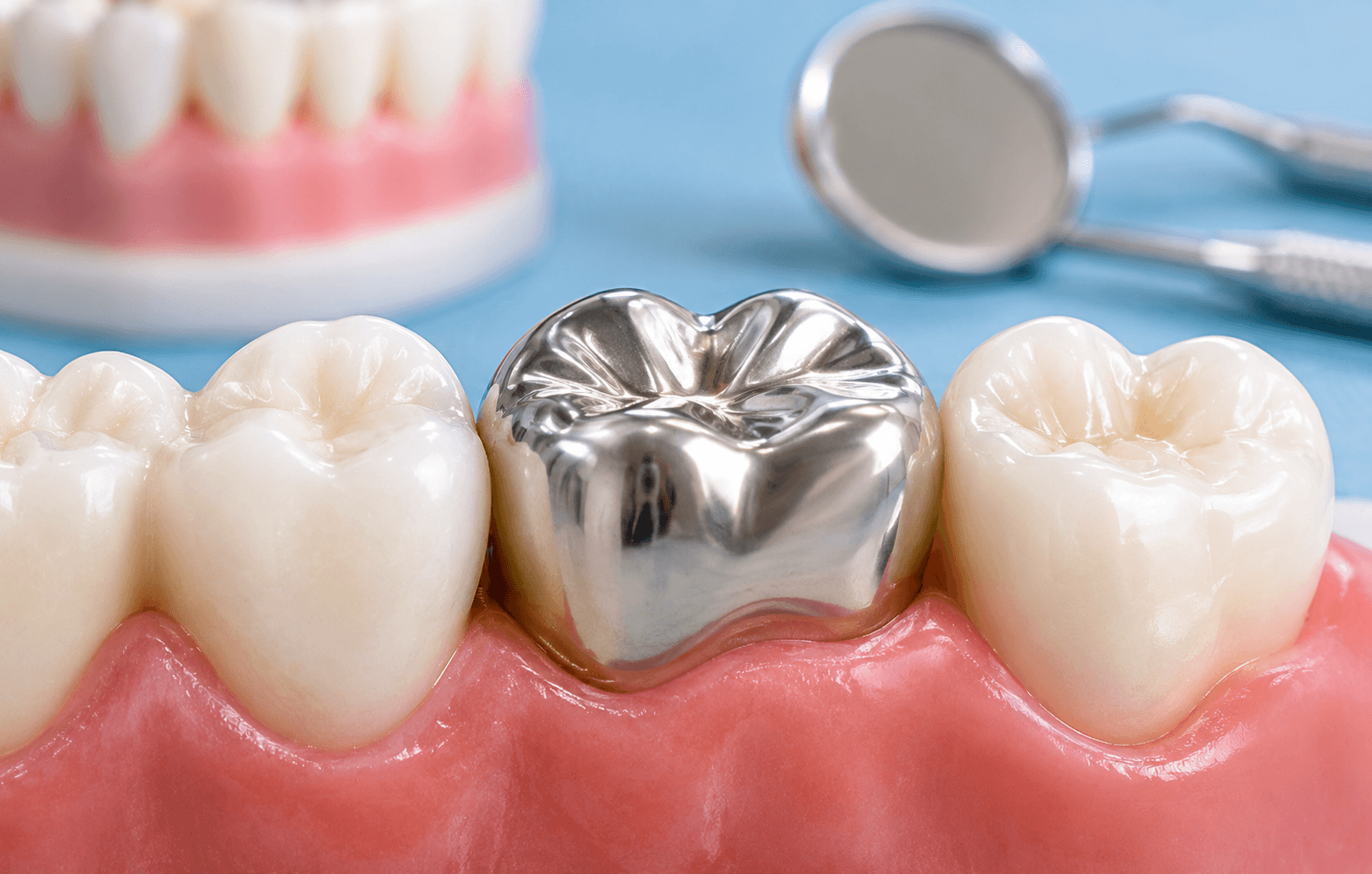
Metal Dental Crowns is a tooth-shaped cap made from metal alloys that fully covers a damaged or weakened tooth above the gum line. Dentists still use metal crowns regularly, especially for back teeth, because they are exceptionally durable and require less natural tooth removal than other crown materials. The most common metals include gold alloys, palladium, nickel, and chromium, often blended for strength and biocompatibility.
If you are weighing your options, the team at Calcium Clinic can help you understand whether a metal crown suits your specific tooth, bite, and budget.
What You Are Getting With a Metal Crown
Metal crowns fall into a few distinct categories, and the differences matter more than most people expect.
| Crown Type | What It Is Made Of | Best Used For | Notable Trade-Off |
| Full gold alloy | Gold mixed with copper, silver, platinum, or palladium | Back molars, heavy grinders | Most expensive metal option, highly visible |
| Base metal alloy | Nickel, chromium, or cobalt blends | Back teeth, budget-conscious cases | Very strong, possible metal sensitivity |
| Porcelain fused to metal | Metal base with tooth-colored porcelain outer layer | Front or visible premolars | Aesthetic compromise, porcelain can chip |
Gold alloys remain a gold standard for posterior crowns because they wear at a rate similar to natural enamel and rarely fracture. Base metal alloys are harder and more resistant to wear, but some patients with nickel sensitivity may react to them. Porcelain fused to metal crowns attempt to solve the visibility problem, yet the porcelain layer can chip over time, exposing the metal underneath.
Why Dentists Still Recommend Metal Crowns
The search intent here is often practical: people want to know if metal crowns are outdated or a smart choice. The answer is that they remain a smart choice in specific situations.
Metal crowns need less tooth structure removed during preparation. Because the material is strong even in thin sections, the dentist can preserve more healthy tooth. This matters for long-term tooth survival.
They also tolerate biting forces extremely well. For patients who clench, grind, or have a history of cracking ceramic crowns, a full metal crown on a molar is often the most predictable restoration available. Well-established clinical experience shows metal crowns lasting several decades with proper oral hygiene, typically longer than all-ceramic alternatives in the posterior region.
The main disadvantages are aesthetic: the metallic color is impossible to hide, and some patients dislike the idea of visible metal in the mouth. Temperature sensitivity can also occur because metal conducts heat and cold more readily than ceramic, though this usually settles once the tooth adjusts.
What the Procedure Involves
The process follows the standard crown sequence. The dentist numbs the area, reshapes the tooth to create space for the crown, and takes an impression or digital scan. A temporary crown protects the prepared tooth while the laboratory fabricates the permanent metal crown. At a second visit, the dentist checks the fit, bite, and contacts, then cements the crown in place.
Common mistakes people make include assuming a metal crown needs no flossing. The margin where the crown meets the tooth can still decay, so cleaning around it is essential. Another mistake is delaying the crown after a root canal on a back tooth, which increases the risk of fracture before the crown is placed.
Cost Factors Without the Numbers
Pricing varies by region, material choice, laboratory fees, and whether additional procedures are needed. Gold alloy crowns typically cost more than base metal crowns because the material itself is more expensive. A porcelain fused to metal crown often sits between full metal and all-ceramic options. Insurance coverage also differs, with many plans reimbursing a portion of the crown cost based on the least expensive alternative.
For patients in the UAE looking for affordable options, searching for a Cheap Dentist in Dubai or a Cheap Dental Clinic Deira can help locate practices that offer transparent pricing on restorative work. When comparing options, ask whether the quoted fee includes the temporary crown, the laboratory cost, and any adjustments after placement.
Choosing the Right Provider
The longevity of a metal crown depends heavily on the fit and the health of the underlying tooth. A well-fitted crown with sealed margins can last for decades, while a poorly adapted one can allow decay underneath. This is why the skill of the dentist matters as much as the material.
If you are considering Dental crowns in dubai, look for a provider who explains the material options clearly and shows you examples of previous work. Practices offering Dental Crowns & Bridges in Deira often handle a high volume of restorative cases, which can translate to practical experience with different crown types. The Best Dentist in Deira, Dubai will typically assess your bite, grinding habits, and the condition of the adjacent teeth before recommending a material.
For broader treatment needs, checking the Services list at a clinic can clarify whether they handle crowns, bridges, implants, and preventive care under one roof. The Best Dental Clinic in Deira Dubai will usually provide a full range of restorative options rather than pushing a single material for every case.
What to Do Next
If you have a damaged back tooth, a cracked filling, or a root canal-treated molar, a metal crown may be the most durable and tooth-conserving choice. Book an appointment with a dentist who can examine the tooth, take radiographs, and discuss whether a full metal or porcelain fused to metal crown fits your situation. Acting before the tooth fractures or decays further usually means a simpler, less expensive restoration.
Book an appointment for your dental crown concerns
FREQUENTLY ASKED QUESTIONS
1.Do dentists still use metal crowns?
Yes. Metal crowns remain a standard restorative option, particularly for molars and premolars where chewing forces are highest and aesthetics are less visible.
2.What are the disadvantages of a metal crown?
The main drawbacks are the metallic appearance, possible thermal sensitivity to hot and cold, and the rare risk of an allergic reaction to nickel in base metal alloys.
3.How long does a metal dental crown last?
With good oral hygiene and regular dental check-ups, a metal crown can last several decades, often outperforming ceramic crowns in the back of the mouth.
4.What is a metal dental crown?
A metal dental crown is a custom-made cap fabricated from a metal alloy, designed to cover and protect a damaged, decayed, or root canal-treated tooth.