The short answer to “can dental bone graft cause cancer” is no. Routine dental bone grafting is not known to cause cancer, and cancer is not listed as an expected or typical complication in standard oral surgery guidance. At Calcium Clinic, a Best Dental Clinic in Deira Dubai, this question usually comes from patients who are about to have a graft before an implant. If you are looking for a Cheap Dentist in Dubai, you can discuss this concern during your consultation.
What the current evidence actually shows
- Standard dental bone grafting materials are not classified as carcinogens, and current clinical reviews do not list cancer as a routine risk.
- Human donor bone used in grafts is screened and regulated as a human cell and tissue product, with donor eligibility rules aimed at disease transmission.
- The more relevant long-term issue is chronic inflammation around implants, which is examined separately from the graft itself.
- People with a history of oral cancer or head and neck radiation should have individual planning, not a blanket avoidance of bone grafts.
The concern is understandable, but it is rooted more in language and rare case reports than in how dental bone grafts actually behave.
What a dental bone graft actually does
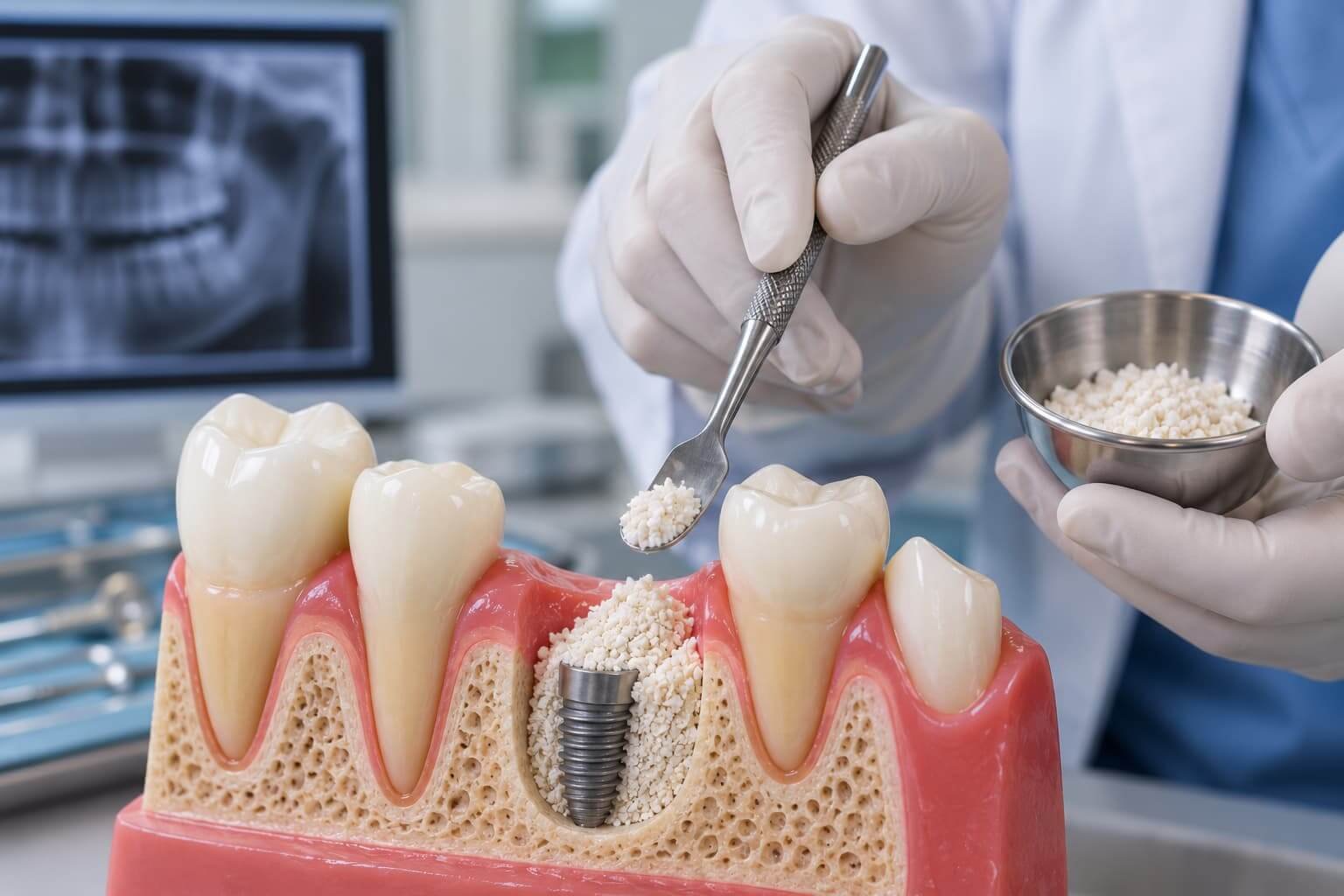
A dental bone graft rebuilds jawbone that has shrunk after tooth loss, periodontal disease, or trauma. The material is placed where bone volume is needed, and the body gradually replaces it with natural bone during healing. It is often recommended before dental implants, after an extraction, or to repair bone loss from gum disease. Our Services include this procedure as part of implant preparation.
The key point is that the graft is a scaffold, not a mass of actively dividing cells. Cancer grows from genetic mutations that override normal cell regulation. A processed bone graft does not work that way.
Graft materials and the cancer question
| Material type | Source | Main role | Cancer-related concern |
| Autograft | Patient’s own bone | High integration potential | None expected; it is the patient’s own tissue |
| Allograft | Licensed human donor bank | Common for implant preparation | Screened for disease transmission; no cancer link established |
| Xenograft | Bovine or porcine bone from licensed bank | Structural preservation | Processed mineral scaffold; no living cells |
| Synthetic alloplast | Hydroxyapatite or other lab-made substitute | Controlled resorption rates | Biocompatible; no donor tissue |
The real risks to discuss instead
The actual complications to review before a dental bone graft are infection, bleeding, swelling, pain, nerve irritation, sinus issues in the upper jaw, and graft failure where the material does not integrate. Infection is the most important early safety issue. A failed graft can delay implant placement, but it is not the same biological process as cancer. Dental crowns in dubai are often placed after the implant integrates successfully.
Initial healing typically takes about a week, but full bone graft maturation can take up to a year. That timeline matters more for implant planning than for cancer risk.
Where the cancer fear comes from
Some patients confuse dental bone grafting with bone morphogenetic proteins used in other surgeries, especially spinal procedures. Those are signaling proteins, not routine dental graft material. Others hear donor bone and think of disease transmission. In the United States, human donor tissues used in dental grafts are regulated as human cells, tissues, and cellular and tissue-based products, with donor screening and processing standards.
Dental implant cancer fears usually trace back to oral squamous cell carcinoma appearing near an implant. A systematic review of oral cancer around dental implants did not establish a causal link. Severe chronic inflammation around an implant, called peri-implantitis, has been studied as a possible local risk factor, but that is a separate issue from the graft material itself. One published implant analysis calculated a standardized incidence ratio of 0.00017, which is a very low risk figure. If you are seeking a Cheap Dental Clinic Deira for implant-related care, you can ask about these statistics during your visit.
What to ask instead of “can this cause cancer”
A good question to ask your dentist is about the specific graft material they plan to use and why they chose it for your case. You can also ask about the surgeon’s experience with the procedure, the expected healing timeline, and what signs of infection or graft failure you should watch for. For those considering implant-supported restorations, Dental Crowns & Bridges in Deira are a common follow-up treatment. If you are still concerned, ask for a referral to an oral medicine specialist who can review your individual risk profile. The Best Dentist in Deira, Dubai will take the time to explain the evidence and address your worries directly.