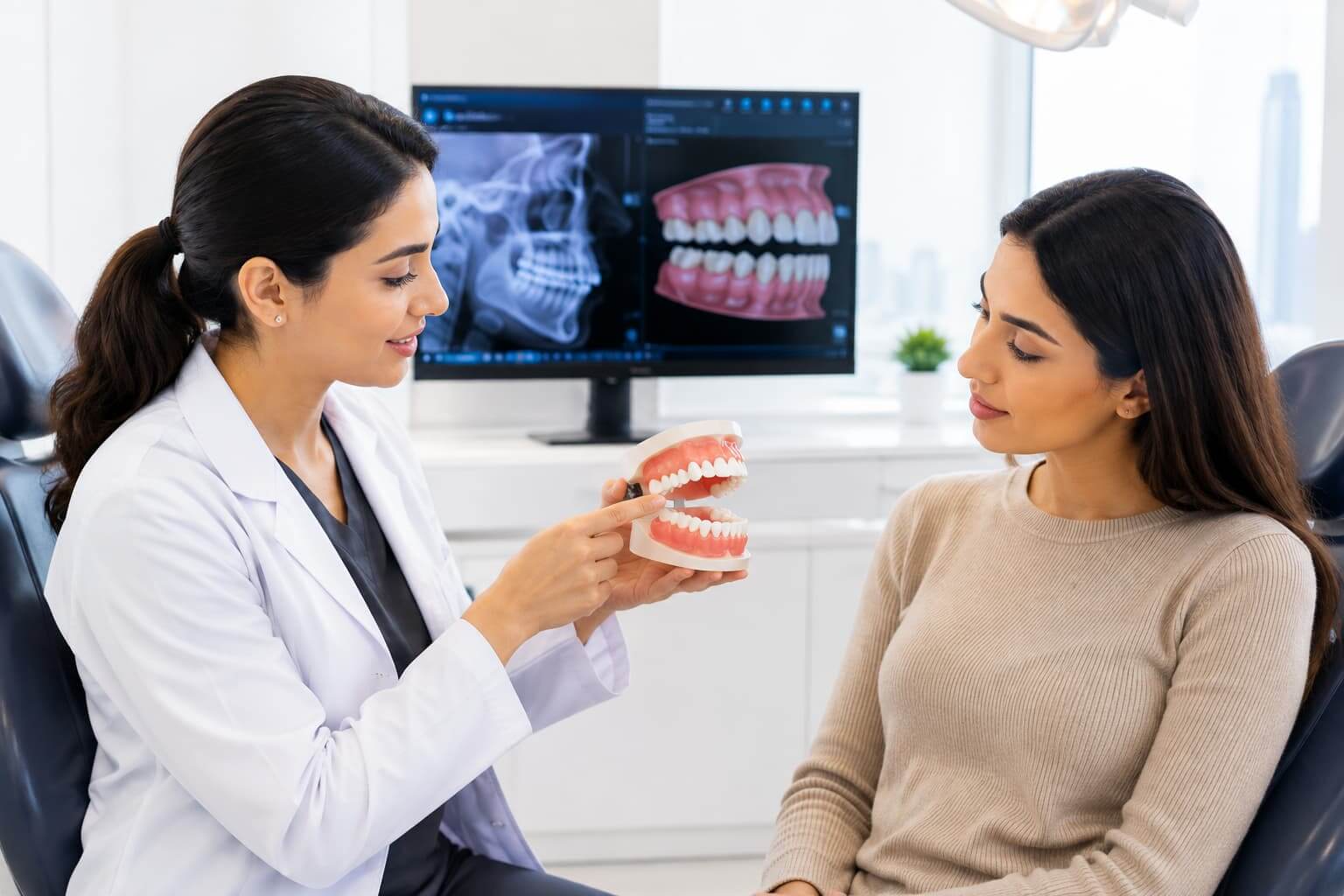
what is malocclusion? A jaw shuts, and teeth don’t line up. That’s malocclusion.
Upper and lower teeth end up misaligned somehow, and the whole bite gets thrown off because of it. Nothing complicated about the basic idea.
So what’s actually behind the term what is malocclusion, and why should anyone bother caring past how their smile photographs? Good question honestly. This piece walks through the types of misalignment out there, what tends to cause them, and specifically what happens when nobody deals with it for years. Spoiler, it doesn’t stay small. Dealing with bite issues yourself and want real guidance from the Best Dental Clinic in Deira Dubai? Keep reading before deciding anything.
The Basics of Malocclusion
At its core it’s a mismatch. Upper jaw against lower jaw. Or sometimes just individual teeth crowding each other out in a mouth that ran out of room.
Some cases are so mild only a dentist would catch them during a routine check. Others mess with chewing. With speech. With how your jaw feels on some random Tuesday for no obvious reason.
Break the word down and it’s not complicated at all. “Mal” means bad. “Occlusion” means bite. So what is malocclusion once you strip the dental school vocabulary away? A bad bite. Teeth that just don’t meet the way they’re supposed to.
Types of Malocclusion
Three categories, generally, based on how teeth and jaws sit relative to one another.
Class 1 Malocclusion
By far the most common one. The bite itself is roughly fine but individual teeth are crowded, twisted or spaced oddly.
Class 2 Malocclusion
Overbite. Upper teeth and jaw sit noticeably further forward than the lower set.
Class 3 Malocclusion
Underbite, essentially the opposite. Lower jaw pushes forward past the upper one so the bottom teeth end up in front.
Quick Comparison Table
| Type | Common Name | Key Feature |
| Class 1 | Neutrocclusion | Normal bite, crowded or misaligned teeth |
| Class 2 | Overbite | Upper teeth positioned too far forward |
| Class 3 | Underbite | Lower jaw extends beyond upper jaw |
Knowing which type fits shapes everything that comes after. It’s basically what decides the right malocclusion treatment path.
What Actually Causes It
Genetics mostly, or habits. Sometimes both working together.
Jaw size and shape often just get passed down from a parent, nothing you did wrong there. Thumb sucking or a pacifier that hung around way past toddler years plays a part too. So does losing baby teeth early, since that lets everything else drift into the gap. Add tongue thrusting, mouth breathing, or years of neglected dental care that let decay or tooth loss quietly shift things around, and you’ve got most of the usual list.
Families tend to share this more than people expect. Jaw structure and tooth positioning run in bloodlines the same way height or eye color does.
How This Actually Affects Your Oral Health
Not cosmetic. That’s the first thing worth clearing up.
Crowded, crooked teeth are harder to clean. Food and plaque sit in spots a toothbrush just can’t reach properly, and that raises cavity risk along with gum disease over time. Uneven bite pressure wears certain teeth down faster than others too. Chips and fractures show up eventually, sometimes seemingly out of nowhere, though the real cause was years in the making.
Some people end up with jaw pain. Headaches. Trouble chewing without discomfort. Speech can shift too depending on how tooth position interferes with certain sounds. And plenty of people who eventually need something like Dental Crowns in Dubai can trace the root cause back to an untreated bite problem from years earlier, one nobody flagged in time.
Treatment Options Worth Knowing
Depends on severity. Depends on type. A full exam with X-rays usually comes first before any dentist or orthodontist commits to a plan.
Braces handle moderate to severe cases well. Clear aligners work for milder ones. Retainers follow afterward to lock results in place. Extraction sometimes becomes necessary with severe crowding, and jaw surgery exists for extreme skeletal cases, though that’s genuinely rare.
Getting checked by a Cheap Dentist in Dubai early matters here. Catch it before it snowballs and the whole malocclusion treatment process tends to be simpler.
When to Actually See Someone About It
Visible crowding. Trouble biting or chewing. Jaw clicking, popping, gaps that weren’t there last year. Any of these, worth a look.
Kids should get evaluated around age seven if early signs show up, since catching things while the jaw’s still developing usually means less invasive treatment down the road. Services related to orthodontic evaluation is a reasonable place to start if you’re not sure whether this applies to you.
Final Thoughts
So, what is malocclusion when you zoom out? More than a cosmetic issue. Misaligned teeth and jaws touch cleaning ease, cavity risk, jaw comfort and speech clarity, all of it, over time.
Catching it early and following through with proper malocclusion treatment protects function as much as appearance. A routine check at Cheap Dental Clinic Deira or more involved work like Dental Crowns & Bridges in Deira, either way, dealing with it sooner beats dealing with it later.
Want personalized guidance from the Best Dentist in Deira, Dubai? Calcium Clinic runs thorough evaluations to figure out whether correction is actually needed and what path fits your case.
Noticing signs of malocclusion or worried about your bite? Schedule a consultation today for an assessment built around what’s actually going on with you, not a generic checklist.
Frequently Asked Questions
What is malocclusion in kids specifically?
Same misalignment as adults but usually driven by thumb sucking, early tooth loss or how the jaw happens to grow during childhood.
Does it get worse without treatment?
Yes, especially while a child’s jaw is still growing. Adults see slow worsening too, mostly from ongoing bite pressure over years.
Is treatment always necessary?
No. Mild cases with no functional impact sometimes just get monitored. A dentist should decide this case by case though, not a blanket rule.
How long does treatment take?
A few months for mild cases. Two years or more for complex orthodontic work. Wide range, depends entirely on severity.
What happens if it’s ignored for years?
Higher cavity risk, gum issues, worn or cracked teeth, sometimes chronic jaw pain that gets tougher to fix the longer it sits untouched.
Does fixing it always mean braces?
Not always. Mild cases might just need monitoring or a small intervention. More involved ones need braces, aligners, occasionally surgery.
Can adults still get treated?
Yes. Jaw growth’s finished by adulthood so some surgical routes are off the table, but braces and aligners work fine at any age.