
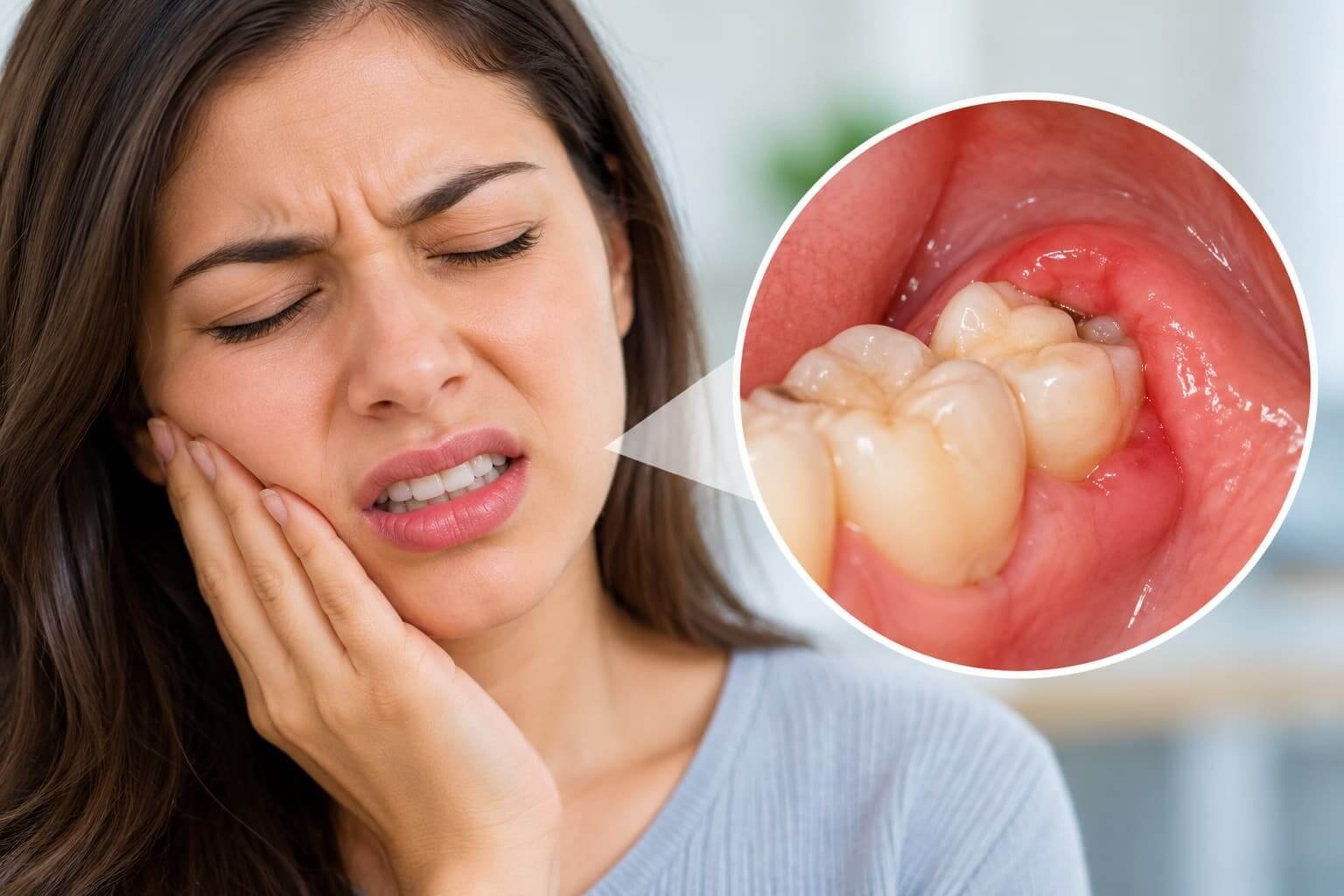
Wisdom Teeth Hurting Gums?Sore, swollen gums around a wisdom tooth usually point to pericoronitis, an inflammation that develops when a wisdom tooth only partially breaks through the gum. A flap of gum tissue, called an operculum, traps food and bacteria underneath it, creating irritation or infection. The pain can range from a dull ache to sharp discomfort when chewing, and it rarely resolves on its own without attention. If the pain is persistent, a visit to the Best Dental Clinic in Deira Dubai can help determine whether the tooth needs treatment or removal.
What Your Gums Are Telling You
Gum pain near a wisdom tooth is a signal that something mechanical or bacterial is happening at the back of the mouth. The most common trigger is a partially erupted tooth. Because wisdom teeth are the last to arrive, often between the late teens and mid-twenties, there is frequently not enough room for them to come in cleanly. The tooth may sit at an angle, push against the molar in front, or stay half-buried under gum tissue.
That half-buried state is the problem. The operculum creates a pocket that a toothbrush cannot reach. Food debris settles there, bacteria multiply, and the tissue becomes red, tender, and swollen. In some cases the swelling spreads to the cheek or jaw, and the person notices a persistent bad taste or breath that does not improve with brushing.
Other causes include pressure from a tooth that has no space to erupt, decay in a wisdom tooth that is difficult to clean, or gum irritation from the opposing tooth biting down on swollen tissue. Less commonly, gum pain appears years after wisdom teeth were removed, which is usually unrelated to the teeth themselves and more likely linked to gum recession, a nearby molar, or a healing site that needs evaluation.
Signs That Need Attention
Not every twinge at the back of the mouth is an emergency, but certain signs suggest the problem is moving beyond mild irritation. Pain when chewing or swallowing, stiffness in the jaw, trouble opening the mouth fully, and swelling that extends into the cheek or neck are all reasons to see a dentist promptly. An unpleasant taste that lingers, or bad breath that returns quickly after brushing, often means trapped bacteria are actively breaking down food under the gum flap.
A dental examination can distinguish between simple inflammation and an infection that needs antibiotics or drainage. Delaying care allows infection to spread into deeper spaces of the jaw and throat, which is rare but serious.
Home Relief That Actually Helps
Home care will not fix the underlying cause, but it can reduce discomfort until a dental visit happens. The most effective measure is a warm saltwater rinse: about one teaspoon of salt in a glass of warm water, swished gently for 30 seconds, two or three times a day. This helps flush debris from under the gum flap and calms inflamed tissue.
Over-the-counter pain relievers such as ibuprofen or acetaminophen can manage pain and reduce swelling when taken as directed. Ibuprofen has the added benefit of addressing inflammation. Keeping the area clean is important, but brushing too hard over swollen gums makes things worse. A soft-bristled brush and gentle pressure around the back teeth are safer.
One common mistake is using mouthwash with high alcohol content, which can sting and further irritate already inflamed tissue. Another is poking at the gum flap with fingers, toothpicks, or cotton buds in an attempt to dislodge food. That usually pushes debris deeper and introduces more bacteria.
| Symptom | Likely Meaning | What to Do |
| Mild soreness, red gum behind last molar | Early pericoronitis or eruption pressure | Saltwater rinses, gentle cleaning, monitor for 2 to 3 days |
| Swelling, bad taste, pain when chewing | Trapped debris under gum flap, possible infection | See a dentist soon; avoid poking the area |
| Difficulty opening mouth, cheek or jaw swelling | Spreading infection | Prompt dental or medical care |
| Gum pain years after wisdom tooth removal | Unrelated gum issue or nearby tooth problem | Dental evaluation to identify the real source |
How a Dentist Treats the Problem
After examining the tooth and surrounding gum, a dentist may recommend one of several approaches depending on severity. A deep cleaning can remove trapped debris and bacteria from under the gum flap. If infection is present, antibiotics may be prescribed to control it before any further treatment.
For a gum flap that keeps causing trouble, a minor procedure can remove the excess tissue, eliminating the pocket where food collects. This works well when the tooth itself is healthy and has enough room to erupt fully. When the tooth is impacted, angled, decayed, or repeatedly infected, removal is often the more practical long-term solution. The decision depends on the tooth’s position, the patient’s age, and how many episodes of pericoronitis have already occurred.
Some patients ask about Dental crowns in dubai or Dental Crowns & Bridges in Deira when a wisdom tooth is damaged, but in most cases a problematic wisdom tooth is extracted rather than restored. Crowns are better suited to teeth that are accessible, functional, and worth preserving. A wisdom tooth that is hard to clean and already causing repeated gum infections is rarely a good candidate.
Prevention and Ongoing Care
Once a wisdom tooth has caused gum pain, it is likely to cause it again unless the underlying issue is addressed. Even after symptoms settle, the gum flap remains, and the same pocket will collect debris again. Regular dental check-ups allow a dentist to monitor eruption and catch problems before they become painful. For people who have had one episode of pericoronitis, the current recommendation is often to remove the tooth rather than wait for a second or third infection.
For those who choose to keep a partially erupted wisdom tooth, meticulous cleaning is non-negotiable. A small interdental brush or an oral irrigator can help flush the area, but these tools require care to avoid forcing debris deeper. A dentist or hygienist can demonstrate the right technique.
If cost is a concern, options such as a Cheap Dentist in Dubai or a Cheap Dental Clinic Deira can provide an assessment and discuss treatment choices without unnecessary procedures. The key is to have the area examined before pain becomes an emergency. You can review the available Services and Book Appointment to get a clear diagnosis and a plan that fits the situation. For persistent wisdom tooth pain, seeking out the Best Dentist in Deira, Dubai ensures the area is properly evaluated.
FREQUENTLY ASKED QUESTIONS
1. What to do if my gums around my wisdom teeth hurt?
Start with warm saltwater rinses two to three times a day and keep the area clean with a soft-bristled brush. Over-the-counter pain relievers can help manage discomfort. If pain persists beyond a few days, or if swelling, bad taste, or difficulty opening the mouth develops, see a dentist for an examination.
2 Do your wisdom teeth make your gums hurt?
Yes. As wisdom teeth erupt, they push through gum tissue, which can cause soreness even when the tooth is coming in normally. When a tooth is partially erupted or impacted, the gum over it is more likely to become inflamed or infected, making the pain more persistent.
3 How long does gum pain from a wisdom tooth last?
Mild eruption discomfort typically settles within a few days to a week. Pain from pericoronitis can last longer and tends to recur because the gum flap continues to trap debris. If pain lasts more than a week or keeps returning, the underlying cause needs dental treatment.
4 What are the early signs of wisdom tooth decay?
Early decay in a wisdom tooth often causes sensitivity to sweet, hot, or cold foods, a visible dark spot or hole, and sometimes a dull ache. Because wisdom teeth are hard to clean, decay can progress quickly. A dentist can detect early decay before it reaches the nerve and causes more severe pain.