
TMJ is the joint that connects your jaw to your skull, one on each side of your face. When a dentist brings it up as a problem, not just as anatomy, they usually mean something’s gone wrong with that joint. Clicking, soreness, a jaw that catches when you try to open it wide. That kind of thing.
Honestly, most people ignore this joint completely until it starts acting up. Then it’s a click during dinner, or an ache that won’t quit by the end of the week, and suddenly you’re up at midnight typing “what is TMJ in dentistry” into Google trying to figure out if you need to actually do something about it. So here’s the rundown, why it happens, what it tends to feel like, what dentists actually do about it, and when it’s worth just booking a visit somewhere like the Best Dental Clinic in Deira Dubai instead of guessing.
What This Joint Is Even Doing
It’s not like a door hinge, swinging one direction. It slides forward as it rotates, and that combination is the only reason you can chew and talk without thinking about either one. You’ve got two of them, working as a pair, and most of the trouble starts when one side quietly stops keeping up with the other. You don’t usually notice right away either. It just kind of creeps in.
Dentists have a proper name for the disorder, temporomandibular disorder, TMD if you’re being clinical about it. Nobody outside a dental office actually says that though. Everyone just says TMJ, which if we’re being honest is really what is TMJ in dentistry boils down to in real conversation, a shorthand for the disorder that stuck even though it’s technically the wrong word for it.
Okay, But What Does TMJ Actually Involve
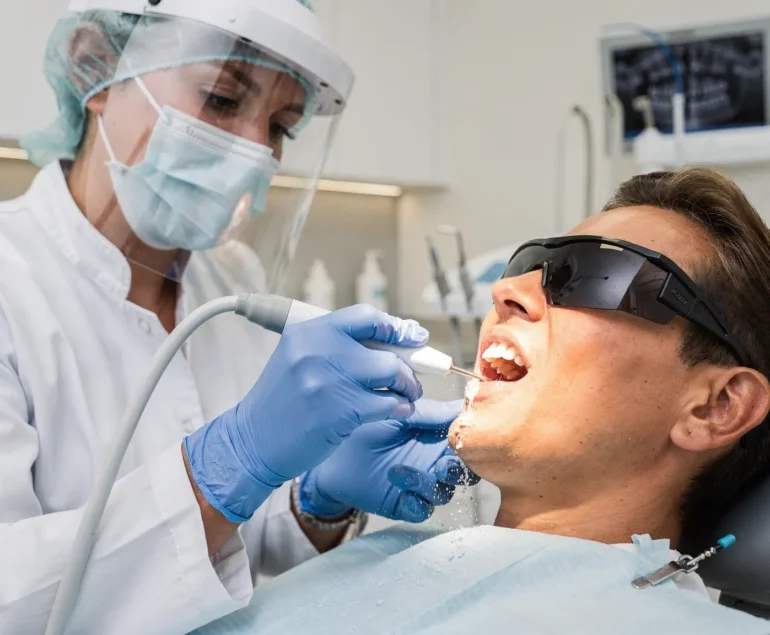
Here’s the thing, a dentist isn’t only looking at the joint when they check for TMJ. They’re looking at the muscles wrapped around it too, and how your teeth actually meet when you bite down. Worn enamel is a clue. So is a bite that’s a little crooked. So is a jaw muscle that just feels tense for no reason you can point to.
There’s rarely one single cause, in my experience talking to dentists about this. It’s more like layers. An old injury from years back. Clenching that became a habit without anyone noticing. A stretch of life that was just stressful enough to leave tension sitting in the jaw, and it never really left.
What Actually Causes It
A few things keep coming up, over and over, in pretty much every case:
- Grinding your teeth at night (a lot of people have no idea they do this)
- A jaw injury, could be a fall, sports, a car accident, whatever
- Arthritis working its way into the joint
- A bite that’s off, sometimes from missing teeth
- Stress, which for some reason likes to settle right in the jaw
- Bad posture that pulls your neck and jaw out of their normal line
Most patients don’t put two and two together until a dentist mentions it out loud. Makes sense though, since the pain likes to show up somewhere weird. Ears get blamed. Temples get blamed. The actual jaw is usually last on the list.
What It Actually Feels Like
For some people it’s just a faint click, barely worth mentioning. For others it’s sharp enough to stop them mid bite. Here’s roughly what shows up and why, laid out simply.
| Symptom | Likely Cause |
| Clicking or popping when opening the mouth | The joint disc has shifted |
| Jaw pain or tenderness | Muscle strain or inflammation |
| Headaches or a dull earache | Pain referred from the jaw muscles |
| Trouble chewing | Uneven bite |
| Jaw locking | Advanced joint dysfunction |
| Swelling near the jaw | Inflammation in the joint |
If anything on there hangs around longer than a week or two, don’t just shrug it off. Get it looked at.
TMJ Treatment, and What Actually Works
There isn’t one fix that covers everyone. It really depends how far along things are, and most dentists start with whatever’s least invasive first, which makes sense.
Start Small
Softer food for a while. A warm compress on the jaw. A handful of stretches. And if stress is part of what’s going on (it usually is, more than people want to admit), actually doing something about that matters more than most people expect. Even cutting back on gum helps, weirdly enough, since it just keeps the joint grinding away for no real reason.
Where the Dentist Comes In
Once home care isn’t cutting it anymore, TMJ treatment usually moves toward a custom night guard, a bite adjustment, or exercises for the jaw muscles that a dentist walks you through. Sometimes though, the real problem is teeth that have worn down unevenly, and something like dental crowns in Dubai ends up fixing more of the jaw pain than you’d think, because it takes care of the bite issue that was causing the TMJ symptoms all along.
When Things Don’t Improve
For the cases that just won’t budge, next up is usually anti-inflammatory medication, joint injections, or, rarely, surgery. Dentists don’t jump to these. They come after simpler TMJ treatment has actually had a fair shot.
Cost is a real factor for a lot of people, and plenty start out searching for a cheap dentist in Dubai who can figure out what’s going on and put together something that fits their budget. TMJ tends to tangle up with other dental stuff too, so fixing it properly usually means pulling from the whole range of dental services, not just one isolated treatment.
When You Should Actually Go In
Not every twinge in your jaw needs an appointment, to be clear. But a few things are worth acting on instead of waiting out:
- Jaw pain that’s been around for weeks, not just a couple days
- Trouble opening or closing your mouth all the way
- The jaw actually locking, stuck open or stuck shut
- Headaches showing up alongside the jaw soreness
- A bite that suddenly feels wrong somehow
Catching it early with a Best Dentist in Deira, Dubai usually means the fix stays simple. Leave it too long and small TMJ issues have this way of turning into bigger, messier ones.
conclusion
At the end of the day, TMJ disorders come down to a joint that isn’t doing its job right, and what that looks like can range from a harmless little click to pain that genuinely gets in the way of your day. Understanding what is TMJ in dentistry really just comes down to catching it early, before a small click turns into something that actually hurts. Night guard, bite adjustment, restorative work, whatever route it ends up being, TMJ treatment tends to make a real difference once you actually start.
If your jaw’s been clicking, aching, or locking up and it’s just not letting up, don’t sit on it. At Calcium Clinic, our team can take a proper look, figure out what’s actually causing it, and put together a TMJ treatment plan that makes sense for you, whether that’s something as simple as a night guard or a bit more hands on. A lot of patients find us while looking for a Cheap Dental Clinic in Deira or checking out Dental Crowns & Bridges in Deira for a related bite problem.
Contact us to get a consultation on the calendar before the discomfort settles in for good.
Frequently Asked Questions
1 Is TMJ actually serious?
Not usually, no. Most cases respond fine to conservative TMJ treatment. But if you let it sit for too long, eating, sleeping, even just talking can get a lot harder than it should be.
2 Can stress really cause this?
Yeah, pretty often actually. Stress has this habit of landing in the jaw as clenching, and over time that just wears the joint down.
3 How long until TMJ treatment actually works?
Mild stuff can ease up in a couple weeks with basic home care. Bigger fixes, like correcting a bite, take longer, sometimes a few months before it really settles.
4 Does TMJ ever just go away by itself?
Sometimes, especially the mild cases. But if it keeps coming back, or getting worse instead of better, that’s usually your sign to stop waiting around.
.