What is dental erosion?It is the permanent loss of tooth enamel caused by acids rather than bacteria. Enamel is the hard, protective outer layer of your teeth, and once it dissolves away, the body cannot regenerate it.
This article explains what dental erosion is, how it differs from tooth decay, the early warning signs, and the practical steps that slow or stop further damage. It also covers restorative options for teeth that have already lost significant structure, with guidance on when to see a dentist such as the team at Calcium Clinic.
How Dental Erosion Differs From Decay
Dental erosion and cavities both damage teeth, but through different mechanisms. Cavities form when bacteria in plaque feed on sugars and produce acid that creates localized holes. Dental erosion is a chemical process. Acids from food, drinks, or the stomach wash over the entire tooth surface and gradually dissolve the enamel layer.
This distinction matters because prevention strategies differ. Fluoride and good brushing help control bacterial plaque, but erosion requires reducing the frequency and duration of acid exposure in the first place.
Common Causes of Dental Erosion
The acids that cause erosion come from two main sources: outside the body and inside the body.
Dietary Acids
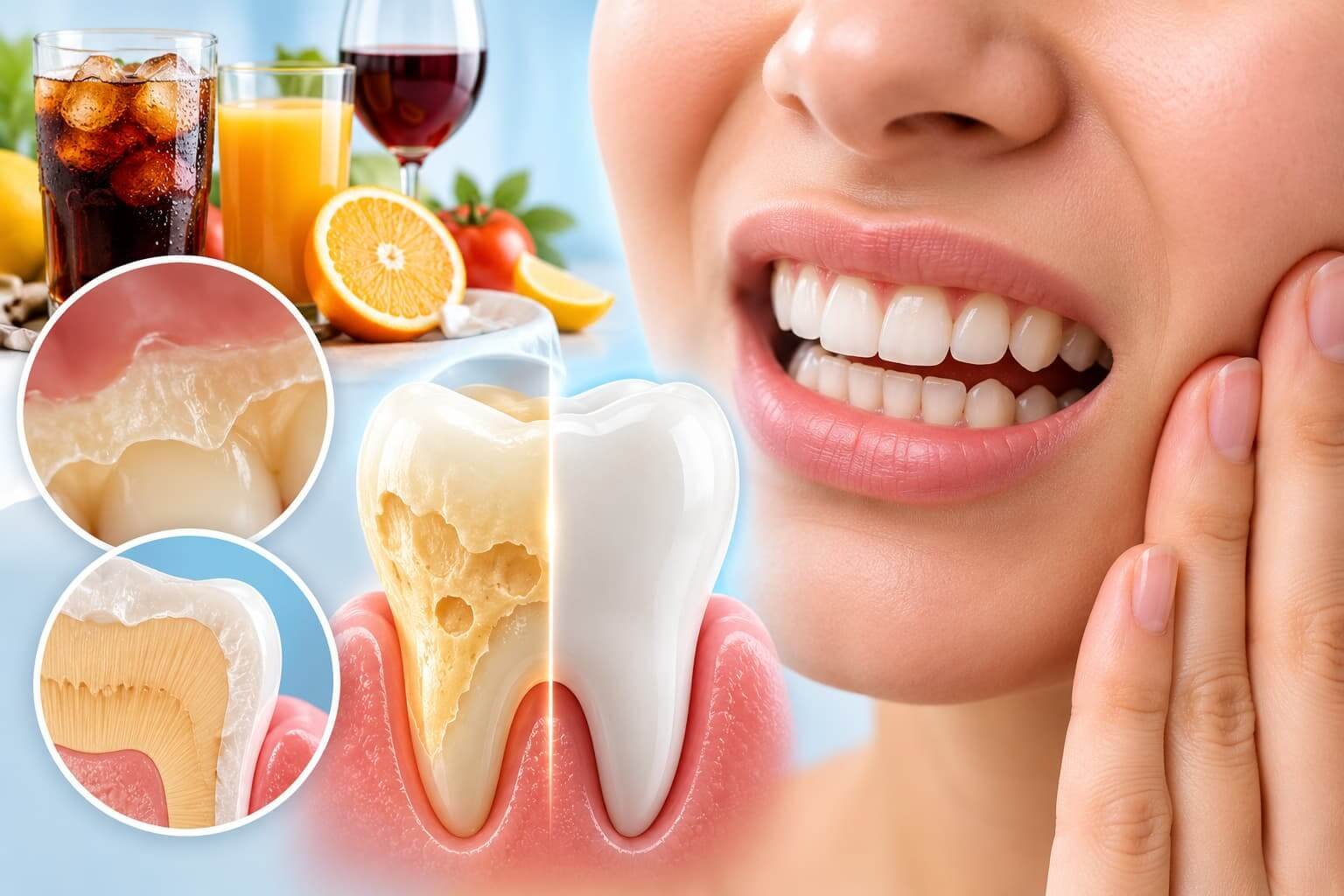
Frequent consumption of soft drinks, fruit juices, sports drinks, wine, and citrus fruits is the most common external cause. Even foods considered healthy, such as oranges, lemons, and apples, can contribute when eaten in large amounts or held in the mouth for long periods. Carbonated water with added fruit flavoring is another often-overlooked source because the carbonation itself creates a mildly acidic environment.
Stomach Acid
Medical conditions that bring stomach acid into the mouth are the main internal cause. Gastroesophageal reflux disease, commonly called GERD, allows acid to travel up the esophagus and into the mouth, often during sleep. Persistent vomiting from eating disorders such as bulimia or from pregnancy-related morning sickness also exposes teeth to powerful stomach acid.
Dry Mouth and Low Saliva Flow
Saliva is the mouth’s natural buffer. It neutralizes acids and supplies minerals that help repair early enamel softening. Any condition or medication that reduces saliva flow, such as certain antihistamines, antidepressants, or blood pressure drugs, leaves teeth more vulnerable to acid attacks.
Early Signs and Symptoms
Dental erosion develops slowly, which means early detection is possible if you know what to look for.
The first sign is often sensitivity. Teeth begin to react sharply to hot, cold, or sweet foods and drinks as the protective enamel thins and the underlying dentin becomes exposed.
Discoloration follows. Enamel is naturally translucent and slightly white. As it wears away, the yellowish dentin underneath shows through, making teeth appear more yellow even with regular brushing.
Changes in tooth shape are a later but distinctive sign. The edges of front teeth may look transparent or glassy. The chewing surfaces of back teeth can develop small dents or cups. Teeth may also feel rough or develop chips and cracks more easily than before.
How Acid Damages Enamel
Understanding the mechanism helps explain why some common habits make erosion worse. When acid touches enamel, it temporarily softens the outer layer. Saliva normally neutralizes the acid and re-hardens the surface over the next 30 to 60 minutes.
Brushing during this window speeds up erosion. The softened enamel is more easily scrubbed away by a toothbrush. Current dental guidance recommends rinsing with water after acidic foods or drinks and waiting at least 30 minutes before brushing.
Foods and Drinks That Cause Enamel Erosion
The table below groups common items by their acid risk level.
| Risk Level | Foods and Drinks | Notes |
| High | Soft drinks, sports drinks, energy drinks, citrus juices | Combine sugar and acid; frequent sipping prolongs exposure |
| Moderate | Wine, coffee, fruit-flavored teas, tomato products | Acidic but often consumed with meals which helps |
| Lower but relevant | Citrus fruits, apples, berries, vinegar-based dressings | Healthy overall; risk rises with frequent snacking |
| Hidden | Flavored sparkling water, chewable vitamin C tablets | Perceived as healthy but still acidic |
Prevention Strategies That Actually Work
Preventing dental erosion requires reducing acid exposure and strengthening the enamel that remains.
Limit the frequency of acidic drinks rather than the total amount. Sipping one soda over several hours is more damaging than finishing it quickly with a meal. Using a straw helps direct liquid past the teeth.
Rinse with plain water after acidic foods or drinks. This dilutes the acid and speeds up the mouth’s return to a neutral pH. Chewing sugar-free gum also stimulates saliva flow.
Use fluoride toothpaste and consider a fluoride mouthwash. Fluoride helps remineralize enamel that has been mildly softened by acid. It cannot rebuild lost enamel, but it can harden what remains and reduce sensitivity.
Address underlying medical conditions. People with GERD or frequent vomiting should work with a physician to manage the source of the acid. A dentist can recommend protective measures such as a neutralizing rinse or a night guard if grinding compounds the problem.
Treatment Options for Existing Erosion
Dental erosion cannot be reversed, but the damage can be managed and restored.
For mild erosion, the focus is prevention and desensitizing products. Fluoride varnishes applied by a dentist can reduce sensitivity and slow further loss.
For moderate erosion affecting appearance or function, bonding with tooth-colored composite resin can rebuild lost structure. This works well for small areas on front teeth.
For severe erosion, dental crowns may be needed. A crown covers the entire visible portion of the tooth and protects it from further acid exposure. The team at Calcium Clinic offers dental crowns in Dubai for patients whose teeth have lost significant structure.
When to See a Dentist
Dental erosion is easy to miss in its early stages because it causes no pain until dentin is exposed. Regular check-ups allow a dentist to spot early signs such as glossy spots, transparency at the edges, or slight cupping on molars before the damage becomes visible or symptomatic.
If you notice increased sensitivity, yellowing that does not improve with cleaning, or teeth that look shorter or more transparent, schedule an evaluation. Early intervention prevents the need for more extensive restorative work later.
Frequently Asked Questions
1.Can dental erosion be fixed?
Dental erosion cannot be reversed because enamel does not regenerate. However, the damage can be managed. Mild cases respond to fluoride treatments and preventive habits. Moderate to severe cases can be restored with bonding, veneers, or crowns that protect the remaining tooth structure.
2.What does teeth erosion look like?
Early erosion makes the edges of front teeth look transparent or glassy. As it progresses, teeth appear more yellow because the darker dentin shows through thinning enamel. Back teeth may develop small dents or cups on the chewing surfaces, and teeth may look shorter or more rounded.
3.How to stop erosion of teeth?
Stop erosion by reducing the frequency of acidic foods and drinks, rinsing with water after acid exposure, waiting at least 30 minutes before brushing, using fluoride toothpaste, and treating any underlying acid reflux or dry mouth condition. Regular dental visits catch early signs before significant damage occurs.
3.What foods cause enamel erosion?
Soft drinks, fruit juices, sports drinks, wine, citrus fruits, and vinegar-based foods are the most common culprits. The risk depends on how often and how long these items contact the teeth. Sipping acidic drinks throughout the day is more damaging than consuming them quickly with a meal.