What Is Periodontitis? Periodontitis is a serious gum disease that affects the gums and the bone and tissues supporting your teeth. It can cause bleeding gums, swelling, bad breath and loose teeth. If it continues to progress, it can eventually lead to tooth loss.
The tricky part is that it does not always hurt. You may notice some blood when brushing or see that your gums have started pulling away from your teeth but otherwise feel fine. That makes it easy to ignore.
If your gums have been bleeding or looking swollen, a checkup at the Best Dental Clinic in Deira Dubai can help find out what is going on.
What Is Periodontitis and How Does It Start?
So what is periodontitis in simple terms? It is gum disease that has progressed beyond the gums and started affecting the tissues and bone around your teeth.
It usually starts with plaque. Plaque builds up on your teeth every day and contains bacteria. If it is not cleaned away properly, the gums can become irritated.
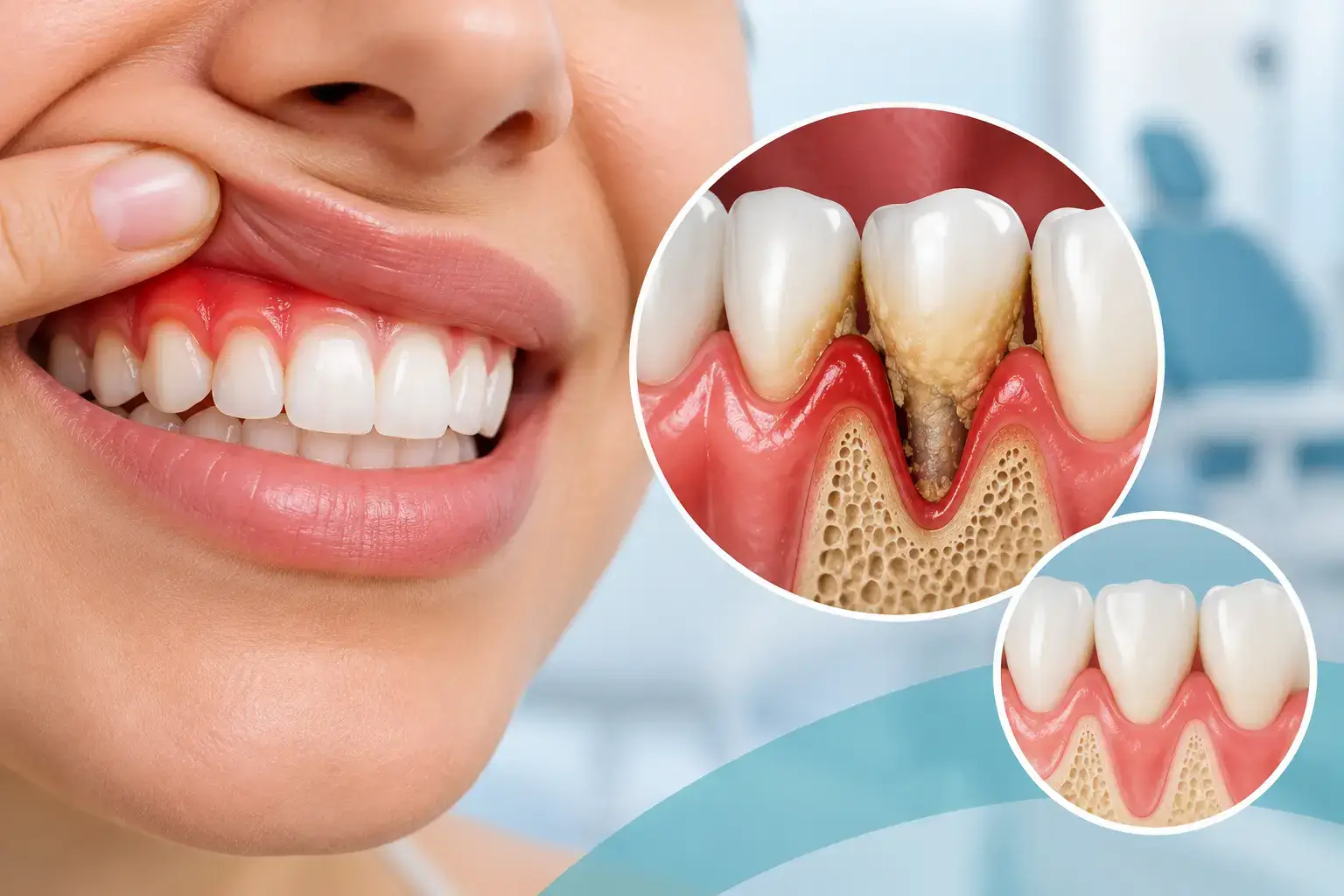
At first, you may notice red or swollen gums that bleed when you brush. This early stage is called gingivitis.
If the inflammation continues, the gums can pull away from the teeth. This creates small spaces called periodontal pockets where plaque and bacteria can collect.
Over time, the tissues and bone supporting the teeth can become damaged. That is when gum disease has progressed to periodontitis.
What Causes Periodontitis?
When people ask what is periodontitis, they often want to know what makes it happen.
Plaque is the main cause, but several other things can increase the risk or make gum disease harder to control.
Common risk factors include:
- Poor brushing and flossing habits
- Smoking or tobacco use
- Diabetes
- Family history of gum disease
- Hormonal changes
- Certain medications
- Some medical conditions
- Missing regular dental checkups
Smoking can affect how the gums heal and may make periodontal treatment less effective. Diabetes can also make gum problems harder to manage, especially when blood sugar is not well controlled.
Having one of these risk factors does not mean you will definitely develop periodontitis. It does mean that taking care of your gums becomes even more important.
What Are the Signs of Periodontitis?
Knowing what is periodontitis is helpful, but noticing the signs is what usually prompts people to get checked.
Some symptoms are easy to brush off. A little blood on the toothbrush may not seem serious. Bad breath can also be blamed on food or not drinking enough water. If these problems keep coming back, though, it is worth having your gums examined.
| Sign | What you may notice |
| Bleeding gums | Blood when brushing or flossing |
| Red or swollen gums | Gums look puffy or irritated |
| Persistent bad breath | Bad breath keeps returning |
| Receding gums | Teeth appear longer than before |
| Sensitive teeth | Sensitivity around the gumline |
| Loose teeth | A tooth feels less firm than usual |
| Pain while chewing | Discomfort when biting or eating |
| Teeth shifting | Teeth move or gaps begin to appear |
Periodontitis does not always cause pain. Some people only find out they have it during a routine dental examination.
So even if your teeth do not hurt, regular dental checkups still matter.
What Is Periodontitis Compared With Gingivitis?
Gingivitis and periodontitis are related but they are not the same.
Gingivitis is the earlier stage of gum disease. The gums become red, swollen and prone to bleeding but the deeper tissues and bone supporting the teeth have not necessarily been damaged.
With proper cleaning and better oral care, gingivitis can often be brought under control.
What is periodontitis, then? It is the more advanced stage where the tissues and bone supporting the teeth can become damaged.
Once bone has been lost, brushing more often cannot simply bring it back. Treatment is used to control the disease and prevent further damage.
If your gums bleed regularly, get them checked before you start noticing loose or shifting teeth.
How Is Periodontitis Diagnosed?
A dentist cannot always tell how serious gum disease is by simply looking at your gums.
During an examination, the dentist may check:
- The condition of your gums
- Areas that bleed
- The depth of periodontal pockets
- Gum recession
- Tooth movement
- Your bite
- Your dental history
- Relevant medical conditions
X-rays may also be taken to check the bone around your teeth.
If you have noticed bleeding, swelling or changes in your gums, visiting a Cheap Dentist in Dubai can help you find the cause.
How Is Periodontitis Treated?
Once what is periodontitis has been established through an examination, the treatment depends on how much inflammation and damage is present.
Professional Cleaning
If plaque and tartar have built up around your teeth, professional cleaning is often the first step.
Tartar is hardened plaque. Once it forms, you cannot remove it properly with a toothbrush at home. Having it professionally removed gives the gums a cleaner environment to heal.
Scaling and Root Planing
If the periodontal pockets are deeper, your dentist may recommend scaling and root planing.
This treatment cleans below the gumline and removes plaque and tartar from the tooth roots. The root surfaces are then cleaned and smoothed.
Afterwards, your daily oral care still matters. Plaque can build up again if brushing and cleaning between the teeth are neglected.
You can also explore the Services at Calcium Clinic for preventive and restorative dental care.
Advanced Periodontal Treatment
More advanced cases may need additional treatment. Depending on the condition of your gums, this may involve periodontal surgery or other procedures to deal with deep pockets and protect the remaining tissues.
A tooth can also become weak or damaged while gum disease is being managed. In suitable cases, Dental Crowns in Dubai may help protect a weakened tooth.
The gums should be assessed first so the restorative treatment fits the overall condition of your mouth.
Can Periodontitis Be Prevented?
Good gum care is mostly about doing the basics regularly.
Brush twice a day with fluoride toothpaste and clean between your teeth every day. You can use floss or an interdental cleaner depending on what works for you.
If your gums bleed regularly, do not ignore it. Bleeding can be a sign that the gums need attention.
Regular dental appointments also help because professional cleaning can remove tartar from areas that are difficult to clean at home.
Avoiding tobacco is another important step for protecting your gums.
If you already have periodontal disease, your dentist may recommend more frequent checkups and cleanings.
Why Should You Not Ignore Gum Problems?
So what is periodontitis beyond bleeding gums?
It is a disease that can gradually weaken the structures holding your teeth in place. What starts as bleeding can progress to gum recession, sensitivity and changes in how your teeth feel when you bite.
As the supporting tissue and bone become weaker, teeth can start shifting or become loose.
The lack of severe pain can be misleading. Periodontitis can continue progressing without causing much discomfort, so waiting for pain is not a good way to judge your gum health.
What Is Periodontitis Treatment Like at Calcium Clinic?
At Calcium Clinic, the first step is to examine your teeth and gums properly.
The dentist can check the gumline, measure periodontal pockets and assess the supporting tissues. The treatment can then be planned according to what the examination shows.
Some patients may need professional cleaning and better home care. Others may require more involved periodontal treatment.
If several teeth have been weakened or damaged, Dental Crowns & Bridges in Deira may be considered where appropriate.
There is no need to assume that every patient needs the same treatment. The condition of your gums and teeth determines what comes next.
Conclusion
So what is periodontitis? It is an advanced form of gum disease that can damage the gums and the tissues and bone supporting your teeth. It often starts with plaque and ongoing gum inflammation and can become much more serious when it is left untreated.
Bleeding gums, persistent bad breath, gum recession and loose teeth are all good reasons to get your gums checked. You do not have to wait until the problem becomes painful.
Brush twice a day, clean between your teeth, avoid tobacco and keep up with regular dental visits. These simple habits can go a long way toward protecting your gums.
If you have noticed bleeding, swelling, gum recession or movement in your teeth, speak with the Best Dentist in Deira, Dubai team at Calcium Clinic.
Schedule a consultation with Calcium Clinic and have your gum health checked.
Frequently Asked Questions
1 What Is Periodontitis?
It is an advanced form of gum disease that affects the gums and the tissues and bone supporting the teeth. Without treatment, the condition can continue to damage these structures and may eventually lead to tooth loss.
2 Can gingivitis turn into periodontitis?
Yes. Gingivitis can progress when plaque and inflammation are not properly controlled. Having gingivitis does not mean that periodontitis will definitely develop, but it should not be ignored.
3 Is periodontitis painful?
It can be, but not everyone experiences pain. Bleeding gums, bad breath, gum recession and loose teeth can appear even when there is little discomfort.
4 Can periodontitis be cured?
Treatment can control periodontitis and help prevent further damage. Good oral hygiene and regular dental care are important for keeping the condition under control.
5 Can loose teeth from periodontitis be saved?
Sometimes. It depends on how much bone and supporting tissue have been lost and the condition of the tooth. A dentist needs to examine the tooth before deciding whether it can be saved.
6 How often should I visit a dentist if I have periodontitis?
It depends on how advanced the condition is and how you respond to treatment. Your dentist can recommend how often you need checkups and professional cleaning.