Braces in Dubai are available through specialist orthodontists and dental clinics, from traditional metal brackets to nearly invisible lingual systems and removable clear aligners. The right choice depends on misalignment, aesthetic priorities, treatment timeline, and budget. A consultation with a qualified orthodontist is essential, and many patients start by visiting a Best Dental Clinic in Deira Dubai for an initial assessment.
Choosing Between the Main Brace Systems
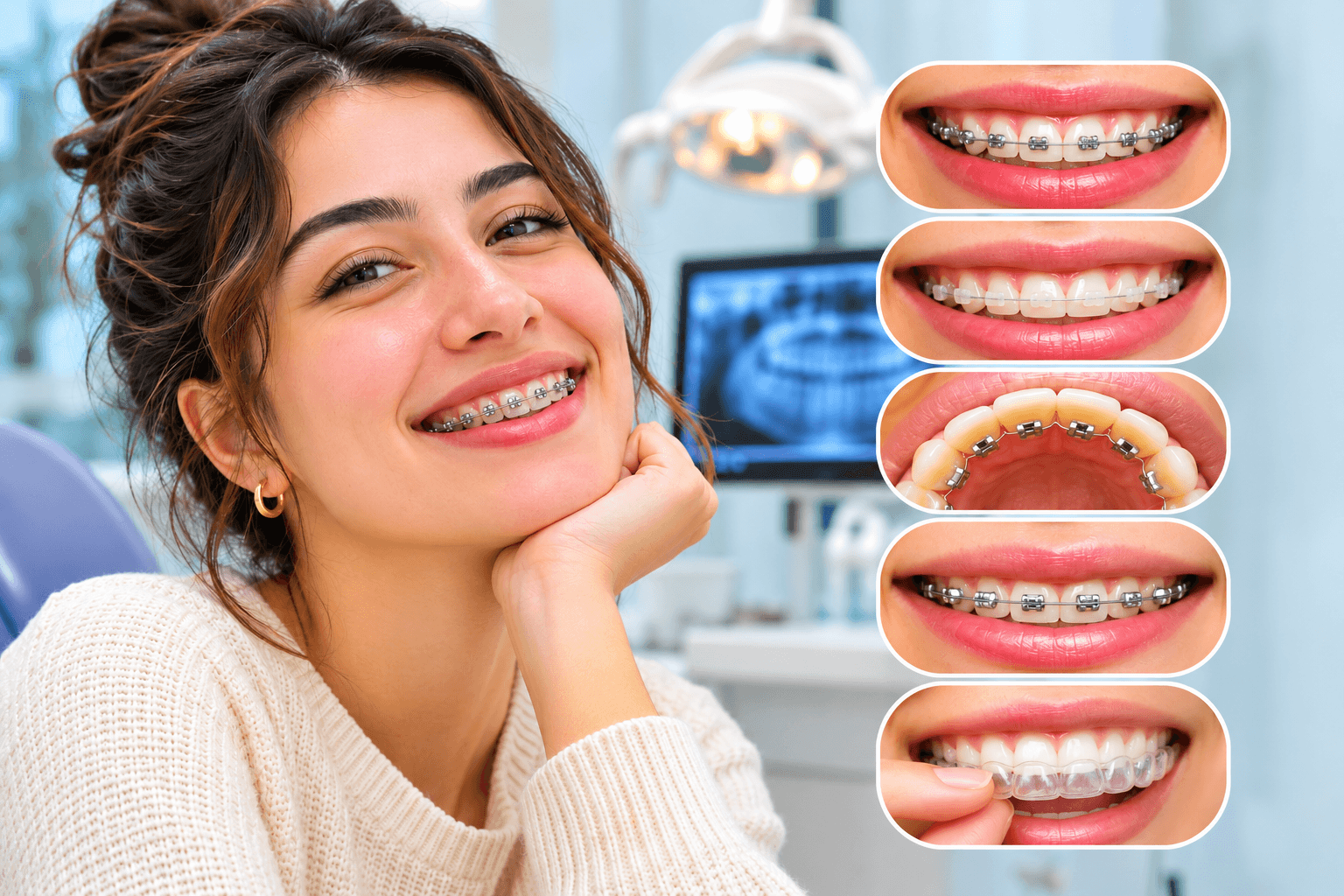
Dubai clinics typically offer five approaches. Metal braces are the most time-tested and cost-effective, using stainless steel brackets and archwires adjusted every four to six weeks. They handle mild crowding to complex bite corrections and are the most durable. Ceramic braces work identically but use tooth-colored or clear brackets, making them less noticeable, though more brittle and requiring extra care. Lingual braces attach to the back surfaces of teeth, completely hidden, but feel more intrusive at first and demand greater precision. Self-ligating systems, such as Damon braces, use a clip instead of elastic ties, reducing friction and sometimes extending intervals between adjustments. Clear aligners like Invisalign are removable, nearly invisible, and convenient for eating and cleaning, but generally unsuitable for severe misalignment and rely on patient compliance.
| Brace Type | Visibility | Best For | Key Trade-off |
| Metal braces | High | Complex cases, younger patients, budget-conscious treatment | Most visible option |
| Ceramic braces | Low | Adults wanting effective but discreet correction | Brackets less durable than metal |
| Lingual braces | Invisible | Professionals concerned about appearance | Initial tongue discomfort, higher cost |
| Self-ligating braces | Moderate | Patients wanting fewer adjustment visits | Not always necessary for simple cases |
| Clear aligners | Nearly invisible | Mild to moderate misalignment | Requires disciplined wear of 20+ hours daily |
What Braces Actually Correct
Orthodontic treatment addresses more than crooked teeth. Braces correct overbites, underbites, crossbites, open bites, crowding, and excessive spacing. Untreated, these can contribute to uneven tooth wear, gum disease, jaw pain, and difficulty chewing. Crowded teeth are harder to clean, while gaps expose gums to irritation. Jaw misalignment sometimes affects speech. An orthodontist assesses all factors during the initial examination, typically including X-rays, photographs, and dental impressions or digital scans.
Treatment Process and Timeline
Getting braces starts with a consultation and records appointment. The orthodontist examines teeth, takes imaging, and develops a treatment plan. Brackets are bonded to teeth, and an archwire is threaded through them. For most fixed braces, adjustments happen every four to six weeks, tightening or replacing the wire to gradually shift teeth. Average treatment lasts one to three years depending on severity. After braces come off, retainers are essential, without them teeth drift back. Some patients require supplementary procedures before or during treatment, and clinics offering broader Services can coordinate this, including restorative work like Dental crowns in dubai if a tooth is weakened or misshapen.
Practical Considerations People Overlook
One common mistake is choosing an aesthetic option without confirming it can handle the underlying bite problem. Ceramic and lingual braces work well for many cases, but severe rotations or significant jaw discrepancies may respond faster and more predictably to metal systems. Another overlooked factor is oral hygiene. Fixed braces trap food and plaque, so patients need interdental brushes, floss threaders, or water flossers, plus more frequent professional cleanings. Anyone seeking a Cheap Dentist in Dubai should still verify the provider is a licensed orthodontist or has direct orthodontic supervision, since treatment quality affects results and long-term dental health. A Cheap Dental Clinic Deira may offer competitive rates, but the orthodontist’s experience matters more than the clinic’s marketing.
What Affects Cost Without Getting Into Numbers
Several qualitative factors influence the final price of braces in Dubai. The type of system is the biggest variable, with metal braces at the lower end and lingual braces at the higher end. Treatment complexity and estimated duration also play a role, as does the orthodontist’s specialization. Some clinics include retainers and follow-up visits in the initial quote, while others bill separately, so ask for a fully itemized treatment plan. Insurance coverage for orthodontics varies by policy, and many UAE providers offer payment plans. Patients considering related restorative work may also explore Dental Crowns & Bridges in Deira to understand how comprehensive treatment is sequenced.
Red Flags and How to Choose a Provider
Look for a specialist orthodontist rather than a general dentist for complex cases, though many general dentists are competent with straightforward alignment. Ask how long the provider has been placing the specific system you are considering. A reputable clinic will show before and after cases, explain limitations of each option, and not pressure you into the most expensive treatment. Be wary of promises that sound too fast, orthodontic movement has biological limits. A Best Dentist in Deira, Dubai will typically take records before quoting a treatment plan and will discuss retention as part of the overall package, not as an afterthought.
What to Do Next
Book an orthodontic consultation and ask which brace systems suit your case, what the full treatment plan includes, and what retention will involve. If you are in the Deira area, Calcium Clinic offers orthodontic assessments that cover these questions directly. To book an appointment, contact the clinic and request a consultation with the orthodontic team.
Which country is the cheapest for braces?
Prices vary widely by region, with some patients traveling to countries in Southeast Asia, Eastern Europe, or Latin America for lower-cost orthodontic care. However, braces require regular adjustments over one to three years, so treatment abroad is usually impractical unless you live there or can return frequently.
What age is best for braces?
Orthodontic evaluation is recommended around age seven, but active treatment often begins between ages ten and fourteen when most permanent teeth have erupted. Adults can get braces at any age, and a growing number of patients in Dubai are adults seeking ceramic, lingual, or clear aligner options.
Do clear braces cost more?
Yes, ceramic braces and clear aligners typically cost more than traditional metal braces. The materials are more expensive, and clear aligner treatment involves laboratory fees for custom-fabricated trays.
How long do ceramic braces last?
Ceramic braces are designed to last for the full treatment period, typically one to three years. The brackets themselves are more prone to chipping or cracking than metal, so patients who grind their teeth or play contact sports may need extra protection.