
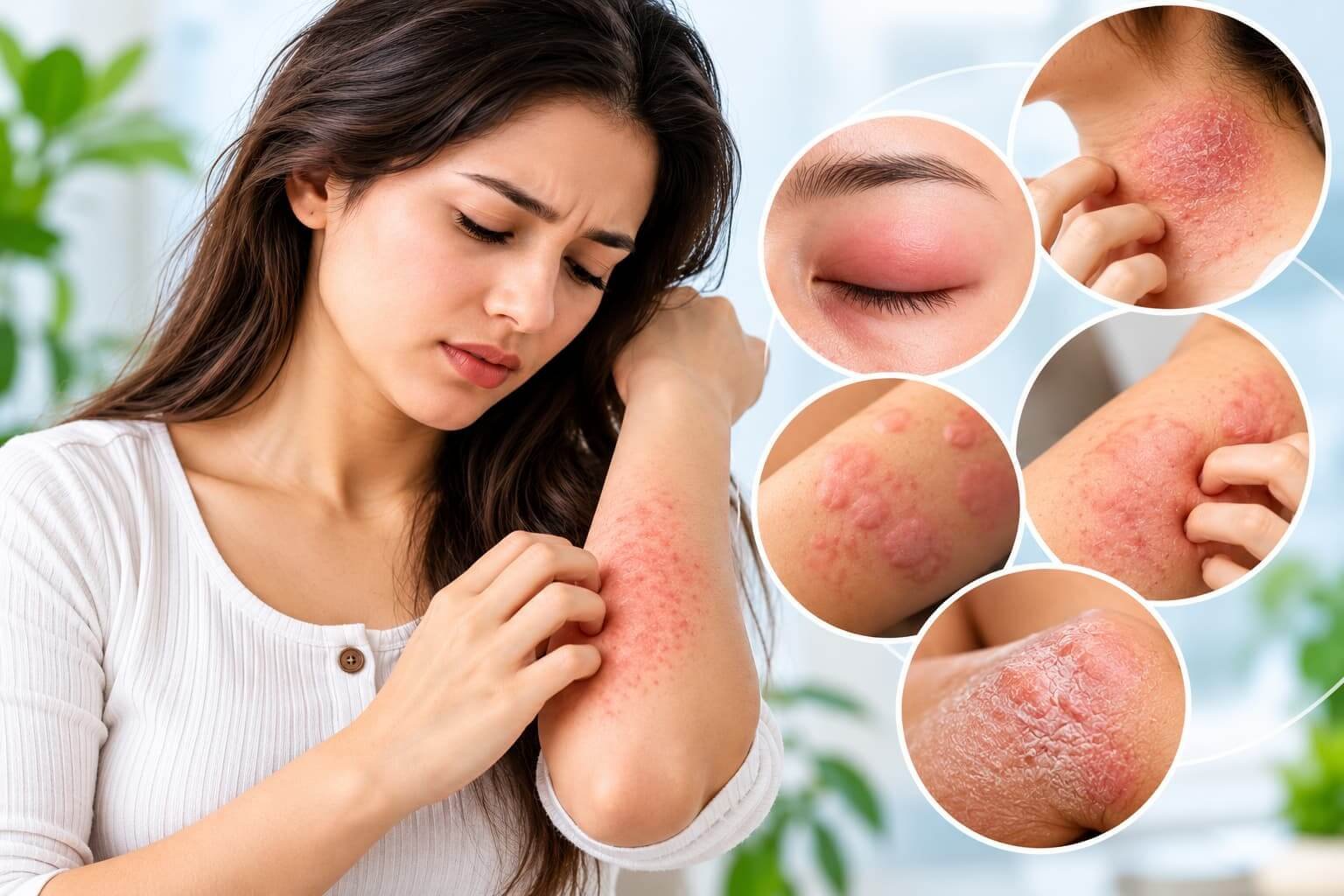
Skin allergy types and treatment involve identifying how the immune system overreacts to normally harmless substances that touch or enter the body. The reaction triggers rashes, redness, itching or swelling that can range from mildly annoying to life-threatening.
Understanding skin allergy types and treatment matters because symptoms overlap with colds, sinus issues, asthma and other skin conditions. A clear picture helps you choose the right home care, know when to reach for an antihistamine and recognise when a doctor visit is necessary. For persistent or recurring cases, a structured approach such as Homeopathy Treatment in Dubai offers an alternative path worth exploring with a qualified practitioner.
Common Skin Allergies Compared
| Allergy Type | Typical Triggers | Key Symptoms | First-Line Treatment |
| Contact Dermatitis | Jewelry metals, soaps, poison ivy, latex | Localized itchy rash, blisters | Remove trigger, hydrocortisone cream |
| Atopic Dermatitis (Eczema) | Genetic predisposition, immune overactivity | Dry, red, intensely itchy patches | Moisturizers, topical steroids |
| Urticaria (Hives) | Foods, medications, insect stings, heat | Raised red welts appearing suddenly | Oral antihistamines |
| Angioedema | Same as hives, often alongside them | Swelling beneath skin, eyes, lips, hands | Antihistamines, urgent care if breathing affected |
Contact Dermatitis
Contact dermatitis occurs when skin directly touches an allergen or irritant. Common culprits include nickel in jewelry, fragrances in soaps and plant oils like poison ivy. The rash stays localized to the contact area and may blister.
Treatment starts with washing the area to remove the trigger. Over-the-counter hydrocortisone creams reduce inflammation and itching. Cold compresses provide quick relief. If the rash spreads or blisters open, a doctor may prescribe stronger topical treatment.
Atopic Dermatitis (Eczema)
Eczema is a chronic inflammatory condition causing dry, red and intensely itchy patches. It often links to genetic predisposition and immune system overactivity rather than a single avoidable trigger. Flare-ups can come and go over months or years.
Management focuses on daily moisturizing to repair the skin barrier. Prescription or OTC steroid creams calm active flares. Identifying personal triggers such as rough fabrics, certain soaps or stress helps reduce frequency. This condition needs long-term care rather than a one-time fix.
Urticaria (Hives)
Hives are red, raised, itchy welts that can appear suddenly on the skin. They may show up in small patches or larger clusters and are commonly triggered by food or certain medications. Hives can be mild or severe.
Oral antihistamines are the standard first treatment. They block the histamine release causing the welts. Most hives fade within hours to days. Recurring hives lasting beyond six weeks warrant medical evaluation to find the underlying trigger.
Angioedema
Angioedema resembles hives but the swelling occurs beneath the skin rather than on the surface. It frequently affects the eyes, lips, hands or feet. Swelling can be dramatic and uncomfortable.
Antihistamines help mild cases. Swelling that involves the throat, tongue or any breathing difficulty is a medical emergency requiring immediate attention. Do not wait to see if it improves on its own.
Treatment Approaches That Work
The fastest way to stop skin allergy symptoms depends on the type and severity. For mild reactions, soothing lotions or cold compresses provide quick relief. Over-the-counter anti-allergic creams or antihistamines may help reduce itching.
For chronic or recurrent skin allergies, trigger avoidance remains the most important step. Identifying and avoiding the cause is key to preventing recurrence. A symptom diary tracking foods, products and environments can reveal patterns that blood or patch testing later confirms.
Some people explore complementary options alongside conventional care. A Homeopathy Clinic in Dubai may offer individualized assessment for those seeking a holistic approach, though results vary and conventional treatment should not be abandoned for severe symptoms.
When to See a Doctor
Seek medical attention immediately if the rash spreads, becomes severe, or is associated with swelling or breathing issues. These are red flags for a systemic reaction that home care cannot manage.
A primary care provider can look at the full picture when symptoms overlap with other conditions. For recurring hives, persistent eczema or suspected contact allergens, patch testing and a tailored treatment plan make a meaningful difference. A Female Homeopathy Doctor in Dubai can provide gender-sensitive care for women whose skin allergies fluctuate with hormonal changes, pregnancy or menopause.
Practical Tips for Daily Management
Use fragrance-free soaps and laundry detergents. Fragrances are among the most common contact irritants.
Apply moisturizer within three minutes after bathing to lock in hydration, especially for eczema-prone skin.
Keep an antihistamine at home if you have known food or medication triggers. Early dosing works better than waiting for symptoms to peak.
Wear gloves when handling cleaning products or known plant irritants. Barrier protection prevents contact dermatitis before it starts.
Patch test new skincare products on a small area of inner forearm for 48 hours before full use.
Getting the Right Diagnosis
Skin allergy types and treatment decisions depend on accurate identification. What looks like eczema may actually be contact dermatitis from a new laundry detergent. What seems like hives could be an early sign of a medication reaction.
A doctor can distinguish between allergic and irritant reactions, order patch testing for contact allergens and prescribe stronger treatments when OTC options fall short. For those seeking integrated care, calcium clinic offers consultations that combine conventional diagnosis with homeopathic perspectives. To schedule an evaluation, contact us through the clinic’s appointment page.
FAQ
1.What is the fastest way to stop skin allergies?
Oral antihistamines work fastest for hives and widespread itching because they block histamine throughout the body. For localized contact reactions, washing off the trigger and applying hydrocortisone cream or a cold compress provides rapid relief. Severe swelling or breathing difficulty requires emergency care, not home treatment.
2.What are 7 types of allergies?
Seven common allergy types include seasonal allergic rhinitis (hay fever), allergic conjunctivitis, urticaria (hives), eczema (atopic dermatitis), contact dermatitis, food allergies and drug allergies. Anaphylaxis is the most severe systemic allergic reaction and needs immediate epinephrine.
3.What is the best medicine for allergy skin?
The best medicine depends on the reaction type. Oral antihistamines such as cetirizine or loratadine work well for hives and angioedema. Hydrocortisone cream suits localized contact dermatitis. Prescription steroid creams or immunomodulators manage moderate to severe eczema. A doctor can recommend the right option based on your specific symptoms.
4.What are the most common types of skin allergies?
The most common skin allergy types are contact dermatitis, atopic dermatitis (eczema), urticaria (hives) and angioedema. Contact dermatitis and hives tend to be acute and trigger-specific. Eczema is usually chronic with genetic roots. Angioedema often accompanies hives but affects deeper tissue.