
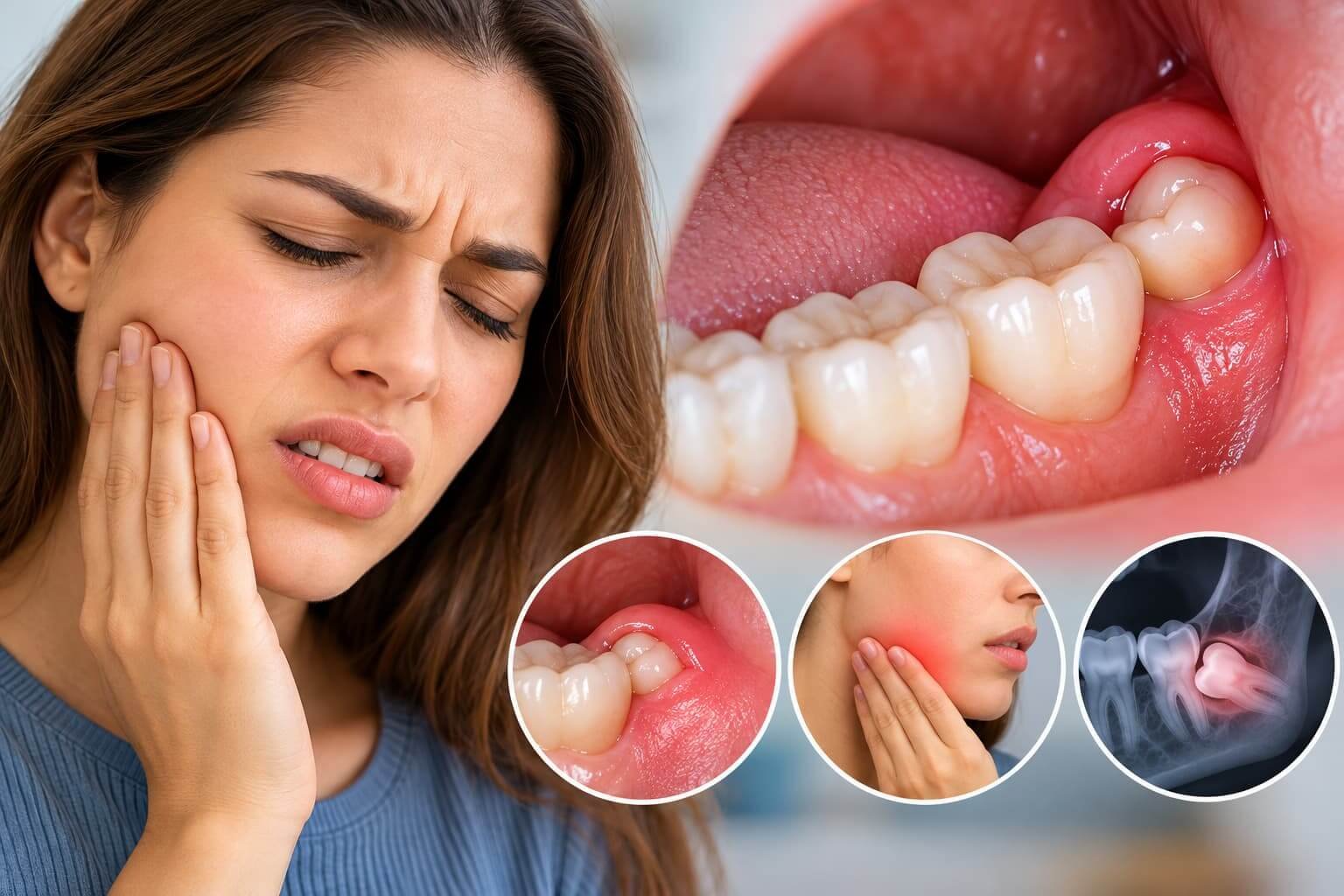
The first signs of wisdom teeth coming in are tender, swollen or red gums at the very back of your mouth behind your second molars, often with a dull ache or pressure in the jaw. Wisdom teeth, or third molars, typically begin pushing through the gums between ages 17 and 25. Some people feel nothing; others notice discomfort weeks or months before the tooth becomes visible.
Understanding what to look for helps distinguish normal eruption from problems needing professional attention. At Calcium Clinic, patients often ask how to tell routine teething sensations from early impaction. This guide covers the earliest symptoms, causes, when to seek care and options, including Homeopathy Treatment in Dubai for managing discomfort alongside conventional dental care.
What the Earliest Symptoms Actually Feel Like
The first signs of wisdom teeth coming in vary. Some describe vague pressure near the back of the jaw; others feel a sharp twinge when chewing or brushing. The gum behind the second molar may look puffy or darker pink.
A small flap of gum often forms over a partially erupted wisdom tooth. This flap, the operculum, traps food and bacteria easily, so bad breath or an unpleasant taste frequently appears before the tooth is fully visible. You might also notice a small white speck or the sharp edge of a tooth poking through the gum.
Jaw stiffness is another early clue. Muscles around the back of the jaw can feel tight, especially in the morning. Some find it uncomfortable to open the mouth fully or chew on that side.
Common Early Warning Signs
The following table summarises the most frequently reported first signs of wisdom teeth coming in and what each typically indicates.
| Symptom | What It Feels Like | What It May Indicate |
| Tender or swollen gums | Puffy, red tissue behind the second molar | Tooth beginning to push through |
| Dull jaw ache | Persistent pressure or throbbing near the back of the jaw | Eruption pressure or early impaction |
| Bad breath or odd taste | Unpleasant odour or metallic taste | Food trapped under a gum flap |
| Earache or headache | Ache radiating upward from the jaw | Referred pressure from shifting teeth |
| Difficulty opening mouth | Stiffness or limited movement | Inflammation around the erupting tooth |
Why Wisdom Teeth Cause Discomfort
Wisdom teeth are the last molars to arrive. By then, the other 28 adult teeth are already in place. Many modern jaws lack room for four extra molars, so wisdom teeth sometimes grow at odd angles, press against neighbouring teeth or stay partially trapped under the gum.
This lack of space is a well-documented evolutionary mismatch. Ancestral diets included tough, chewy foods that wore down molars and encouraged broader jaw development. Today softer diets mean less wear and smaller jaws, so third molars often become a structural problem rather than a functional asset.
Normal Eruption vs Early Impaction
Not every wisdom tooth causes trouble. When a tooth is healthy, fully erupted, correctly positioned and easy to clean, removal may not be necessary. The key is whether you can reach it with a toothbrush and floss.
Impaction means the tooth cannot emerge fully or correctly. It may angle toward the second molar, tilt backward or lie horizontally in the jaw. Impacted teeth create pressure, disrupt alignment and increase infection risk. Persistent pain unresponsive to over-the-counter relief, worsening swelling or any discharge from the gum are red flags warranting prompt assessment.
When to See a Dentist
A dental examination with X-rays is the only reliable way to know whether a wisdom tooth is erupting normally or becoming impacted. Current best practice recommends evaluation in the late teens or early twenties, even if symptoms are mild. Roots are not fully formed before around age 24, which often makes extraction simpler and recovery faster.
Seek care sooner if you notice any of the following:
- Pain that interferes with eating or sleeping
- Swelling in the gum, cheek or jaw that does not improve
- Pus, a foul taste or fever
- Difficulty swallowing or opening your mouth
- Signs that neighbouring teeth are shifting
Managing Early Discomfort at Home
Mild symptoms can often be managed temporarily with warm salt water rinses, soft foods and over-the-counter pain relief. Keeping the area clean matters because a partially erupted tooth creates a pocket where bacteria thrive. Gentle brushing and rinsing after meals reduce the chance of pericoronitis, an infection of the gum flap over a partially erupted tooth.
Some patients explore complementary options such as Homeopathy Clinic in Dubai services for symptom relief. A qualified practitioner, including a Female Homeopathy Doctor in Dubai, can discuss remedies aimed at reducing inflammation and discomfort. Homeopathy is not a substitute for dental assessment and does not treat impaction, but some people find it helpful alongside conventional care.
What Triggers Wisdom Teeth to Grow In
Wisdom tooth eruption is primarily driven by age and genetics. There is no external trigger that makes them appear. The process begins when the tooth root develops and the crown starts moving toward the gum surface. How fast wisdom teeth erupt varies widely. Some emerge over a few weeks, while others take months or years to fully break through. In many cases, the tooth never completes eruption and remains partially or fully impacted.
Practical Next Steps
If you suspect the first signs of wisdom teeth coming in, book a dental examination. X-rays show the position, angle and development of each third molar and help determine whether monitoring or removal is appropriate. Early assessment prevents complications that arise from waiting until pain becomes severe.
For readers in Dubai, Calcium Clinic offers dental evaluations and can advise on both conventional and complementary care options. To discuss your symptoms or schedule a check-up, contact us for a consultation.
How can you tell a wisdom tooth is coming through?
Look for tender or swollen gums behind your second molars, a dull ache in the back of the jaw, bad breath or an unpleasant taste. You may also see a small white edge of tooth breaking through the gum.
Is it better to remove wisdom teeth early?
In many cases yes. Removing wisdom teeth before roots fully form, typically before age 24, often leads to faster healing and fewer complications. A dentist can confirm whether early removal is right for your specific situation.
What triggers wisdom teeth to grow in?
Age and genetics are the main triggers. Wisdom teeth typically begin erupting between ages 17 and 25. No external factor causes them to start moving.
How fast do wisdom teeth erupt?
Eruption speed varies significantly. Some wisdom teeth emerge within weeks, while others take months or years. Many never fully erupt and remain partially or completely impacted.