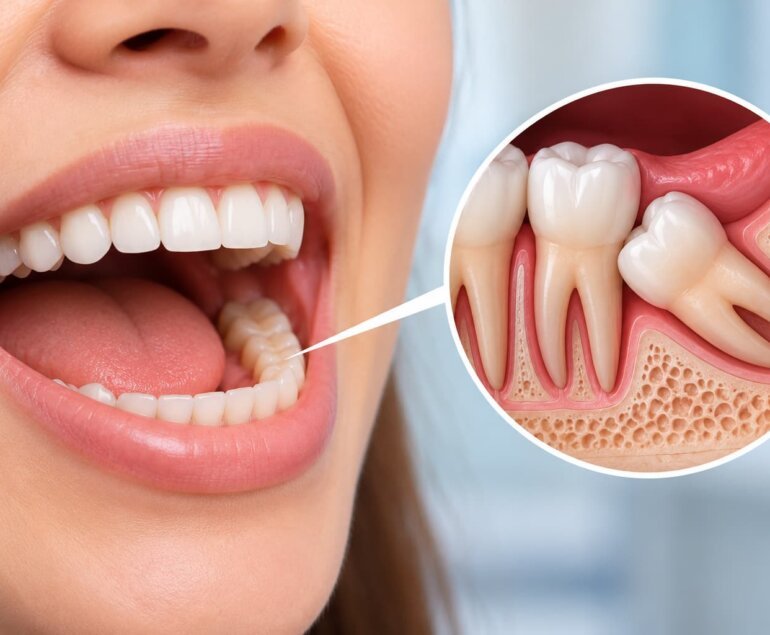
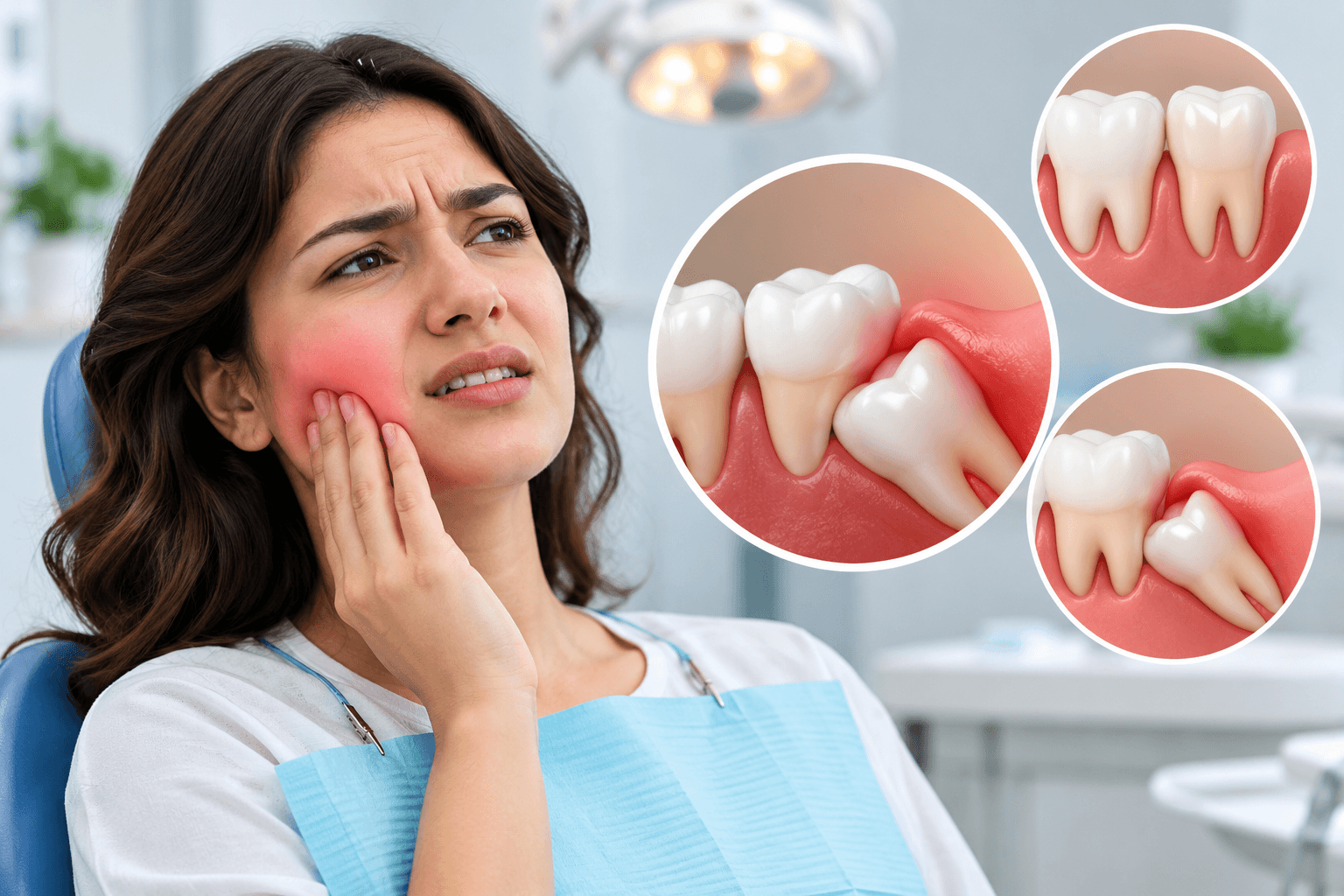
Wisdom teeth are not essential for modern chewing, speaking, or oral health. Most people function perfectly well without them, and in many cases these third molars cause more harm than good. That said, a small percentage of people keep healthy, properly positioned wisdom teeth that do add some minor chewing surface. The real answer depends on your jaw size, tooth position, and long-term risk factors, which is why a dentist at Calcium Clinic or any qualified provider should evaluate them individually rather than applying a one-size-fits-all rule.
What Wisdom Teeth Actually Do Today
Wisdom teeth are evolutionary leftovers. Early humans needed a third set of molars to grind tough, raw foods like roots, nuts, and coarse meats. As diets shifted to softer, cooked foods and utensils became common, human jaws gradually became smaller. Today, many jaws simply lack the space for these late-arriving teeth, which typically emerge between ages 17 and 25.
That does not mean they are always useless. When wisdom teeth erupt fully, sit straight, and stay cleanable, they can provide a little extra grinding power and may help preserve local jawbone structure in that area. Some dentists also note they can act as backup molars if a first or second molar is lost later in life. These benefits are modest and only apply to a minority of people.
When Keeping Them Makes Sense
A wisdom tooth is worth keeping only when all of these conditions are met:
- It has erupted completely through the gum
- It is aligned straight and does not press against neighboring teeth
- It is easy to brush and floss without special effort
- It has no deep gum pockets, decay, or signs of cyst formation
- Regular X-rays show healthy bone around the tooth
If your wisdom teeth meet all of these criteria, your dentist may recommend monitoring them rather than removing them. This is a legitimate, increasingly common approach. The older practice of automatically extracting every wisdom tooth as a precaution has shifted, and many clinicians now prefer a watch-and-wait strategy for asymptomatic, well-positioned teeth.
When Removal Becomes Necessary
The most common reason for extraction is impaction, where a wisdom tooth gets trapped under gum or bone. Partially impacted teeth are especially troublesome because they create an opening where food and bacteria collect, raising the risk of infection and decay in both the wisdom tooth and the second molar in front of it. Fully impacted teeth may grow sideways and crowd or damage adjacent roots.
Other clear indications for removal include:
- Repeated gum infection or swelling around the tooth
- Cystic growth or damage to the surrounding jawbone
- Crowding that threatens orthodontic results or existing alignment
- Difficulty eating or recurring cheek and tongue biting
- Decay that cannot be reliably restored because the tooth is too far back to clean or fill properly
The trade-off is real. Removing wisdom teeth that are not causing problems carries surgical risks, including nerve injury, dry socket, and infection. Keeping them carries the risk of future impaction, decay, and gum disease that can spread to healthy teeth. That is why the decision should be based on X-rays, symptoms, and individual anatomy, not habit.
| Factor | Keep the Tooth | Remove the Tooth |
| Eruption | Fully erupted and functional | Partially or fully trapped |
| Position | Straight, no pressure on neighbors | Angled, sideways, or crowding |
| Cleanability | Easy to brush and floss | Hard to reach, traps food |
| Symptoms | None, healthy gum tissue | Pain, swelling, repeated infection |
| Long-term risk | Low on X-ray, stable bone | Cyst, decay, or root damage visible |
The 3-3-3 Rule and Other Practical Questions
One question that comes up often is the 3-3-3 rule for teeth. It is a dental guideline, not a wisdom-tooth-specific rule. It refers to three things: see a dentist every three months if you have active gum disease, brush for at least three minutes, and replace your toothbrush every three months. It has nothing to do with wisdom tooth removal, but it is a useful general habit for anyone trying to preserve the teeth they do keep.
As for the hardest tooth to remove, that varies by patient, but lower wisdom teeth with curved or hooked roots embedded in dense jawbone are generally considered the most difficult extractions. Upper wisdom teeth usually come out more easily because the bone is softer and the roots are often less complex. A routine single wisdom tooth extraction typically takes under an hour, though impacted cases can run longer depending on bone coverage and root shape.
What to Do Next
If your wisdom teeth are not causing symptoms, the next step is a clinical exam and panoramic X-ray to see what is happening below the gumline. Symptoms alone are a poor guide, because significant damage can develop before you feel anything. If you are in the Deira area, you can book an appointment with a dentist at Calcium Clinic for an evaluation. For those comparing options nearby, the Best Dental Clinic in Deira Dubai or a Cheap Dentist in Dubai can still provide a proper assessment without pushing unnecessary surgery. Many patients looking for a Cheap Dental Clinic Deira also explore Services such as Dental crowns in dubai or Dental Crowns & Bridges in Deira when wisdom teeth have damaged the molars in front of them, which is a common consequence of leaving impacted teeth untreated. A Best Dentist in Deira, Dubai will typically recommend removal only when the evidence shows the tooth is causing or likely to cause harm, not as a reflex.
If you want to know this contact now
FREQUENTLY ASKED QUESTIONS
1.Why are wisdom teeth important to keep?
They are not important for most people. Healthy, fully erupted, straight wisdom teeth can add minor chewing surface and support local bone, but these benefits are small and apply only to a minority of cases.
2.What is the 3-3-3 rule for teeth?
It is a general dental guideline: see a dentist every three months if you have active gum disease, brush for at least three minutes, and replace your toothbrush every three months. It is not specific to wisdom teeth.
3.What tooth is hardest to remove?
Lower wisdom teeth with curved or hooked roots in dense jawbone are typically the hardest to extract. Upper wisdom teeth usually come out more easily due to softer bone and simpler root shapes.
4.How long does wisdom tooth extraction take?
A straightforward extraction usually takes under an hour. Impacted teeth can take longer depending on bone coverage, root shape, and whether the tooth needs to be sectioned.