What Is Gingivitis?
What Is Gingivitis?Gingivitis is a common and mild form of gum disease that causes irritation, redness, and swelling of the gingiva, the part of your gum around the base of your teeth. It is an infection-driven inflammation triggered by plaque buildup, and it is fully reversible when caught and treated early. At Calcium Clinic, patients often ask whether bleeding gums are normal; the short answer is no, and it is usually the first reliable sign that gingivitis has started.
Gingivitis in Plain Terms
Think of gingivitis as the earliest warning stage of periodontal disease. The key clinical distinction is that gingivitis does not cause bone loss. Left untreated, however, it can progress to periodontitis, a much more serious condition where inflammation spreads to the bone supporting the teeth. At that stage, damage becomes harder to reverse, and teeth may loosen or require removal.
What Causes Gingivitis
The root cause is plaque, a sticky film of bacteria that forms on teeth after eating sugars and starches. When plaque is not removed by daily brushing and flossing, the bacteria release toxins that trigger an immune response, leading to gum inflammation.
Unremoved plaque hardens into tartar, also called calculus. Tartar traps more bacteria along the gumline and cannot be brushed or flossed away. Only a professional cleaning by a dentist or dental hygienist can remove tartar.
Risk factors that make gingivitis more likely include smoking or using tobacco products, which is the most significant risk factor and also delays healing. Dry mouth, crooked teeth that are hard to clean, and hormonal changes during pregnancy also raise the risk. Gum disease is more prevalent and severe in men than in women.
Symptoms to Watch For
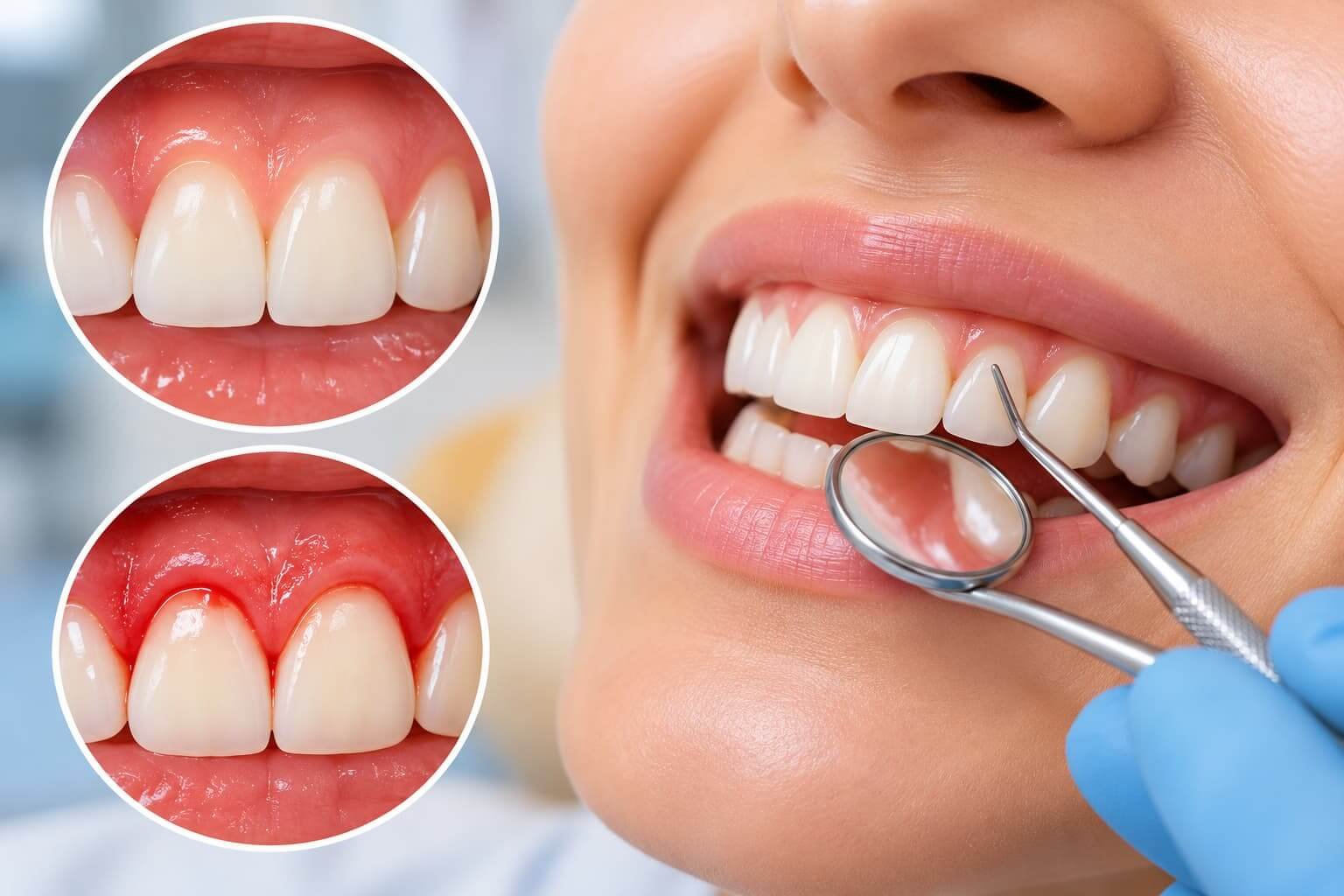
The signs are visible and tactile. Gums may appear red or swollen rather than pale pink and firm. They may feel tender, and bleeding during brushing or flossing is the classic early warning. Persistent bad breath is another common symptom. In early stage gingivitis, gums may look puffy at the edges and bleed easily, but the teeth themselves remain firmly in place.
Gingivitis vs Periodontitis
| Feature | Gingivitis | Periodontitis |
| Bone loss | None | Yes |
| Gum attachment | Intact | Pulls away, forming pockets |
| Tooth mobility | None | Possible loosening |
| Reversibility | Fully reversible | Manageable, not fully reversible |
| Pain | Mild tenderness | Painful chewing possible |
How Gingivitis Is Treated
Treatment has two parts. First, a professional cleaning removes tartar above and below the gumline; this is essential because no home routine can remove hardened calculus. Second, improved daily hygiene prevents new plaque from accumulating.
Most people notice bleeding stops within several days of proper cleaning and care. The gum tissue itself typically heals in one to two weeks when plaque is kept under control. Gingivitis is curable if treated before it advances.
Prevention That Actually Works
Brush twice a day with a fluoride toothpaste, and floss or clean between teeth daily. Routine dental visits allow tartar removal before inflammation sets in. If you smoke, quitting is the single most effective change for gum health. People with dry mouth should talk to a dentist about saliva-promoting strategies, since reduced saliva allows plaque to build up faster.
Common mistakes include brushing too hard, which can irritate gums further, and stopping flossing because of bleeding. Bleeding is a sign to floss more carefully and consistently, not less.
When to See a Dentist
See a dentist if gums bleed regularly, look red or swollen, or if bad breath persists despite good hygiene. Early treatment is simpler and less invasive. If you are in the area, options such as a Cheap Dental Clinic Deira or a Best Dentist in Deira, Dubai can provide a professional assessment. For patients who have already experienced tooth damage from advanced gum disease, restorative options like Dental Crowns & Bridges in Deira may be relevant, but the priority is always controlling the infection first. Many patients also ask about Dental crowns in dubai when gum recession has exposed tooth roots, though crown placement is only appropriate once gum health is stable. If you are comparing providers, the Best Dental Clinic in Deira Dubai will typically examine gum health before discussing any restorative work. A Cheap Dentist in Dubai can still offer thorough periodontal screening, and most clinics list their full range of Services online so you can confirm what is included in a routine visit.
FAQ
1.What is the main cause of gingivitis?
Plaque buildup from inadequate brushing and flossing is the main cause. Plaque bacteria release toxins that inflame the gums, and unremoved plaque hardens into tartar, which worsens the irritation.
2.How do you get rid of gingivitis?
Professional cleaning to remove tartar, followed by consistent brushing twice daily, daily flossing, and routine dental visits. Smoking cessation also improves healing.
3.What does stage 1 gingivitis look like?
Gums appear red or puffy at the edges, especially near the tooth line, and may bleed when you brush or floss. There is no bone loss or tooth movement at this stage.
4.How long does gingivitis take to heal?
Bleeding often stops within several days of effective cleaning. Gum tissue typically heals within one to two weeks when plaque is controlled, though full reversal depends on consistent daily care.