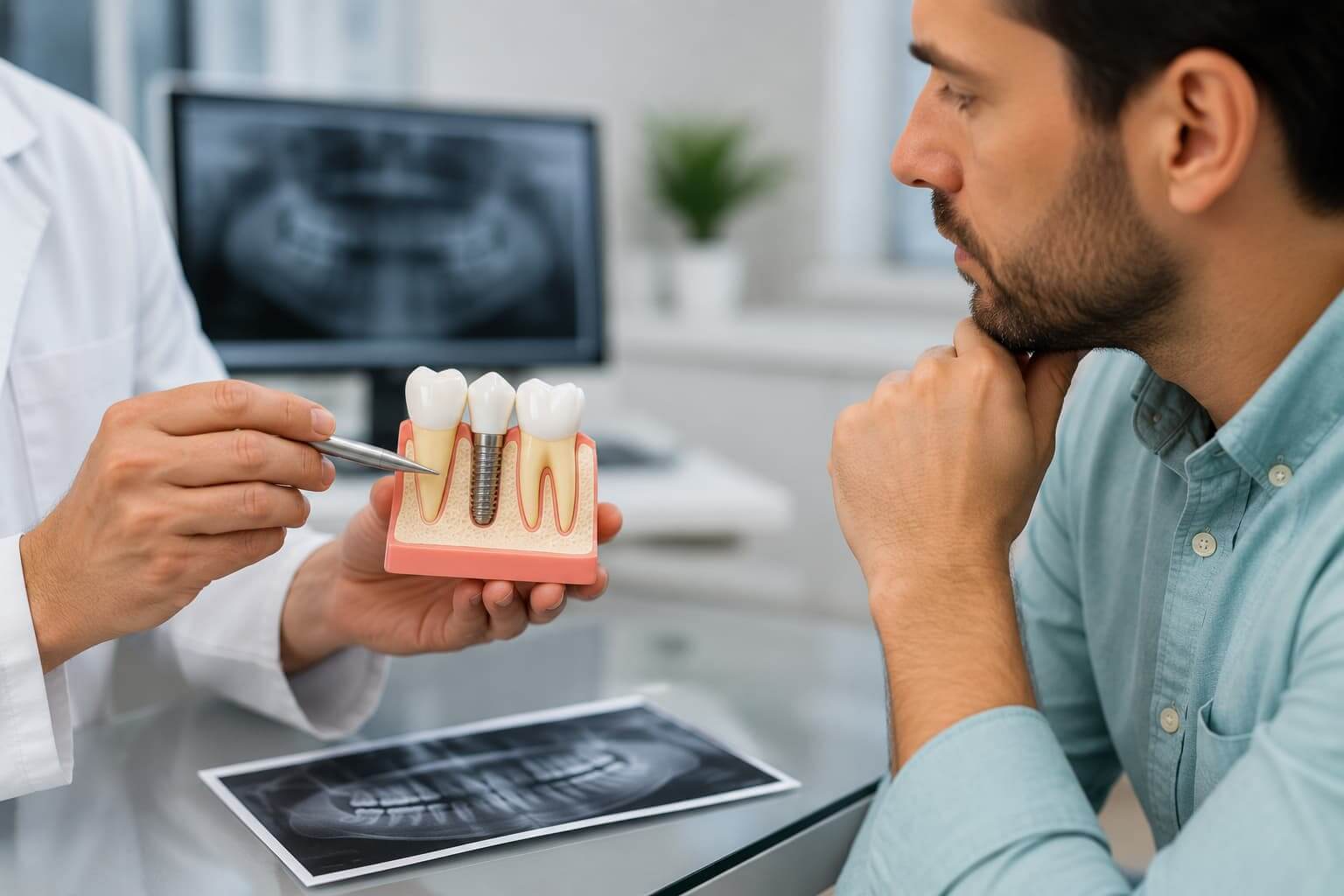
A dental implant is a small titanium post that goes into the jawbone to hold a replacement tooth. Antibiotics are drugs that kill bacteria, and the question here is whether you need to be taking them once the implant is in, to stop the site getting infected while it heals.
So do I need antibiotics after dental implant surgery, or is that just something clinics do out of habit? In most ordinary cases the dose that actually counts is the one you take before the procedure starts, not the box of tablets you go home with. People are often a bit sceptical when we say that, which is fair, so this covers what the research found, when antibiotics really are needed and what to watch while you heal. If you are already booked in or still deciding, the team at the Best Dental Clinic in Deira Dubai would rather go through it with you beforehand than have you googling it at midnight three days later.
Usually No
Single implant, healthy bone, healthy patient. Most of those people do not need a course afterwards.
What holds up in the research is one preventive dose shortly before surgery, which brings down the risk of early failure. Carrying on with tablets for another five or seven days after placement has not shown much added benefit in uncomplicated cases. It is a harder thing to explain than just writing a prescription, admittedly, which is probably part of why the habit persists.
Your dentist might still prescribe. That is a call about your specific case and not a contradiction of any of the above.
What the Studies Found
Reviews of implant trials keep landing in similar territory. The dose beforehand helps, the routine course afterwards mostly does not.
And this reaches past your own jaw. Antibiotic resistance is a serious problem, dentistry writes a decent chunk of the world’s prescriptions, so handing a week of tablets to every patient regardless of their risk feeds something bigger in exchange for very little.
When a dentist answers do I need antibiotics after dental implant placement with a no on a routine case, that is the evidence talking. Not cost cutting.
Bone Grafting or a Sinus Lift
Bigger wound, more surgical time, longer healing. Antibiotics afterwards are usual here.
Going Into an Infected Site
If the implant is being placed where a tooth came out because of infection, that is a different situation and antibiotics are standard.
Multiple Implants or a Long Session
Full arch work, or several implants in one appointment, is not comparable to a single one in good bone. Treated accordingly.
Your Medical History
Poorly controlled diabetes, a suppressed immune system, certain heart conditions, various medications. All of these change the calculation. Tell your dentist what you take, including anything over the counter, because people leave those out constantly and occasionally it matters a great deal.
| Your situation | Typical approach |
| Single implant, healthy bone, no medical issues | Dose before surgery, usually nothing after |
| Bone graft or sinus lift | Course afterwards is common |
| Implant into a previously infected socket | Antibiotics expected |
| Multiple implants or full arch | Usually prescribed |
| Diabetes, immune suppression or certain heart conditions | Case by case with your doctor |
Spotting a Dental Implant Infection
Sore and swollen for the first couple of days is just healing. What matters is the direction it moves in after that.
Ring us if the pain is still climbing past day three, if swelling starts spreading into your cheek or under the jaw, if there is pus or a taste in your mouth that will not go, if you run a fever, or if the implant feels at all loose. Caught in that first week, a dental implant infection is usually a manageable thing. Left for a fortnight it can cost you the implant, and that is a much longer conversation about redoing the whole thing.
The other one we see is people digging out leftover antibiotics from some prescription months ago rather than picking up the phone. Wrong drug half the time, wrong dose, and the appointment that would have sorted it gets pushed back a week.
What Actually Protects You
Clean technique and careful placement do most of the work, honestly. Where you have it done matters considerably more than what you swallow afterwards. How we handle implant cases is set out under Services.
The rest is yours to manage. Clean the area the way you were shown, use the rinse you were given, stay off cigarettes while it heals because smoking is about the strongest predictor of failure in the whole implant literature, and come to your reviews even when nothing hurts.
At Calcium Clinic we work out the final tooth from the start, since how the implant gets loaded affects how long it lasts. Whether that ends up being Dental crowns in dubai on one implant or Dental Crowns & Bridges in Deira across a wider gap is part of the plan, not something improvised at the end.
In Summary
Do I need antibiotics after dental implant surgery? For a straightforward single implant, usually not, since the dose doing the real work happens before you sit down. Grafts, infected sites, multiple implants and certain medical conditions are where a course afterwards earns its place.
Go by how the healing feels, not by the calendar. Anything getting worse after the first few days means come back in, and early dental implant infection responds well when someone looks at it quickly.
Ready to get it looked at? Schedule a consultation with Calcium Clinic in Deira, Dubai.
FREQUENLTY ASKED QUESTIONS
Do I need antibiotics after dental implant surgery if I feel fine?
Usually not, assuming the case was routine. Your review appointment is what actually confirms it though.
What if my dentist prescribes them anyway?
Finish the course. There is probably something in your history behind it, and asking what is perfectly reasonable.
Can I stop once the pain settles?
No.
Do painkillers count?
They handle the discomfort and do nothing whatsoever about a dental implant infection.
Do I need antibiotics after dental implant work if I have a heart condition?
Possibly, and this is one to settle before the appointment rather than on the day itself. Your dentist and your doctor should agree the plan between them, which sometimes takes a phone call or two, so raise it early.
Should I just take them to be safe?
Replacing a failed implant costs far more than any prescription, but the prescription is not the thing preventing that. If money is the worry, say so. A Cheap Dentist in Dubai who sets out the whole plan upfront will save you more than guessing does.