Can Dental Implants Fall Out?Yes, a dental implant can fall out, but what actually comes loose is often not the titanium screw in the jaw. Crowns, healing caps, abutments and connecting screws are far more likely to loosen or dislodge than the implant fixture itself. The fixture has a survival rate above 90% over ten years, while the fixture exfoliation rate is around 2-12% over five years. If you are unsure which part has moved, an assessment at a Best Dental Clinic in Deira Dubai can identify the component and whether the implant is still stable.
What “Fallen Out” Usually Means
Patients often call any part of the implant-tooth complex “the implant.” The parts that can separate are:
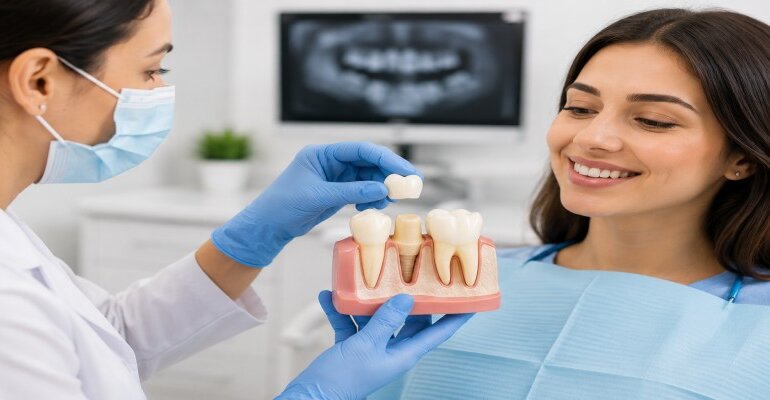
| Part | What It Does | Typical Situation |
| Healing cap or cover screw | Protects the implant during healing | May loosen early; usually easy to replace |
| Crown | The visible tooth-like upper part | Can debond from the abutment; often re-cemented or replaced |
| Abutment | Connects the crown to the fixture | May unseat under load; tightened or replaced if intact |
| Fixture | The titanium post in the jawbone | Rarely exfoliates; if it does, bone support is failing |
The abutment or crown complex has an unseating rate estimated at 20-59% over 15 years, which is much higher than the fixture failure rate. So a loose crown or abutment does not automatically mean the whole implant failed.
Early Warning Signs Before a Fall
Loosening rarely happens without any warning. Look for:
- Movement or wobbling when chewing or touching the area with the tongue
- Pain or tenderness on biting
- Bleeding, redness, swelling or pus around the implant
- Gum recession with visible metal
- A change in the way the teeth meet
Any of these should trigger a prompt dental visit. Early treatment can often save the implant or at least prevent more bone loss.
Why Dental Implants Fail or Loosen
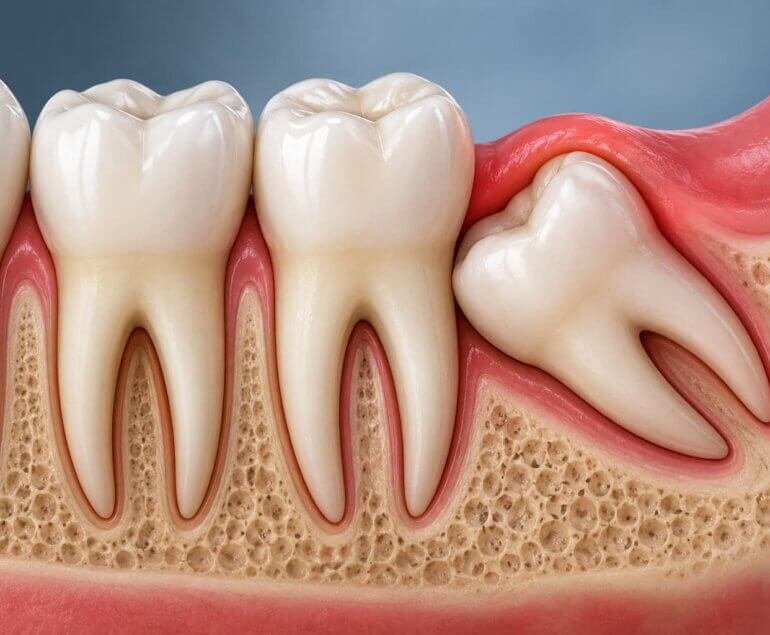
Failure falls into two broad time frames. Early failure usually involves failed osseointegration, the process in which the bone fuses to the titanium surface. Poor bone quality, insufficient bone volume, infection or inadequate healing time can prevent that fusion. Late failure is more commonly driven by peri-implantitis, a gum and bone infection around an already integrated implant.
Other causes include improper placement or bite alignment, teeth grinding, trauma, poor hygiene, smoking and some medications. Some heartburn medications have been studied for their effect on new bone growth, which can impair how the implant fuses with the jaw. A crown or abutment may also loosen because of excess force, cement failure or a fractured screw.
What to Do If Something Falls Out
Save the piece. Rinse it gently with clean water if needed, but do not try to glue it or screw it back into place. Take a clear photo of the piece and the site, then send it to your dentist or request an emergency assessment. Avoid chewing on that side and leave the area alone.
If the healing cap or cover screw came out, the dentist can often replace it quickly after checking that the tissue has not closed over the implant. If the crown or abutment is loose, it may be re-cemented or re-tightened if the fixture is still solid. If the actual titanium fixture has exfoliated, the priority is to evaluate infection, remaining bone and whether grafting will be needed.
Can a Fallen Implant Be Replaced?
In many cases, yes. When only the crown, abutment or screw fails, the fixture often stays in place and the upper components can be restored. Dental crowns in dubai can commonly be replaced independently of the implant. If the fixture itself fails, treatment may involve removing infection, placing a bone graft, waiting for healing and then placing a new implant. The decision depends on remaining bone volume, gum health and the cause of the failure. Patients searching for a Cheap Dentist in Dubai should still ask how the practice handles implant complications, not just initial placement.
Preventing Implant Loss
Most implant loss is not random. Good oral hygiene, regular professional maintenance and early treatment of bleeding or swelling around the implant reduce the risk. Ask whether the clinic’s Services include implant maintenance and emergency component replacement. If you grind your teeth, a night guard protects both natural teeth and implant components. Stop smoking if possible, and keep diabetes or other systemic conditions under control. Many practices offering Dental Crowns & Bridges in Deira also manage the restorative side of implants, but a clinician experienced in implant complications is the key contact if something feels loose. A Cheap Dental Clinic Deira is not automatically less capable, but ask specific questions about implant experience and follow-up.
If a component feels loose or has already fallen out, do not wait. Calcium Clinic can assess the implant, identify which part has failed and plan the next step. Book an appointment with the Best Dentist in Deira, Dubai before the surrounding bone or gum becomes more damaged.
FREQUENTLY ASKED QUESTIONS
1 What happens if your dental implant falls out?
Save the piece, photograph it, avoid chewing on that side and contact your dentist. If the crown, healing cap or abutment came loose, repair may be straightforward. If the titanium fixture itself fell out, the dentist will assess infection and bone loss before deciding on replacement.
2 What is the number one reason dental implants fail?
There is no single cause. Early failures are usually due to failed osseointegration from poor bone quality, infection or inadequate healing. Late failures are most often caused by peri-implantitis, which destroys the supporting bone around an integrated implant.
3 How long can an implant stay without a crown?
An implant can remain without a crown while the bone heals or while a component is being replaced, but the timing should follow your dentist’s plan. Leaving the implant uncovered too long can allow gum tissue to overgrow it or the surrounding bone to change.
4 How many times can a dental implant be replaced?
There is no fixed number. Replacement depends on the remaining bone, the reason for failure and the patient’s healing capacity. Each failure may reduce bone support, so the cause should be addressed before retreatment.