
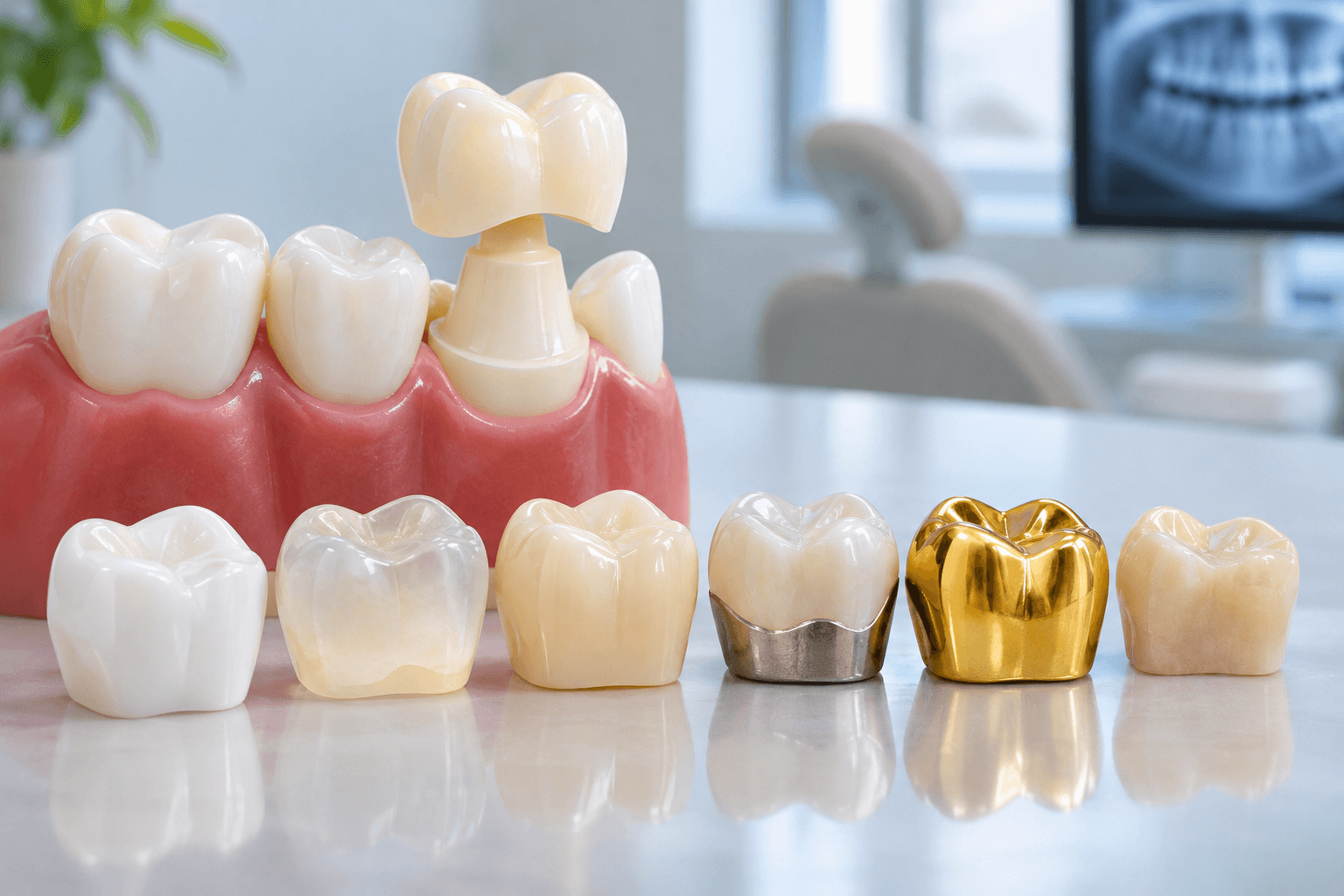
A dental crown is a custom-shaped cap that covers a decayed, cracked, or root-canal-treated tooth to restore its strength, function, and appearance. The main types are zirconia, all-ceramic (porcelain), porcelain-fused-to-metal (PFM), lithium disilicate (e.max), gold/metal alloys, and resin. Each material behaves differently under biting force, looks different in the mouth, and suits different teeth. If you are comparing options in the UAE, Calcium Clinic and other practices typically walk patients through the same material decision before treatment begins.
Crown Materials Compared Side by Side
| Crown Type | Best For | Strength | Aesthetics | Typical Longevity |
| Zirconia | Back molars, bruxism | Very high | Good, opaque | 10-15+ years |
| E.max (lithium disilicate) | Front teeth, premolars | High | Excellent translucency | 10-15 years |
| All-porcelain | Front teeth | Moderate | Excellent | 5-15 years |
| PFM (porcelain-fused-to-metal) | Back teeth, bridges | High | Good, metal line possible | 10-15 years |
| Gold / metal alloy | Back molars | Highest, minimal wear | Poor, visible | 20+ years |
| Resin / composite | Temporary or budget option | Low | Good initially | 3-5 years |
Zirconia Crowns
Zirconia is a white ceramic that is exceptionally strong and biocompatible. It is currently the most common choice for back teeth because it withstands heavy chewing forces without fracturing. The trade-off is appearance: zirconia is more opaque than natural enamel, so it can look slightly flat on a front tooth. Some labs now offer layered zirconia with better translucency, but it still cannot match e.max for pure aesthetics. Zirconia is also gentle on opposing teeth compared with some older ceramics.
E.max and All-Ceramic Crowns
E.max crowns are made from lithium disilicate, a pressed glass-ceramic. They offer the best balance of strength and natural-looking translucency, which is why they are the top choice for visible front teeth and premolars. Standard all-porcelain crowns look similarly lifelike but are less strong, so dentists are more cautious about placing them on molars. Both options are metal-free, which matters if you have metal sensitivities or simply do not want a dark line near the gum.
Porcelain-Fused-to-Metal (PFM)
PFM crowns have a metal base covered with porcelain. They have been used for decades and remain a reliable option for back teeth and long-span bridges because the metal substructure adds strength. The main downside is aesthetic: over time, the gum can recede slightly and expose a grey metal line at the crown margin. PFM crowns are also more abrasive to opposing natural teeth than gold or zirconia.
Gold and Metal Alloy Crowns
Gold crowns are the longest-lasting option in dentistry. They wear at a rate similar to natural enamel, rarely fracture, and require the least amount of tooth reduction because the metal can be thin yet strong. The obvious drawback is appearance. Some patients still choose gold for a second molar where it will barely be visible, especially if they grind their teeth. Metal allergies are rare but possible, so mention any known sensitivity before choosing a base-metal alloy.
Resin Crowns
Resin or composite crowns are the least expensive option and are sometimes used as temporary crowns while a permanent one is being made. They look acceptable initially but wear down and stain faster than any other material. Most dentists consider resin a short-term solution rather than a definitive restoration.
Same-Day Crowns (CAD/CAM)
Many clinics now offer same-day crowns using CAD/CAM technology such as CEREC. Instead of two visits and a temporary crown, the dentist scans the prepared tooth, designs the crown digitally, and mills it from a ceramic block in the office. This is convenient, but the material options are limited to millable ceramics, and the fit depends heavily on the operator’s skill. A traditional lab-made crown still often provides better marginal accuracy for complex cases.
How to Choose the Right Crown
The decision comes down to three questions. First, which tooth is being restored? Front teeth prioritise aesthetics, so e.max or all-porcelain usually wins. Back molars prioritise strength, so zirconia or gold makes more sense. Second, do you grind or clench your teeth? Bruxism rules out all-porcelain and favours zirconia, gold, or PFM. Third, how important is appearance versus longevity? Gold lasts longest but is visible; e.max looks best but may not survive heavy grinding on a molar.
Your dentist should also consider how much healthy tooth structure remains. A crown that requires aggressive tooth reduction may not be the right choice if a more conservative material can do the job. Ask to see photos of previous cases using the material you are considering, and ask whether the lab guarantees the crown against fracture for a set period.
Common Mistakes People Make
- Choosing all-porcelain for a back molar because it looks better, then fracturing it within a few years.
- Ignoring a nightguard after getting a ceramic crown, which voids many lab warranties.
- Assuming all “white” crowns are the same when zirconia, e.max, and porcelain behave very differently.
- Not asking whether the crown is made in-house or by an external lab, which affects quality and turnaround time.
If you are researching Dental crowns in dubai, the same material principles apply whether you visit a private clinic or a hospital dental department. A practice offering Dental Crowns & Bridges in Deira should be able to show you samples of each material and explain which one suits your specific tooth. For those looking for a Cheap Dental Clinic Deira, ask what crown brand and lab the clinic uses before comparing quotes, because material quality varies even within the same category. Many patients looking for a Cheap Dentist in Dubai find that a zirconia crown from a reputable lab outperforms a poorly made e.max crown. The Best Dentist in Deira, Dubai will always discuss material trade-offs rather than pushing a single option. If you are still comparing providers, the Best Dental Clinic in Deira Dubai can offer a full range of Services and help you weigh aesthetics against durability for your particular case.
Contact Calcium clinic for more information
Frequently Asked Questions
What are the different types of dental crowns?
The main types are zirconia, e.max (lithium disilicate), all-porcelain, porcelain-fused-to-metal (PFM), gold or metal alloy, and resin. Each differs in strength, appearance, cost, and how much natural tooth needs to be removed.
How much does a gold crown tooth cost?
Gold crown pricing depends on the current market price of the alloy, the size of the tooth, and the lab fee. Gold is typically more expensive than porcelain or zirconia because the material itself is a precious metal, but the exact amount varies by clinic and region.
Is an NHS crown better than a private crown?
NHS crowns are usually metal or porcelain-fused-to-metal on back teeth, which are strong but less aesthetic. Private treatment offers more material choices, including e.max and layered zirconia, and often more time spent on shade matching and fit.
How long does a dental crown last?
Most crowns last between 5 and 15 years, with gold crowns often lasting 20 years or more. Longevity depends on the material, your bite forces, oral hygiene, and whether you grind your teeth at night.
If you are ready to discuss which crown material fits your tooth and budget, book an appointment with a dentist who can examine the tooth and show you material samples in person.