
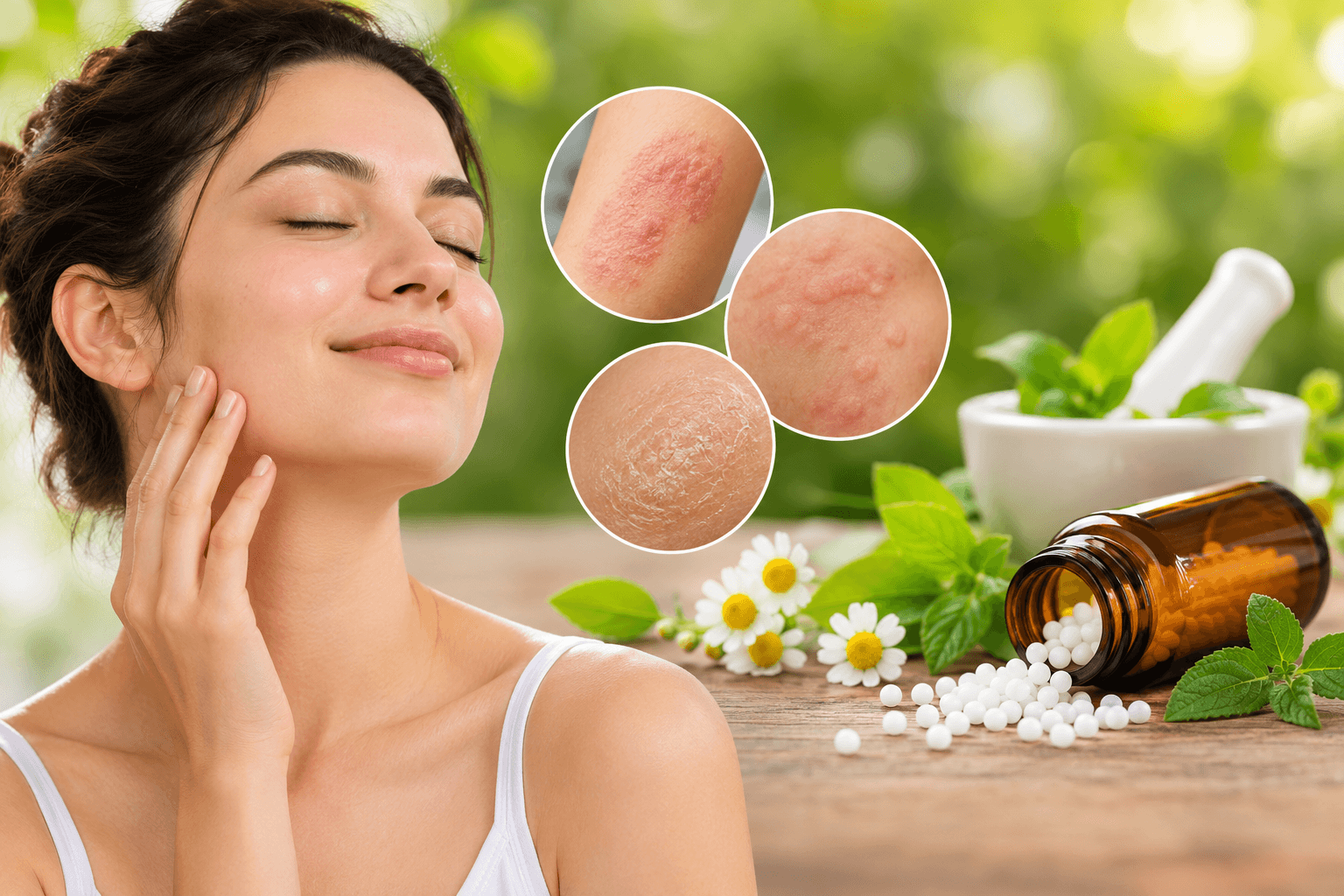
Homeopathy for Skin Problems ?Homeopathy treats skin conditions by addressing internal imbalances rather than suppressing surface symptoms. For persistent rashes, eczema, hives, or allergic itching, it offers a gentle approach that aims to reduce the body’s overreaction to triggers like heat, dust, stress, and certain foods. Many people seek Homeopathy Treatment in Dubai when conventional creams and antihistamines provide only temporary relief and symptoms keep returning.
How Homeopathy Approaches Skin Differently
Conventional treatment focuses on calming the visible skin reaction with topical steroids, antihistamines, or immunosuppressants. Homeopathy works from the inside out. A practitioner examines not just the rash but the whole pattern: when itching worsens, what makes it better, sleep habits, food cravings, emotional state, and family history of allergies. The chosen remedy matches this individual picture.
Two people with identical-looking eczema may receive different remedies. One person’s itching might improve with cold applications, another’s with warmth. One may feel worse in the evening, another after bathing. These details guide remedy selection in ways standardised creams cannot.
Homeopathy for Skin Problems,Common Skin Conditions Addressed
Homeopathic practitioners commonly see these skin complaints:
- Urticaria (hives) triggered by heat, stress, or food reactions
- Eczema and atopic dermatitis with dry, cracked, or weeping patches
- Contact dermatitis from perfumes, detergents, soaps, or cosmetics
- Heat rashes and prickly heat in hot, humid climates
- Allergic itching and redness from dust, pollution, or insect bites
- Scalp itching and flaking
Frequently Used Remedies and Their Indications
The following table outlines homeopathic remedies often considered for skin symptoms. These are not one-size-fits-all prescriptions; remedy selection depends on the full symptom picture.
| Remedy | Skin Indications | Modalities (What Makes It Better or Worse) |
| Apis mellifica | Swollen, puffy hives with stinging pain; skin feels hot | Worse from heat and touch; better from cold applications |
| Urtica urens | Intense itching with burning; hives from shellfish or heat | Worse from bathing or warmth |
| Rhus toxicodendron | Vesicular rashes, intense itching, redness; often linked to damp exposure | Worse in cold, wet weather; better from warm applications and movement |
| Sulphur | Dry, scaly, itchy eruptions; burning; scratching makes it worse | Worse from warmth of bed and washing; better from cool air |
| Graphites | Cracked skin, oozing sticky discharge; common in skin folds | Worse at night and from warmth |
| Arsenicum album | Dry, rough, flaky skin with burning; restlessness accompanies itching | Worse after midnight and from cold; better from warmth |
Rhus toxicodendron 30 is frequently asked about. In homeopathic practice, Rhus tox is typically indicated for blistery, intensely itchy rashes that feel better with hot water or warm compresses and worse in cold, damp conditions. It is not a general-purpose anti-itch remedy; using it without matching these modalities often produces no result.
Potency: 30C Versus 200C
Potency refers to the degree of dilution and succussion (vigorous shaking) a remedy undergoes. Neither is inherently “stronger” in the way a higher milligram dose would be. In classical homeopathy:
- 30C is a moderate potency, often used for acute, recent, or localised skin flare-ups and for self-limiting conditions.
- 200C is a higher potency, typically reserved for deeper, chronic, or constitutional patterns and usually prescribed by an experienced practitioner after a full case analysis.
A higher number does not mean faster or better results. It reflects a different level of action. Self-prescribing 200C for a simple rash is generally discouraged because the remedy needs to match the person’s broader constitution, not just the skin symptom.
What the Evidence Says
Major dermatology organisations, including the American Academy of Dermatology, note that scientific evidence for homeopathy’s effectiveness in treating eczema, dermatitis, and chronic skin conditions is limited and inconsistent. The U.S. Food and Drug Administration does not review homeopathic products for safety or effectiveness.
This does not mean homeopathy has no role. Many patients report subjective improvement, particularly for itching intensity and flare frequency. But it is best understood as a complementary approach, not a replacement for proven dermatological care. For severe, widespread, infected, or rapidly worsening skin disease, delaying conventional medical assessment carries real risks.
Practical Considerations Before Starting
- Skin symptoms sometimes intensify briefly after starting a remedy. This “aggravation” is debated; some view it as part of the healing response, others as a sign the remedy is not well matched.
- Topical homeopathic creams exist, but classical homeopaths often prefer oral remedies, arguing that suppressing a local symptom externally works against the constitutional approach.
- Children with skin allergies can use homeopathy, but dosing and remedy selection require professional guidance, especially for infants.
- A qualified practitioner will ask about conventional medications you are taking and may advise against stopping prescribed treatments abruptly.
When to Seek Professional Care
Consult a qualified homeopathic practitioner or a dermatologist if the skin condition worsens, becomes infected (weeping, crusting, spreading redness, fever), interferes with sleep or daily function, or does not respond to initial treatment. A Homeopathy Clinic in Dubai with a registered practitioner can assess whether this approach suits your case. Some patients specifically seek a Female Homeopathy Doctor in Dubai for comfort during detailed case-taking, which often involves personal questions about sleep, digestion, and emotional patterns.
Diet and Lifestyle Support
Homeopathic treatment works best alongside basic skin hygiene. Avoid known triggers such as strong perfumes, harsh detergents, and heavily fragranced cosmetics. Stay cool and dry in hot weather, wear breathable fabrics, and rinse off sweat promptly. Drink enough water, manage stress through regular sleep and relaxation, and note any food reactions in a simple diary. These measures reduce the overall allergic load and support whatever treatment you choose.
For personalised guidance on whether homeopathy suits your skin condition, contact us at calcium clinic to book an appointment with a qualified practitioner.
FAQ
What homeopathic medicine can I use to relieve itchy scalp?
Remedies depend on the scalp’s appearance and accompanying symptoms. Sulphur is often considered for dry, flaky, intensely itchy scalps that worsen with washing or warmth. Graphites may suit sticky, oozing eruptions behind the ears or in skin folds. If the itch is accompanied by dandruff and worsens at night, a practitioner might consider Arsenicum album. A proper assessment matters because scalp itching can stem from fungal infection, seborrheic dermatitis, psoriasis, or contact allergy, each requiring different management.
How to reduce skin problems?
Reducing skin problems involves both internal and external measures. Identify and avoid personal triggers, whether foods, fragrances, heat, or stress. Use gentle, fragrance-free skin products and rinse sweat promptly. Keep the skin moisturised with suitable emollients. Address sleep and stress, since both influence inflammatory skin responses. For recurrent or chronic issues, consult a professional rather than relying on over-the-counter creams long term.
What is Rhus Tox 30 used for?
Rhus toxicodendron 30 is used in homeopathy for intensely itchy, blistery skin eruptions that feel better from warm applications or hot water and worse in cold, damp conditions. It is also associated with joint stiffness that improves with movement. It is not a general anti-itch remedy and should only be used when the symptom picture matches these characteristics.
Which is more powerful, 30c or 200C?
In homeopathy, 200C is considered a higher potency than 30C, but “powerful” is not the right frame. Potency affects the depth and duration of action, not the strength in a pharmacological sense. 30C is typically used for acute or localised complaints, while 200C is reserved for deeper constitutional treatment under professional guidance. Using a higher potency without a matching remedy picture is unlikely to help and may aggravate symptoms.