Dental caries treatment depends on how far decay has progressed, from non-invasive remineralization for early enamel damage to root canal therapy or extraction for severe destruction. No single treatment is “best”; the right approach matches the lesion stage, symptoms, and caries risk. At Calcium Clinic, diagnosis begins with clinical examination and X-rays before treatment.
What Treatment Matches Each Stage of Decay
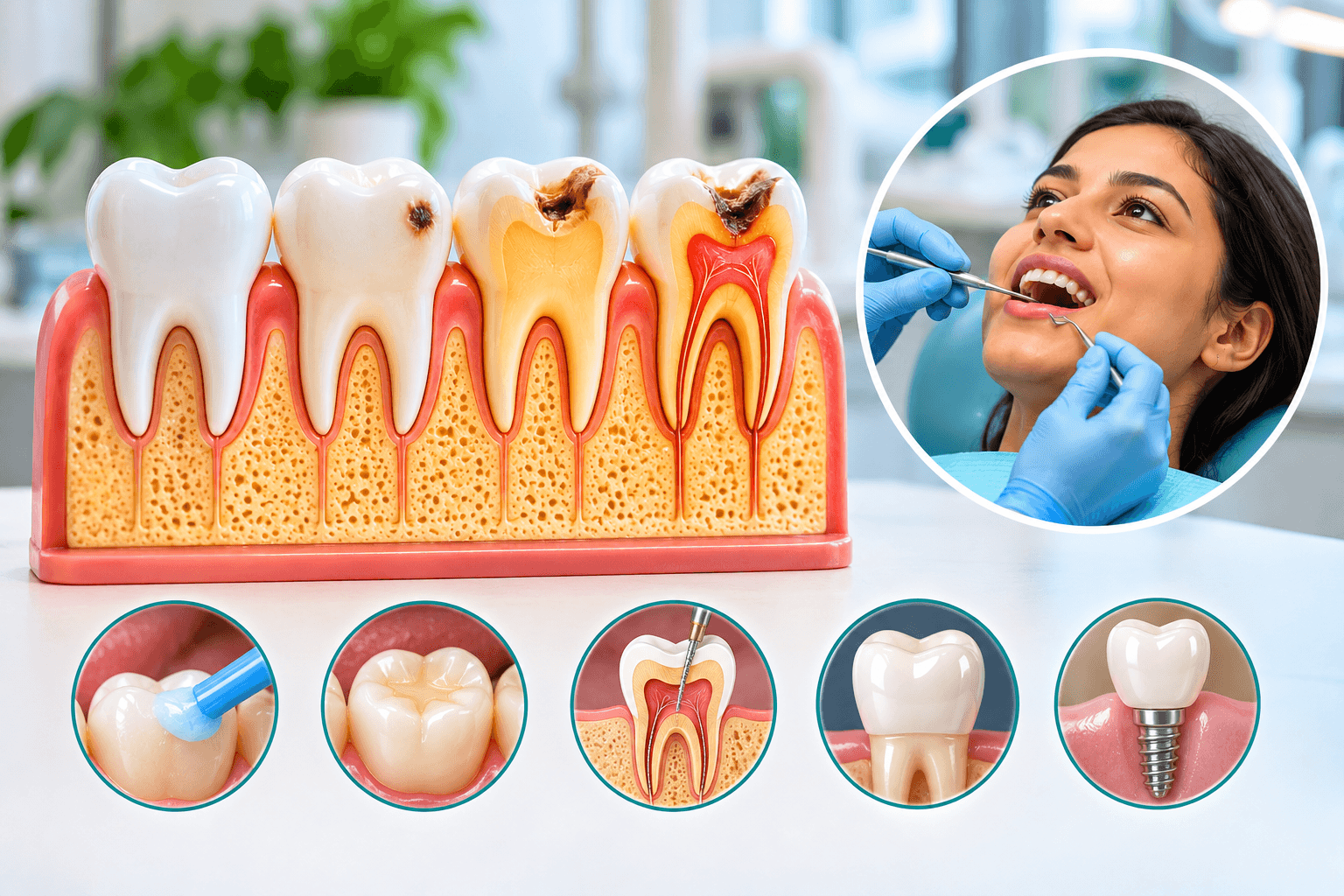
Tooth decay moves through predictable stages, each with a different treatment window.
| Stage | What You See or Feel | Professional Treatment | Reversible? |
| Demineralization | Chalky white spot, no hole | Fluoride varnish (5% sodium fluoride, 22,600 ppm), prescription toothpaste, resin infiltration | Yes |
| Enamel decay | Brown or black spot, no pain | Filling (composite, GIC) or microabrasion | No, but restorable |
| Dentin decay | Visible hole, sensitivity to sweet, cold | Filling, inlay, or onlay after caries removal | No |
| Pulp involvement | Spontaneous pain, throbbing, pain at night | Root canal therapy plus crown | Tooth saved, pulp not |
| Unsalvageable | Large broken crown, abscess, mobility | Extraction, then bridge, denture, or implant | No |
Treating a white spot with a drill is overtreatment; watching a cavitated lesion is undertreatment. Distinguishing a white spot from a true cavity is the most important diagnostic call in modern caries management.
How Dentists Diagnose Caries
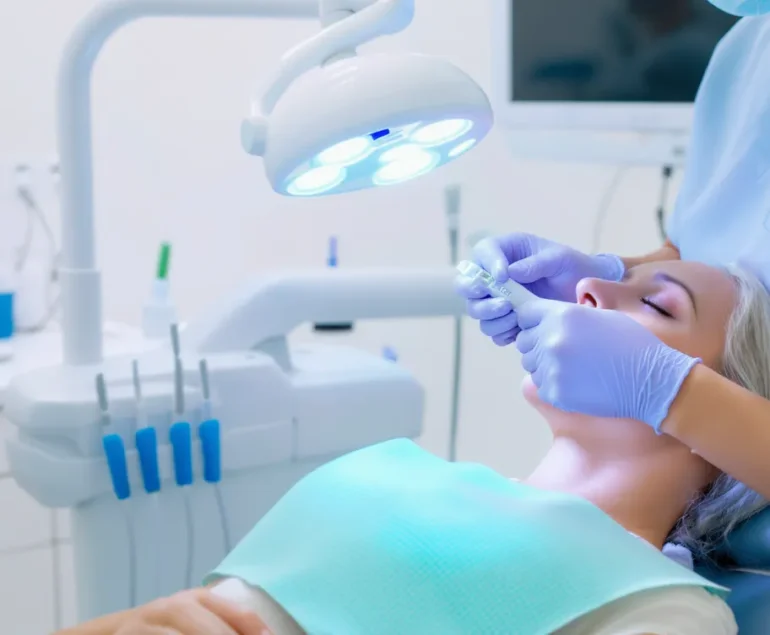
Diagnosis combines visual inspection under magnification, probing with a sharp explorer for soft dentin, and bitewing X-rays to detect decay between teeth or under fillings. Laser fluorescence devices or transillumination are adjuncts, not replacements for clinical judgment and radiographs.
Early-Stage Treatment: Remineralization and Monitoring
Before a hole forms, enamel can repair itself if the acid attack stops. Professional fluoride varnish every 3 to 6 months accelerates remineralization. High-risk patients may receive higher-strength fluoride toothpaste or xylitol gum after meals.
Resin infiltration suits white spot lesions, especially on front teeth after orthodontics. The clinician etches the surface and infiltrates low-viscosity resin into porous enamel, sealing the lesion and improving appearance. It is technique-sensitive and not for every white spot.
Active surveillance means documenting the lesion with photographs or scans, intensifying prevention, and re-evaluating in 6 to 12 months. This is deliberate, evidence-based strategy to avoid drilling until cavitation is confirmed.
Minimally Invasive Approaches Worth Knowing
Silver Diamine Fluoride (SDF), typically 38%, is painted onto cavitated lesions to arrest decay without drilling. It suits root caries in older adults, young children, or anxious or medically complex patients. The trade-off is permanent black staining, so it is reserved for posterior teeth or when aesthetics are secondary.
Atraumatic Restorative Treatment (ART) uses hand instruments to remove soft, infected dentin, then restores with Glass Ionomer Cement (GIC). GIC bonds chemically to dentin and releases fluoride, ideal for this purpose. ART is common in community settings and for patients who cannot tolerate drilling.
The Hall Technique places a preformed metal crown over a decayed primary molar without caries removal or local anaesthetic. The sealed environment starves bacteria, protecting the tooth until it exfoliates. Research supports it for primary teeth, though it remains underused.
Restorative Treatment: Fillings, Inlays, Onlays, Crowns
Once cavitation occurs, decayed tissue must be removed and the tooth restored. Material choice depends on location, cavity size, moisture control, and aesthetics.
Composite resin bonds to tooth structure and matches natural colour, first choice for most front and small posterior restorations. It requires a dry field and shrinks slightly during curing. Amalgam is durable and less technique-sensitive but contains mercury, controversial for some patients. GIC releases fluoride and works in high-moisture or low-compliance situations, though it wears faster. Ceramic inlays and onlays offer excellent aesthetics and strength for larger cavities but need laboratory fabrication and two visits.
When decay destroys more than half the tooth width, a full-coverage crown is indicated. Materials include porcelain-fused-to-metal, full ceramic, and zirconia. For patients considering Dental Crowns & Bridges in Deira, material choice and remaining tooth structure should guide the decision more than cost alone.
Root Canal Therapy and Extraction
When bacteria reach the pulp, the tooth becomes inflamed and eventually necrotic. Symptoms include lingering pain to hot or cold, spontaneous throbbing, pain when lying down, and swelling or a gum boil. Root canal therapy removes infected pulp, cleans and shapes canals, fills them with gutta-percha, and restores the tooth. Posterior teeth almost always need a crown afterward to prevent fracture.
Extraction is reserved for teeth that cannot be restored, due to extensive subgingival decay, vertical root fracture, or severe bone loss. Replacement options include implants, bridges, or partial dentures. Delaying replacement causes drifting of adjacent teeth and bone resorption, so decide before or shortly after extraction.
Home Care: What Works and What Does Not
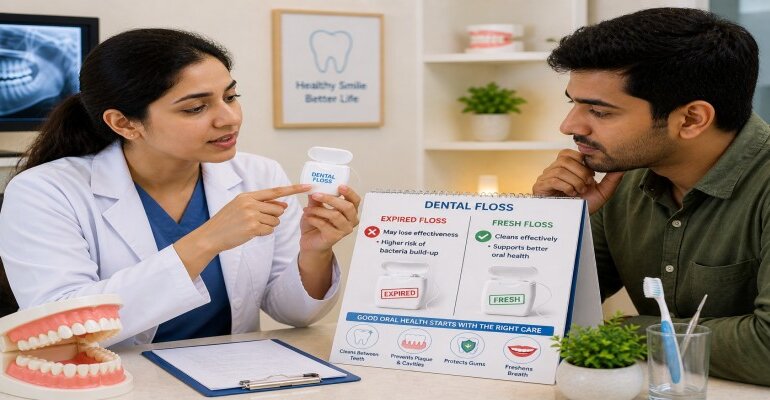
No safe or effective method exists for removing an active cavity at home. A toothbrush cannot reach inside a cavitation, and scraping or dissolving decay damages healthy structure and drives bacteria deeper. Home care can prevent new lesions and reverse early demineralization: twice-daily fluoride toothpaste, flossing or interdental cleaning, limiting snacking frequency, and fluoride or xylitol products as recommended.
Risk-Based Management: CAMBRA
Caries Management by Risk Assessment (CAMBRA) assigns patients to low, moderate, high, or extreme risk categories based on diet, hygiene, fluoride exposure, saliva flow, medical conditions, and past caries history. High-risk patients may need fluoride varnish every 3 months, prescription toothpaste, chlorhexidine rinse for a limited period, and more frequent recall visits. This explains why two patients with identical-looking cavities may receive different preventive protocols.
For affordable care without compromising diagnosis, a Cheap Dentist in Dubai can still follow CAMBRA protocols properly. The key is whether the clinician assesses risk and explains the rationale, not the price point.
Common Mistakes People Make
- Treating a white spot as a cavity and requesting a filling.
- Ignoring sensitivity because it goes away, when it may indicate reversible pulpitis progressing toward irreversible pulpitis.
- Replacing an amalgam filling solely for aesthetics without understanding the risk of removing healthy tooth structure.
- Skipping the crown after root canal on a molar, leading to fracture and eventual extraction.
- Assuming no pain means no decay; dentin decay is often painless until it nears the pulp.
If you are unsure what stage your decay has reached or which treatment is appropriate, the next step is a clinical examination and X-rays. Book Appointment with a Best Dentist in Deira, Dubai who explains the stage, the options, and the preventive plan, not just the procedure. For a trusted Best Dental Clinic in Deira Dubai, you can also review the full range of Services offered before booking.
Frequently Asked Questions
1. What is the best treatment for dental caries?
The best dental caries treatment depends on the stage of tooth decay. Early enamel damage may be managed with fluoride treatments, while cavities may require fillings. Advanced decay affecting the pulp may need root canal treatment or extraction.
2. Can dental caries be reversed without a filling?
Yes, early tooth decay can sometimes be reversed through remineralization with fluoride and improved oral hygiene before a cavity forms. Once a hole develops in the tooth, professional restorative treatment is usually necessary.
3. What are the warning signs that dental caries needs treatment?
Common signs include tooth sensitivity to hot, cold, or sweet foods, visible holes or dark spots, toothache, pain while chewing, and persistent bad breath. Early decay may not cause any symptoms, so regular dental check-ups are important.
4. How can I prevent dental caries from getting worse?
Brush twice daily with fluoride toothpaste, clean between your teeth every day, limit sugary snacks and drinks, and attend regular dental check-ups. Early diagnosis and professional fluoride treatment can help prevent further decay and reduce the need for extensive dental procedures.