Dental nerve damage is when the nerve inside or around a tooth gets injured badly enough to cause pain, numbness or sensitivity that behaves differently from ordinary toothache. Can dental nerve damage heal is one of those questions without a clean universal answer because the outcome genuinely shifts depending on what caused it and how long it went unaddressed.
Plenty of cases sort themselves out. Plenty don’t. What usually determines which way it goes is timing and the specific type of damage involved. This piece covers symptoms, how diagnosis works in practice and what recovery actually looks like. If the best dental clinic in Deira Dubai is already on your list, reading this first gives you a better sense of what to expect.
What Causes Dental Nerve Damage?
Almost always something specific. Nerve damage in teeth rarely appears without a traceable cause.
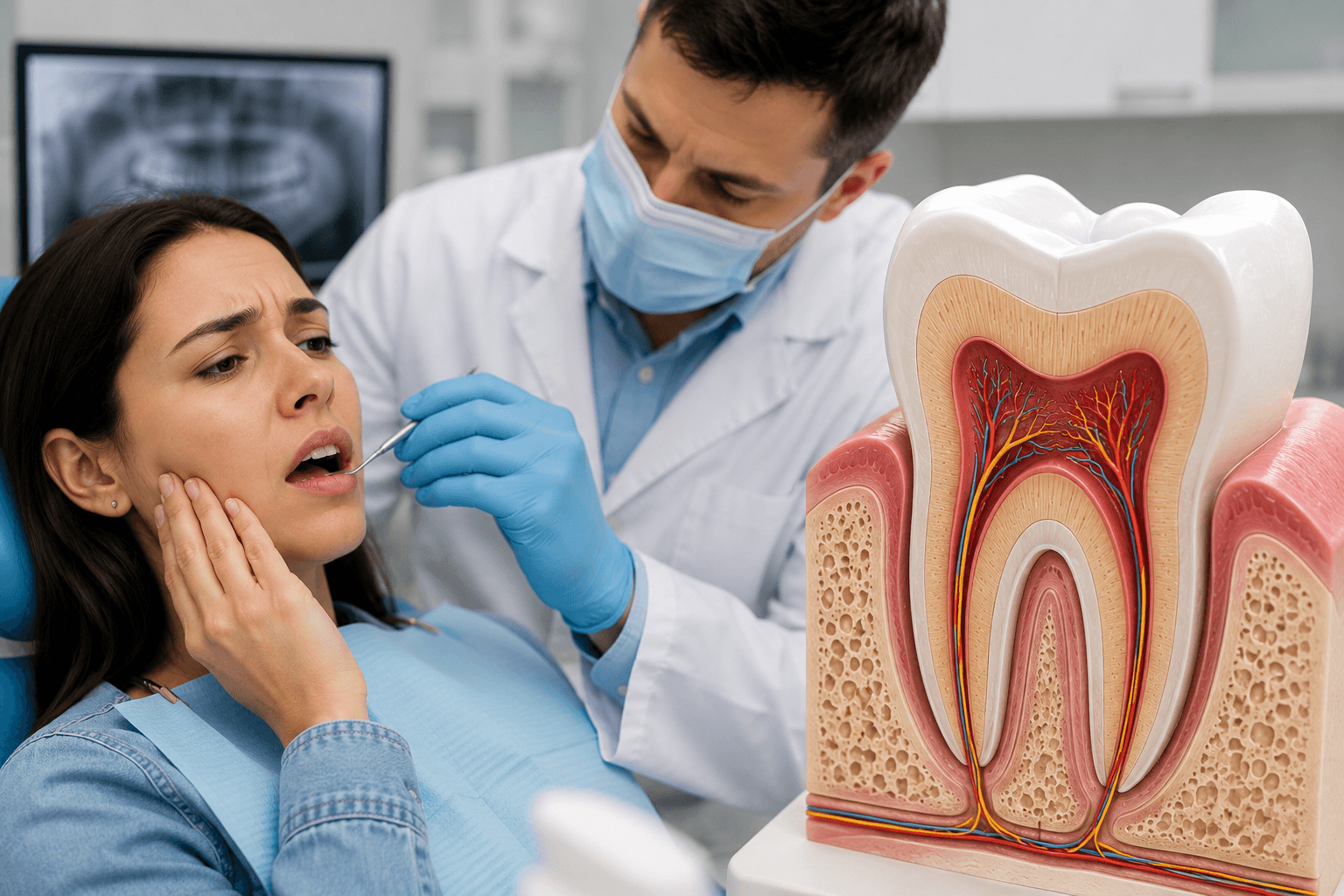
Physical impact is common. A knock during sport, biting down on something unexpectedly hard, a fall that shifts a tooth. Any of these can disturb the nerve without anything showing on the surface afterward. Deep decay is another route in. The nerve sits inside the pulp chamber at the tooth’s centre and bacteria working through enough enamel and dentine will reach it eventually. Infection follows.
Dental procedures carry a small risk too. Extractions and implant placements near the inferior alveolar nerve in the lower jaw are the main scenarios where procedure-related nerve issues come up. Slower causes exist as well: years of grinding, restorations that never quite fitted right, gum disease gradually eroding bone around the roots. These accumulate quietly before anything obvious happens.
Can a Cracked Tooth Cause Nerve Damage?
Frequently, yes. Can a cracked tooth cause nerve damage comes up regularly because cracks are notoriously difficult to confirm on standard x-rays. They get missed. Symptoms get written off as something else until they worsen enough to force the issue.
A vertical crack reaching the pulp means every bite flexes the crack slightly. The nerve registers that movement. Early on it’s a sharp twinge on something firm. Left without treatment, bacteria get in through the crack line, pulp infection develops and the damage escalates from nerve irritation to something needing a root canal or extraction.
Cold sensitivity that doesn’t settle quickly after the stimulus is removed is usually the first real indicator that a crack has reached nerve level. Heat sensitivity appearing on top of that typically means the nerve is inflamed or already dying.
Symptoms of Dental Nerve Damage
| Symptom | What It May Indicate |
| Sharp pain when biting | Cracked tooth or pulp inflammation |
| Cold sensitivity that lingers | Early nerve involvement |
| Heat sensitivity | Nerve inflammation or dying pulp |
| Numbness in lip or chin | Inferior alveolar nerve compression |
| Spontaneous throbbing pain | Advanced pulp infection |
| No pain despite visible damage | Nerve has died |
| Tingling around the jaw | Nerve irritation post-procedure |
Two rows in that table get missed more than the others. A tooth that was extremely sensitive and has gone quiet isn’t recovering. In a lot of cases the nerve has died, which cuts the pain signal but leaves an active infection free to move into surrounding bone. Silence from a previously painful tooth, especially alongside gum swelling or tooth darkening, needs prompt attention.
Which of these patterns fits your situation is a big part of what determines whether can dental nerve damage heal applies or not.
How Diagnosis Works
X-rays and a visual exam start the process but they regularly miss things, particularly cracks and early pulp involvement.
Temperature testing comes next. Cold and heat applied to the tooth tells the dentist how the nerve is responding and whether that response normalises or lingers. Electric pulp testing checks whether the nerve is still alive at all. A bite stick isolates which tooth is generating the pain when the source isn’t obvious. Periodontal probing rules out bone loss from gum disease as a separate contributing factor.
For anything involving the inferior alveolar nerve after a lower molar extraction or implant procedure, a CBCT scan becomes necessary. It produces a three-dimensional picture that flat x-rays simply can’t replicate.
Reaching the correct diagnosis early is what determines whether can dental nerve damage heal ends with a yes. Waiting shifts the answer in the other direction.
Can Dental Nerve Damage Heal?
Depends on the damage type. Three categories cover most cases.
Neuropraxia is the mild end. The nerve is bruised or temporarily compressed but structurally intact. Most cases resolve without treatment, typically within eight to twelve weeks. Minor trauma and brief procedure-related compression usually fall here.
Axonotmesis sits in the middle. Internal nerve fibre damage with the outer sheath still intact. Recovery happens but slowly, sometimes taking a year or longer. Sensation returns gradually and may stay incomplete.
Neurotmesis is full severance or crushing of the nerve. Spontaneous recovery is unlikely. Surgical intervention may be required. Rare in routine dental situations but possible with complex lower molar extractions or jaw trauma.
Can dental nerve damage heal for the average patient presenting with tooth pain and sensitivity? Usually yes. Timing is the condition attached to that answer. An inflamed nerve treated at the irritation stage has a very different prognosis from one that’s been infected for several months.
Patients at Calcium Clinic presenting with nerve-related pain get a thorough workup before anything is prescribed. That sequence matters for getting to an outcome that actually holds.
Treatment Options
Follows directly from what the diagnosis shows. No single approach covers all cases.
Early irritation with no infection: removing whatever is causing the irritation sometimes lets the nerve settle on its own. A cracked filling replaced, a bite corrected, fresh decay cleared. Anti-inflammatory medication covers symptoms while things calm down.
Infected or dead pulp with a restorable tooth: root canal treatment. The nerve tissue is removed, the canal cleaned and sealed and a crown placed on top. Can dental nerve damage heal after a root canal is technically a different question at that point because the nerve is gone, but the tooth functions normally for years afterward.
Dental crowns in Dubai follow root canal treatment in most cases. Without a live nerve the tooth loses moisture over time and becomes brittle. The crown prevents fracture. Dental crowns and bridges in Deira extend to cases involving neighbouring teeth in the same restoration.
Unsalvageable tooth: extraction then implant or bridge. A cheap dentist in Dubai handles the extraction but the restoration planning afterward is where the long-term result actually comes from. That part deserves proper attention.
Recovery Timelines
Minor nerve bruising from trauma or a procedure: six to twelve weeks for most patients to reach full or near-full resolution. Tingling during recovery is generally a positive sign. It means the nerve is regenerating.
Post-root canal: a few days of tenderness is normal. Active pain from the tooth clears relatively quickly. Crown placement follows within one to two weeks and that’s treatment done for straightforward cases.
Inferior alveolar nerve involvement: the slow scenario. Numbness in the lip or chin after lower jaw work can take months to improve and in some cases partial numbness persists long term. Regular follow-up is what tracks whether progress is happening.
Aftercare quality matters at any price point. A cheap dental clinic in Deira that schedules proper follow-up is a better outcome than one that doesn’t, regardless of what the initial treatment cost.
Conclusion
The cases that become complicated are the ones that sat too long. The best dentist in Deira, Dubai at Calcium Clinic runs through the full diagnostic process before recommending anything, pulp vitality testing, imaging and a proper clinical assessment.
Book a consultation before the options get narrower.
FREQUENTLY ASKED QUESTIONS:
1: Can it resolve without any treatment?
Minor bruising sometimes does. The issue is that without a clinical assessment there’s no way to know whether that’s your situation. Waiting without getting checked first is a gamble on the diagnosis being the mild kind.
2: What does a dying nerve actually feel like?
A tooth that was very painful and has gone quiet, especially with any darkening of the tooth or a small raised bump on the gum near the root. That combination is a specific warning sign. Severe pain stopping suddenly without treatment is not improvement.
3: Can a cracked tooth cause permanent nerve damage?
Yes. The window matters. A crack that lets bacteria reach the pulp and an infection that spreads into surrounding bone becomes a significantly harder situation to treat. Catching it while the damage is still reversible is the whole point of not putting off assessment.
4: Numbness after a procedure. Is that normal?
The numbness from anaesthetic during the appointment clears within a few hours. Numbness still present several days later is worth reporting so it can be monitored and documented.
5: Does root canal treatment fix nerve damage?
It removes the damaged or dead nerve tissue and clears the infection. The nerve doesn’t regenerate after that. But can dental nerve damage heal framed differently: the pain resolves and the tooth keeps working normally with a crown on it.
6: What treatments are available for nerve-related dental problems?
The full range from diagnosis through to crown placement and implant restoration is covered under services at Calcium Clinic.
7:Can dental nerve damage heal?
For most patients, yes, when the damage type and treatment timing line up. Bruised nerves from minor incidents often recover without any intervention. Infected pulps need root canal treatment. More severe nerve injuries take longer and sometimes require specialist referral.
8:Can a cracked tooth cause nerve damage?
It can, and the problem is that cracks often don’t show clearly until significant damage has already occurred. Any sensitivity on biting or lingering response to temperature is worth investigating rather than watching.