TMJ in Dentistry: Symptoms, Causes and Treatment for Jaw Joint Disorders
TMJ in dentistry refers to problems in the jaw joint area that can cause pain or difficulty when you open and close your mouth. In simple terms, it means the jaw joint or the muscles that move it are not working smoothly. Because your jaw joint is used for speaking, chewing, swallowing, and yawning, even a small issue can affect daily life. This article explains how dentists define TMJ in dentistry, what symptoms to watch for, and which treatments are commonly used to reduce pain and protect your teeth. If you have jaw clicking, facial tightness, or frequent headaches, this guide will help you understand what to do next and when to book a dental evaluation.
What is tmj dental and what does TMJ mean?
The TMJ is the temporomandibular joint, the hinge joint in front of each ear that connects your lower jaw to your skull. When people ask what is tmj dental they are usually referring to TMJ disorders (often called TMD) which can involve the joint itself, the chewing muscles or both.
A key point is that TMJ disorders are not always “just a jaw problem.” Your bite tooth wear stress habits posture and even sleep related clenching can contribute.
Common symptoms of jaw joint disorders
When patients search what is tmj dental they are often trying to match their symptoms to a real cause. TMJ symptoms can come and go and the pattern matters.
Jaw and facial symptoms
Common signs include:
- Pain or tenderness in the jaw
- Clicking popping or grating sounds when opening the mouth
- Limited mouth opening or a feeling the jaw “catches”
- Facial aching especially around the cheeks temples or ear area
Head and ear related symptoms
Because the TMJ sits close to the ear TMJ disorders can mimic ear problems. Some people notice ear fullness ringing or pain even when the ear exam is normal. Tension type headaches can also be linked to overworked jaw muscles.
Tooth and bite related symptoms
Dentists also look for tooth wear cracks sensitivity and gum irritation related to clenching or grinding. These dental clues can be part of the answer to what is tmj dental because they show the jaw system has been overloaded.
Symptoms and red flags (quick table)
Not every case needs urgent care but some signs should be checked quickly.
| Symptom | What it can feel like | Possible TMJ link | When to seek urgent evaluation |
| Jaw pain with chewing | Soreness in jaw muscles | Muscle overuse clenching | Severe pain after trauma or sudden swelling |
| Clicking or popping | Noise near the ear on opening | Disc movement in the joint | New noise with locking or inability to open |
| Jaw locking | Jaw stuck open or closed | Joint inflammation or disc issues | Locked jaw that does not release |
| Headaches temple pain | Tight pressure around temples | Muscle tension from bruxism | Sudden severe headache or neurologic symptoms |
| Tooth wear sensitivity | Flattened biting edges sensitivity | Grinding overload | Tooth fracture significant swelling or fever |
What causes TMJ problems?
There is rarely one single cause. Dentists usually think in terms of contributing factors. Understanding causes is part of understanding what tmj dental is.
Common contributing factors
- Teeth grinding or clenching (awake or during sleep)
- High stress with jaw tension habits
- Bite changes from missing teeth crooked teeth or new dental work that needs adjustment
- Arthritis or joint inflammation
- Injury to the jaw joint area
Muscle driven vs joint driven problems
Some TMJ cases are mostly muscular, meaning the chewing muscles are tight and painful. Others are more joint related, meaning the disc inside the joint or joint surfaces are irritated. Many patients have a mix.
How dentists diagnose TMJ disorders
A proper evaluation is important because jaw pain can also be caused by tooth infection, gum disease, sinus problems or nerve related pain. In the dental chair the answer to what is tmj dental begins with a structured exam.
A dentist may:
- Ask about pain timing triggers stress and sleep
- Check jaw opening and side to side movement
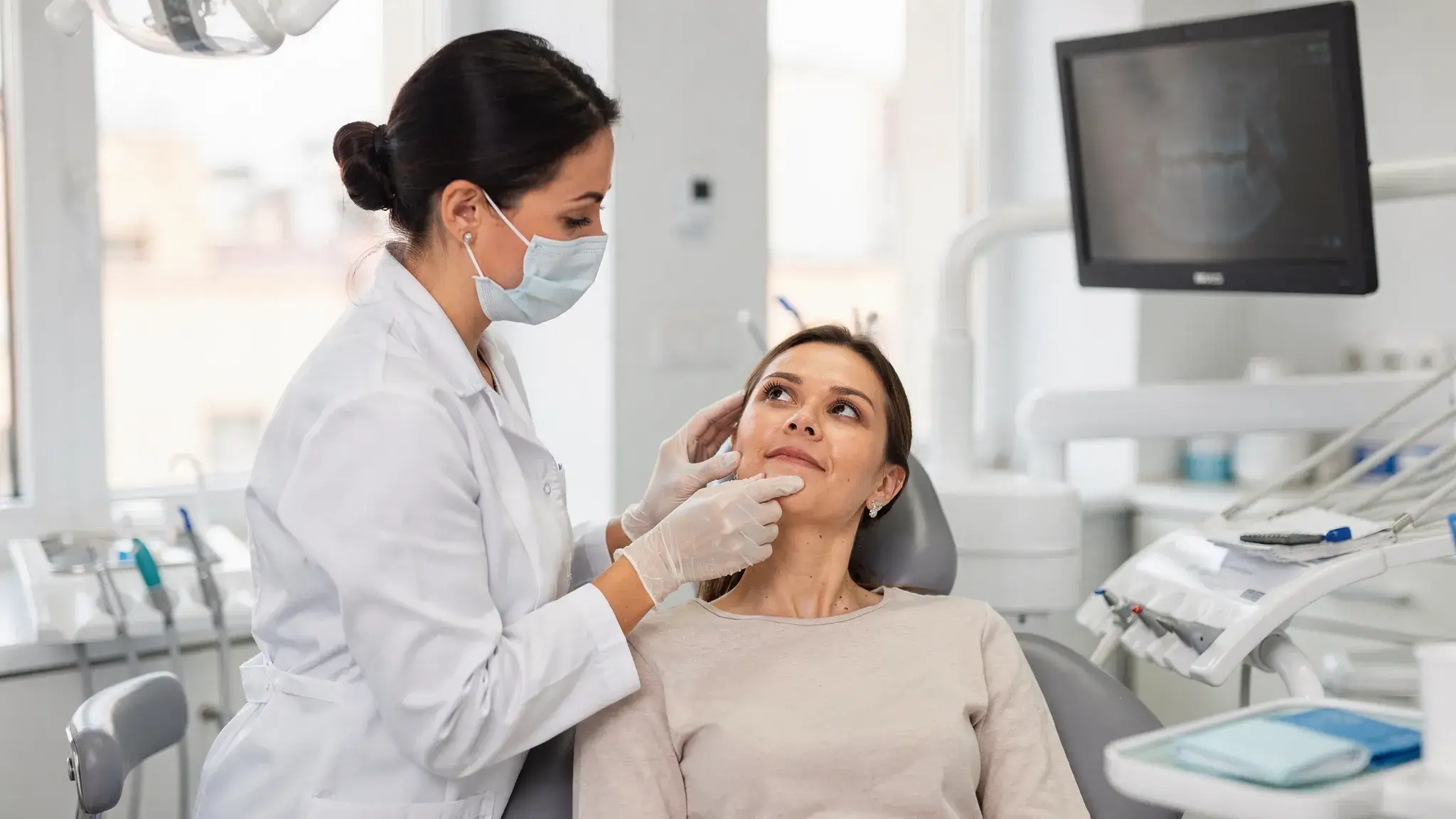
- Feel the jaw muscles for tenderness
- Listen for joint sounds
- Examine tooth wear cracks and bite balance
- Recommend imaging when needed (for example dental X rays or CBCT based on clinical judgment)
If symptoms suggest a more complex joint condition the dentist may coordinate care with an oral and maxillofacial specialist.
Treatment options for TMJ in dentistry
TMJ treatment usually starts conservatively. The goal is to reduce pain, calm inflammation and prevent damage to teeth and joints. This is where the practical part of what is tmj dental matters most because many cases improve without surgery.
Self care and habit changes
Small daily changes can reduce load on the jaw:
- Eat softer foods for a short period if chewing increases pain
- Avoid gum chewing and wide yawning when symptoms flare
- Use warm compresses for tight muscles or cold packs for acute soreness
- Practice jaw relaxation with lips closed teeth apart and tongue resting lightly on the palate
Night guards and bite protection
If clenching or grinding is suspected a dentist may recommend a custom night guard. A properly fitted guard can reduce tooth wear and may reduce muscle overactivity for some patients.
Because bite relationships are individual, a store bought guard is not always ideal. Custom fitting also helps ensure your jaw is not pushed into a worse position.
Medications and supportive therapies
Depending on your medical history a clinician may suggest short term anti inflammatory medicines or muscle relaxants. Some patients benefit from physiotherapy exercises, posture work or massage based therapy. In certain cases trigger point injections or other advanced pain approaches are considered by specialists.
Dental treatment when teeth are part of the problem
If bite issues, missing teeth or broken restorations are contributing, dentists may discuss stabilizing the bite. This can include restoring damaged teeth or replacing missing teeth. Your dentist should prioritize reversible steps before major bite changes.
Specialist care and procedures
A smaller number of cases need specialist care such as arthrocentesis injections or surgery. Most patients do not need surgery.
When should you see a dentist for TMJ symptoms?
Book an evaluation if pain lasts more than a week, keeps returning or affects eating sleep or work. You should also be assessed if you have cracked teeth, new sensitivity or signs of heavy grinding.
If you are in Dubai and want a complete dental exam with personalized guidance you can explore Calcium Clinic services here: Services.
TMJ care at Calcium Clinic in Deira Dubai
If you are searching for what tmj dental is and you want a clear plan the next step is a dental assessment that checks both the jaw joint and the teeth. Calcium Clinic in Deira focuses on patient centered care across general dentistry family dentistry and advanced treatments. If you are comparing providers you can learn more about the Best Dental Clinic in Deira Dubai and options for a Cheap Dentist in Dubai.
Patients also look for transparent options close to home, the clinic is known as a Cheap Dental Clinic Deira and you can meet the Best Dentist in Deira, Dubai for a jaw and bite evaluation.
Conclusion: Key takeaways and next step
What is tmj dental comes down to problems affecting the jaw joint or chewing muscles that can cause pain clicking headaches, tooth wear and difficulty opening the mouth. Common causes include clenching grinding bite imbalance arthritis and injury. Most cases improve with conservative treatment like habit changes, jaw friendly self care and dentist guided bite protection.
If you have ongoing jaw discomfort or you suspect grinding do not guess the cause. Book a consultation to get a proper exam and a personalized plan. Contact Calcium Clinic to schedule your visit here: Contact us.
Frequently Asked Questions
What is tmj dental and is it the same as TMD?
What is tmj dental usually refers to TMJ related disorders while TMD is the broader term for temporomandibular disorders. Many people use the terms interchangeably.
Can TMJ problems cause headaches or ear pain?
Yes. Tight jaw muscles can contribute to tension type headaches and irritation near the joint can feel like ear pain or fullness.
Do I always need a night guard for TMJ pain?
Not always. Night guards can help when grinding or clenching is part of the issue but the decision should be based on exam findings, tooth wear patterns and your symptoms.
Is TMJ pain caused by stress?
Stress can increase clenching and muscle tension which can worsen symptoms. It is often a contributing factor rather than the only cause.
When is TMJ considered an emergency?
Seek urgent care if your jaw is locked and cannot move back if there is facial swelling fever after an infection concern or jaw trauma.