
Why is a dental cantilever bridge not recommended? That’s something a lot of patients end up asking when they start looking into ways to replace a missing tooth. On the surface, it sounds simple enough. A cantilever bridge is basically a dental prosthesis that’s supported by just one adjacent tooth instead of two.
And yeah, it sounds convenient. But dentists usually hesitate with this option, mostly because of how it handles pressure over time. There are some real structural concerns. This is exactly why is a dental cantilever bridge is not recommended in many cases, especially when better options exist at places like Calcium Clinic.
What Exactly Is a Dental Cantilever Bridge?
The Basic Idea
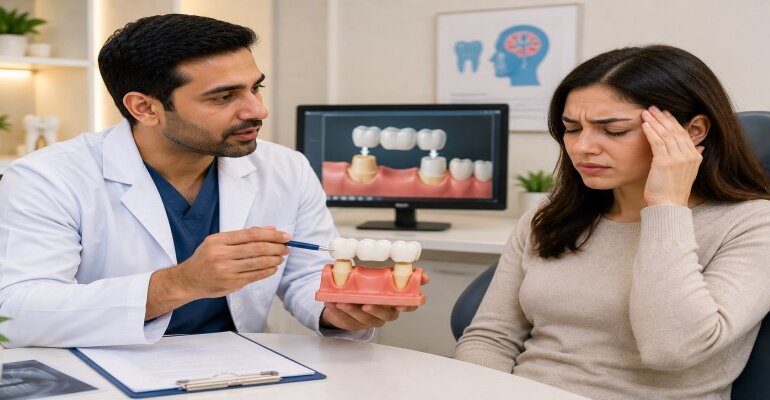
It replaces a missing tooth by attaching an artificial tooth to just one supporting tooth next to it. Unlike traditional bridges, there’s no support on the other side.
How It Actually Works
The nearby tooth is reshaped and fitted with a crown. That crown holds the artificial tooth in place. But here’s the issue, all the chewing force ends up going through that one tooth.And that imbalance is a big part of why dentists don’t recommend it so easily.
So Why Is It Not Recommended?
Too Much Load on One Tooth
Everything depends on a single tooth. Over time, that can lead to:
- Cracks or fractures
- Enamel wear
- Sensitivity
It’s just not a balanced setup.
Higher Chance of Failure
Since one side is unsupported, these bridges are more likely to loosen or even break. Which usually means more dental visits later.
Risk to the Supporting Tooth
The tooth holding everything can slowly weaken. That might lead to:
- Root issues
- Gum problems
- Even losing that tooth
And once that happens, you’re dealing with a bigger problem than before.
Not Suitable Everywhere
They’re generally not used for back teeth. The pressure there is just too much. Sometimes they’re used in front teeth, but even then, only in specific cases.
Shorter Lifespan
Compared to implants or regular bridges, these don’t last as long. That’s another reason dentists don’t prefer them for long term solutions.
Are There Any Benefits?
There are a few, to be fair.
- The procedure is simpler
- Less preparation compared to traditional bridges
- Lower upfront cost
- Can work in certain front tooth cases
But honestly, the drawbacks tend to outweigh these benefits for most people.
Quick Pros and Cons
Pros
- Less invasive
- Lower initial cost
- Works in limited situations
Cons
- Uneven pressure on one tooth
- Higher chance of failure
- Can damage the supporting tooth
- Not suitable for molars
- Doesn’t last as long
A Real Case Example
A patient came to Calcium Clinic with a missing side tooth and wanted something quick. A cantilever bridge was considered at first.
But after checking the bite pressure and overall condition, it wasn’t recommended. Instead, the patient went with a dental implant.
The result? Much more stable, longer lasting, and it didn’t put stress on nearby teeth.
That’s usually how these decisions go in real life.
Better Options to Think About
Dental Implants
Probably the most stable option. They replace both the root and the crown, so they handle pressure much better.
Traditional Bridges
These use support from both sides, which spreads out the force and makes things more balanced.
Partial Dentures
A removable option. Not permanent, but useful if you’re dealing with multiple missing teeth or working within a budget.
Quick Comparison
- Cantilever bridge: low stability, shorter lifespan, higher stress on one tooth
- Traditional bridge: better balance, decent lifespan
- Dental implant: highest stability, long lasting, minimal impact on other teeth
- Partial denture: moderate option, more flexible
How Calcium Clinic Approaches This
At Calcium Clinic, the focus is more on long term results than quick fixes. Treatment plans are usually based on:
- Overall oral health
- Bite strength
- Budget and expectations
So it’s not just about filling a gap, it’s about choosing something that actually holds up over time.
Frequently Asked Questions
Why is a dental cantilever bridge not recommended for back teeth?
Because back teeth handle a lot of pressure, and one supporting tooth just isn’t enough.
Is it okay for long term use?
Not really. The failure rate is higher compared to other options.
Can it damage nearby teeth?
Yes, especially the supporting tooth.
Is it cheaper than implants?
Initially, yes. But long term, it can end up costing more due to repairs or replacements.
What’s the best alternative?
In most cases, dental implants are considered the most reliable.
Final Thoughts
So, why is a dental cantilever bridge not recommended? Mostly because it puts too much stress on one tooth, doesn’t last as long, and carries a higher risk of failure.
It’s not that it never works, it’s just that there are better, more stable options available now.
If you’re thinking about replacing a missing tooth, it’s worth taking a bit of time to choose the right solution. Something that actually lasts, not just something that works for now.
Book Your Consultation at Calcium Clinic
If you’re unsure which option makes sense for you, Calcium Clinic can help you figure it out.
Sometimes just understanding your options properly makes the decision a lot easier. And once that’s clear, everything else kind of falls into place.
If you are considering tooth replacement, take the next step today. Book your consultation here:
https://calciumclinics.com/contact-us/
Choosing the right solution now can ensure a healthier and more confident smile for the future.