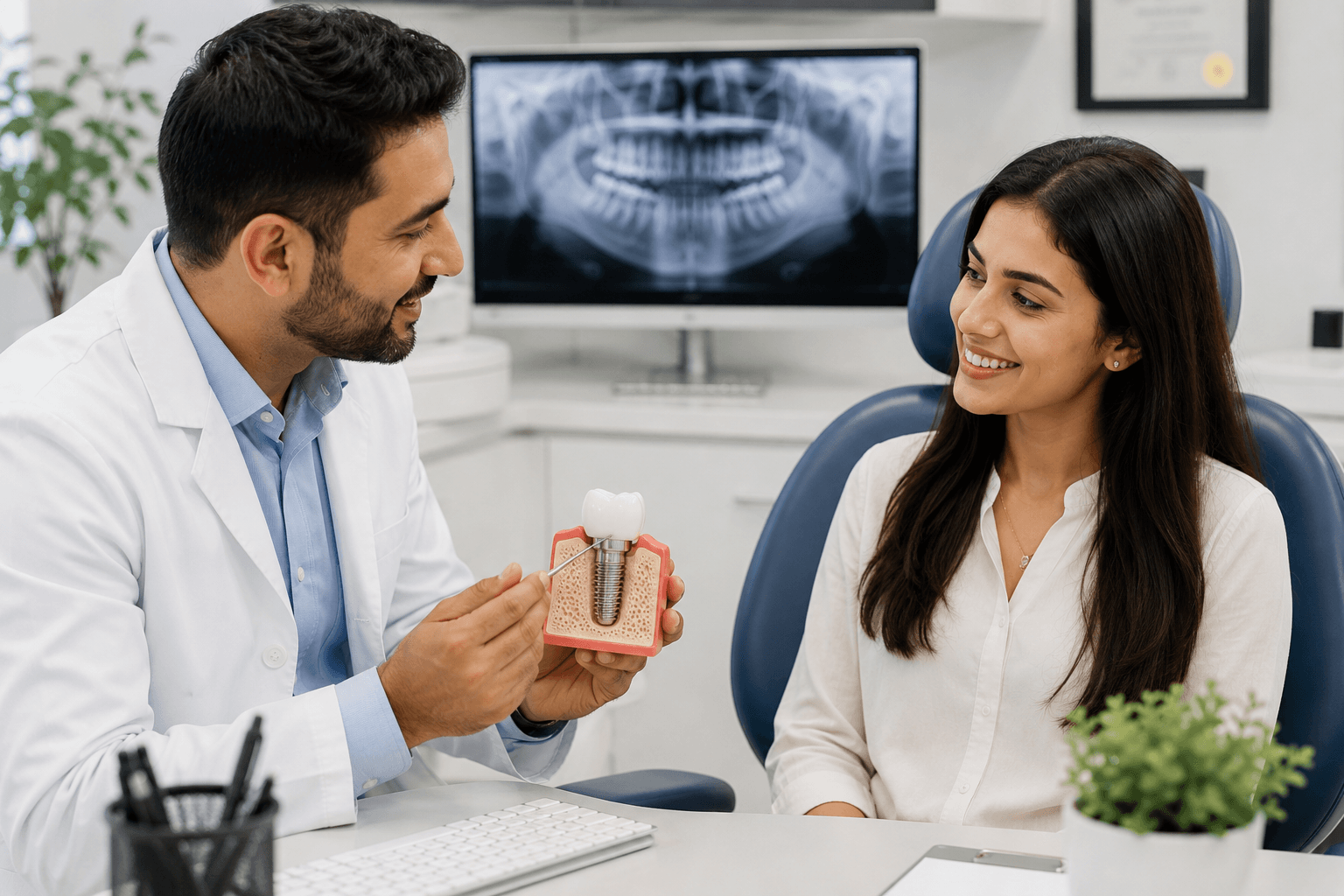
Dental implants are titanium posts screwed into the jawbone where a tooth root used to be. Simple enough. But how long do dental implants last is almost always the first real question people ask, usually before they’ve even decided whether they’re doing it.
No single answer covers everyone. Your hygiene routine, bone condition, smoking history, and the skill of whoever places the implant all pull in different directions. This article lays out what’s realistic. If you’re already considering the best dental clinic in Deira Dubai, knowing this beforehand saves you from making a decision with half the picture.
So, How Long Do Dental Implants Last?
For the titanium post itself, potentially your whole life. It bonds with the jawbone through a process called osseointegration and under normal conditions, it stays put. Clinical survival rates cross 95% at the 10-year mark. Implants from the early 1980s are still functional in patients today.
The crown sitting on top of it is a separate conversation. Porcelain and ceramic wear down. Most crowns need replacing somewhere in the 10 to 15 year range, sometimes earlier depending on habits. So how long do dental implants last splits into two answers depending on which part you’re asking about. The post is built to go the distance. The crown gets replaced as needed.
The Two Parts of a Dental Implant and Their Lifespans
| Component | Material | Average Lifespan |
| Implant Post (root) | Titanium | Lifetime (20-30+ years) |
| Abutment (connector) | Titanium or zirconia | 10-20 years |
| Crown (visible tooth) | Porcelain or ceramic | 10-15 years |
A lot of the success rate statistics you’ll come across online are only measuring the post. Not the abutment, not the crown. So when something claims a 96% success rate at 15 years, read the fine print. That number is almost certainly about the titanium piece buried in your jaw, not the full restoration. Matters when you’re comparing how long do dental implants last across different sources.
What Factors Affect How Long Dental Implants Last?
Patient outcomes vary considerably. A few things explain most of the gap.
Oral hygiene is the main one. Implants don’t decay, but peri-implantitis, an infection of the gum and bone around the implant, is one of the more common failure causes. It’s essentially gum disease focused around the implant site. Twice-daily brushing and flossing around the base of the crown isn’t negotiable if longevity matters to you.
Bone density determines how well osseointegration works in the first place. If bone is thin or compromised going in, the fusion between post and bone is less reliable. Some cases need a graft done beforehand to build up enough volume. It adds time but it changes the odds meaningfully.
Smoking is a consistent variable in implant failure research. Nicotine constricts blood vessels, which slows healing and reduces the oxygen supply to gum tissue during recovery. Smokers fail implants at a noticeably higher rate. Not a marginal difference.
Bruxism is the one patients often don’t realize is relevant. Grinding at night applies repetitive pressure to the crown and indirectly to the post below it. Most people don’t know they grind until a dentist catches wear patterns. A custom nightguard is a straightforward fix that meaningfully extends the lifespan of the restoration.
Systemic conditions like uncontrolled diabetes or autoimmune disease don’t rule out implants, but they require more careful management before and after placement. Being honest with your dentist about your full medical picture isn’t optional here.
Are Dental Implants Truly Permanent?
The confusion usually comes from not separating the post from everything else. The titanium post fuses with bone and stays there. Under normal circumstances nothing removes it. It doesn’t come out at night like a denture. No adjacent teeth get filed to anchor it like a bridge does.
That part is as permanent as dental work gets. The crown above it is not. It chips, wears and eventually needs replacing like any other restoration. So the honest framing is this: the implant is a permanent base, the restoration on top has a lifespan of its own.
At Calcium Clinic, patients get this explained in detail during their first visit rather than finding out piece by piece later. Understanding the difference between the post and the crown changes how people think about the investment.
Early Implant Failure vs. Late Implant Failure
These are two distinct situations that need different explanations.
Early failure happens within months of placement. The post doesn’t integrate properly. Reasons include infection at the site, insufficient bone to begin with, smoking during the healing window or specific medications that interfere with bone formation. A thorough workup before the procedure catches most of the risk factors.
Late failure is slower. Years pass, then peri-implantitis develops, or an unmanaged grinding habit gradually compromises the crown and eventually the post, or some trauma affects the area. Regular checkups with periodic x-rays are what catch this before it progresses to losing the implant entirely.
Aftercare quality matters at any price point. A cheap dentist in Dubai who schedules proper follow-up visits is a better bet than a pricier one who doesn’t. The post-surgery period is where a lot of long-term outcomes get determined.
How to Maximize How Long Your Dental Implants Last
The list isn’t long. Following through on it consistently is where most people fall short:
- Brush twice daily, specifically targeting the gumline where the crown sits
- Use an interdental brush or water flosser around the implant base, standard floss often misses it
- Professional cleaning every six months, or more often if your dentist recommends it
- No chewing on hard non-food items. Ice is included. The crown can crack
- Nightguard if there’s any grinding happening, even suspected grinding
- Smoking cessation, before placement and definitely during healing
Ten and fifteen year follow-up data on patients who kept up with this consistently shows significantly better implant survival than those who didn’t. The post itself is rarely the failure point when osseointegration succeeds and the surrounding tissue stays healthy.
Implants vs. Other Tooth Replacement Options
The lifespan math between options is fairly stark.
Dentures need relining every few years and full replacement every five to seven. Bridges are more durable, lasting 10 to 15 years, but the teeth bordering the gap get permanently altered to support them. That healthy structure doesn’t come back. Implants stand on their own, and they actively slow bone loss in the jaw by mimicking the pressure a real tooth root would create.
Running a 25-year cost comparison at a cheap dental clinic in Deira often shifts the picture. An implant that costs more upfront but lasts a lifetime can be cheaper overall than a bridge replaced twice and the additional work that creates on neighboring teeth.
Where someone is missing several teeth, dental crowns and bridges in Deira remain a practical solution for the right candidate. Bone availability, how many teeth are involved and budget all factor in. A good dentist lays out those tradeoffs clearly rather than steering toward whatever costs more.
Conclusion
How long do dental implants last depends on which part you’re measuring. The titanium post: 20 to 30 years at minimum, often a lifetime. The crown on top: roughly 10 to 15 years before it needs replacing. The surrounding tissue stays healthy if you treat it like it matters, which mostly means brushing well, not smoking and showing up for checkups.
“Permanent” is a word the industry overuses. What’s actually true is that no other tooth replacement currently available comes closer to performing like a real tooth over decades. For most people who go through with it and maintain basic dental hygiene, the outcome holds up.
If you want a clear-eyed assessment of whether your specific situation is a good candidate for implants, the best dentist in Deira, Dubai at Calcium Clinic will tell you what’s actually realistic, including if implants aren’t the right call.
Ready to restore your smile with confidence? Book a consultation at Calcium Clinic today to find out if dental implants are the right long-term solution for you.
Frequently Asked Questions
Q: Can an implant actually come loose years down the line?
Yes. Advanced peri-implantitis or sustained bone loss around the post can cause loosening. It’s not common but it happens, and it’s usually preventable with routine monitoring and x-rays.
Q: Does the implant brand make a difference?
It does. Titanium alloy composition and the surface texture of the post both affect osseointegration quality. Implants from manufacturers with strong long-term data tend to produce more consistent results.
Q: What are the actual signs an implant is failing?
Persistent pain around the site. Gums swelling or bleeding near the crown. The crown shifting when it didn’t before. Any gum recession you can see. These aren’t things to monitor at home until your next appointment. Call your dentist the day you notice them.
Q: Is an implant crown any different from a regular crown?
The materials are often similar. The attachment is completely different. Implant crowns screw or cement onto an abutment, not onto a tooth. For patients also getting dental crowns in Dubai on natural teeth, both can usually be matched in shade and shape without much difficulty.
Q: Do you need special products to clean an implant?
No special toothpaste. Soft bristles matter more than brand. The area that actually needs attention is where the crown base meets the gumline, that crevice traps bacteria. An interdental brush or water flosser handles that better than regular floss alone.